Follow Us on Google Discover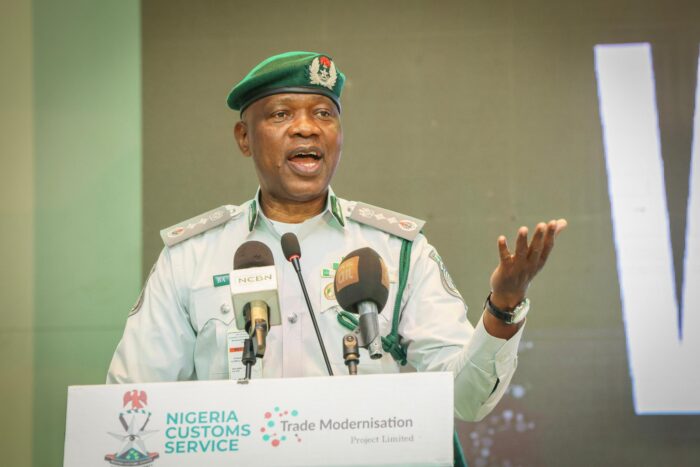
The Nigeria Customs Service has revealed that the value of Import Duty Exemption Certificate approvals for imported goods and equipment rose to N34 trillion in 2025, with about 60 per cent of the waivers granted for military hardware procurement.
According to the News Agency of Nigeria, Comptroller-General Adewale Adeniyi disclosed the figures on Monday during an investigative session of the Senate Committee on Finance with revenue-generating agencies.
He said government policies had at various times both helped and constrained Customs’ revenue-generating capacity.
The disclosure shows the scale of revenue foregone through duty waivers, even as the Customs Service faces a significant shortfall against its 2026 revenue target.
Also Read
What Adeniyi is saying
Adeniyi said the Import Duty Exemption Certificate scheme, introduced in March 2020, has been one of the most significant policy factors affecting Customs revenue over the past several years.
- “IDEC approvals reached about N34 trillion in 2025, with about 60 per cent granted for military hardware procurement due to Nigeria’s prevailing security challenges,” he said.
He said other government-backed waivers covered the importation of Compressed Natural Gas vehicles, electric and hybrid vehicles, healthcare equipment and medical supplies, industrial machinery and manufacturing inputs, as well as food import intervention programmes.
Adeniyi urged the government to establish stronger monitoring mechanisms to evaluate whether beneficiaries of duty waivers were actually delivering the intended outcomes, including lower prices, increased production and improved access to healthcare.
- “Fiscal policy should not be assessed solely from the perspective of revenue generation but also by its broader economic and social impact,” he said.
He also disclosed that out of the N11.04 trillion revenue target for 2026, the NCS had generated N4.5 trillion as of June 30, leaving approximately N7 trillion still to be collected in the second half of the year to meet its annual target.
More insights
The session also touched on an unresolved financial dispute between the Customs Service and the Fiscal Responsibility Commission over unremitted operating surplus to the Consolidated Revenue Fund.
Bello Gulmare, representing the Fiscal Responsibility Commission, alleged that the NCS had an outstanding liability of N8.9 billion in unremitted operating surplus to the Consolidated Revenue Fund as of 2019, a figure the committee directed the Corporate Affairs Commission, the FRC and the committee itself to reconcile within two weeks.
Senate Finance Committee Chairman Sen. Sani Musa directed the parties to submit a detailed reconciliation report before the next sitting.
- “We expect a detailed report on the outcome of the reconciliation meeting within the next two weeks before another interface with the CAC,” he said.
The committee also issued a stern warning to agencies that failed to appear at Monday’s session, threatening sanctions against the heads of the Nigerian Civil Aviation Authority, the Industrial Training Fund and the Small and Medium Enterprises Development Agency of Nigeria.
What you should know
The revelation comes as Customs implements broader reforms aimed at improving the transparency and efficiency of Nigeria’s import administration, including changes to the structure of charges paid by importers.
Nairametrics earlier reported that the Customs Service was set to replace multiple import-related levies with a single 4% Free On Board (FOB) charge as part of a new revenue framework aimed at simplifying customs payments.
According to Adeniyi, the new unified charge will replace the existing Comprehensive Import Supervision Scheme (CISS) and the 7% cost of collection currently paid by importers.
He said importers will only be required to pay the 4% FOB charge upfront once the policy takes effect, with no additional levies imposed under the new structure.