Follow Us on Google Discover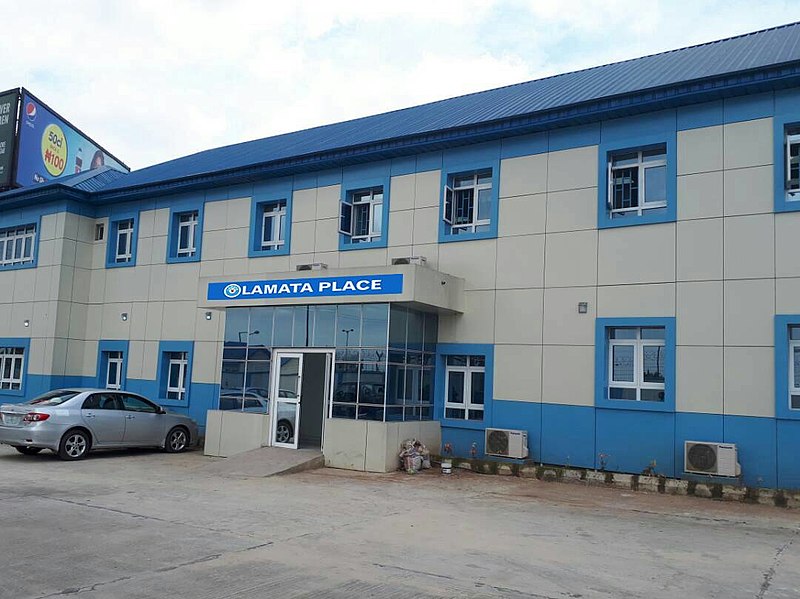
Lagos State has expanded its Strategic Transport Master Plan (STMP) to include 11 rail lines and one monorail as it moves to build a larger and more integrated urban mass transit network.
The development was disclosed by the Lagos Metropolitan Area Transport Authority (LAMATA) in a statement issued on Sunday following the signing of an agreement with China Civil Engineering Construction Corporation (CCECC) to establish a Railway Training Centre.
The updated master plan expands the rail component from the original six planned rail lines.
Currently, only Phase 1 of the Lagos Rail Mass Transit (LRMT) Blue and Red Lines is operational, while construction is ongoing on the Phase 2 extensions of both corridors.
What they are saying
LAMATA Managing Director, Engr. Mrs. Abimbola Akinajo, said the expansion of the Strategic Transport Master Plan reflects Lagos’ growing transportation needs and its long-term vision for an integrated mass transit system.
She noted that the enlarged rail network makes it imperative to establish a structured and internationally certified railway training institution to develop the skilled workforce required to operate and maintain the system.
- “The Strategic Transport Master Plan has now been updated to include 11 rail lines and one monorail. For a network of this scale to be sustainable, we need a proper certified training system covering signalling, maintenance, operations and customer service,” she said.
- “Our goal is to ensure that the infrastructure we build is operated and maintained by Nigerians. This will guarantee the longevity of our transit systems, create meaningful employment opportunities for our youths and contribute significantly to the growth of the Nigerian economy.”
Akinajo added that the Railway Training Centre, which will be established in partnership with CCECC, represents a strategic investment in human capital that will equip Nigerians with the technical expertise needed to support the state’s rail expansion programme.
More insights
Akinajo said LAMATA has already made significant progress in local capacity development through the Blue and Red Line projects. She explained that the agency has continued to strengthen indigenous expertise as rail operations expand across the state.
More than 400 personnel, including train drivers, customer service representatives and operations staff, have been trained since operations commenced on the Blue and Red Lines.
- The Blue Line has achieved more than 90% local staffing, with technical partners filling only the remaining specialised roles.
- CCECC Vice President, Mr. Sun Xiangchun, described the Railway Training Centre as timely, noting that the expansion of Lagos’ rail network would require a new generation of highly trained professionals in railway operations, maintenance and management.
- He added that the proposed centre will combine classroom instruction, simulation-based learning, practical hands-on training and professional skills assessment to produce globally competitive railway personnel, while aligning with the China-Africa Vocational Education Plan jointly endorsed by the Presidents of Nigeria and China.
- LAMATA said the training centre will become a key component of its long-term strategy to build indigenous technical capacity, reduce dependence on foreign expertise and provide the skilled workforce needed to support what is expected to become one of Africa’s largest urban rail networks.
Get up to speed
Lagos’ transport master plan originally comprised six planned rail lines, although only portions of the Blue Line (Marina–Mile 2) and Red Line (Oyingbo–Agbado) are currently operational, with additional phases under construction. The state is also exploring the extension of the Red Line into Ogun State to strengthen inter-state connectivity.
- Other proposed rail corridors under the master plan include the 68-kilometre Green Line, the 85.7-kilometre Purple Line, the 48-kilometre Orange Line and the Yellow Line.
- The Green Line, a $3 billion project being developed with MOFI and China Harbour Engineering Company (CHEC), will run from the Lekki Free Zone to Marina.
- The Federal Government proposed N146.14 billion in the 2025 budget and N102.3 billion in the 2026 budget as counterpart funding for the Green Line.
In June, the Nigerian Railway Corporation (NRC) granted LAMATA a 15-year rail operating licence covering the Lagos Red Line, Blue Line and future rail lines developed within the licence period.
Under the licence arrangement, future rail lines completed during the 15-year period will only require final safety and operational inspections before passenger services commence, eliminating the need for fresh baseline operating licences.
What you should know
Earlier in April, the Lagos State Government announced plans to shift its long-term transportation strategy away from road expansion towards a multimodal system centred on rail, Bus Rapid Transit (BRT) and ferry services under its updated 2050 mobility master plan.
- The revised framework is designed to improve connectivity, reduce congestion and support the mobility needs of the state’s rapidly growing population.
- LAMATA said the revised Strategic Transport and Mobility Master Plan (STMMP) signals a major rethink of how Lagos intends to address worsening traffic congestion and prepare for a projected population of 45 million by 2050.
- Lagos State Commissioner for Transportation, Mr. Oluwaseun Osiyemi, said the state can no longer rely solely on road construction to address its transportation challenges.
- The revised strategy prioritises rail expansion, stronger BRT systems and structured ferry services within an integrated multimodal transport network.
The state also plans to modernise its public bus fleet with cleaner energy options while improving last-mile connectivity to enhance commuter access and urban mobility.
The revised mobility framework positions mass transit as the backbone of Lagos’ future transportation system, with greater integration expected to improve efficiency, accessibility and long-term sustainability across the state.