
 Follow Us on Google Discover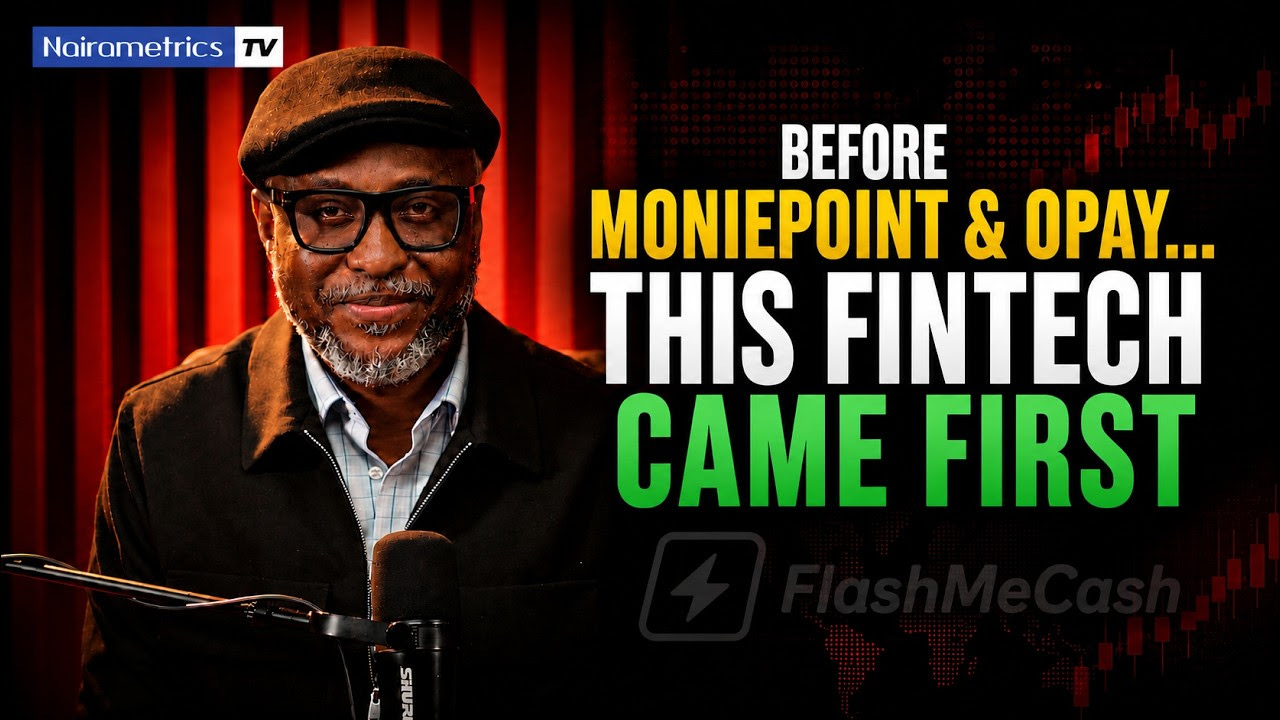
Long before fintech giants such as Opay, Moniepoint, Kuda, and Paga transformed Nigeria’s financial services ecosystem, a local bank had already envisioned a cashless future powered by mobile technology.
In the latest episode of the Money Brief Podcast: Corporate Stories, host Ugo Obichukwu revisits the story of FlashMeCash, a GSM-based money transfer platform launched by First Atlantic Bank in 2002 and widely regarded as one of Nigeria’s earliest fintech innovations.
At a time when smartphones, mobile applications, and internet banking were virtually nonexistent, FlashMeCash enabled customers to transfer money using GSM phones.
Recipients received transaction notifications and could access funds electronically, while the platform was also designed to facilitate payments for goods and services.
Also Read
In many ways, the product anticipated the digital payments ecosystem that would only become mainstream nearly two decades later.
What they are saying
According to Obichukwu, First Atlantic Bank described FlashMeCash as “Africa’s first GSM-based money transfer service.”
The timing was remarkable. The platform launched in 2002—three years before Facebook, five years before the introduction of the iPhone, and several years before Kenya’s M-Pesa would popularize mobile money across Africa.
- “Imagine that kind of world. No smartphones, no mobile apps. Internet banking was not banking at all. ATMs were still relatively a novelty. Most Nigerians just carried cash around. And if you wanted to transfer money, you’d usually have to physically visit a bank branch and do that transfer,” Obichukwu said.
The initiative was championed by Femi Pedro, then Managing Director and Chief Executive Officer of First Atlantic Bank.
Pedro, who later served as Deputy Governor of Lagos State, was among a group of banking executives pushing for greater modernization of Nigeria’s financial system and reduced reliance on cash transactions.
More insights
Despite its innovative concept, FlashMeCash struggled to gain traction and ultimately failed to achieve widespread adoption.
According to Obichukwu, several factors contributed to its downfall.
- Limited Mobile Phone Adoption: Mobile telephony was still in its infancy in Nigeria. GSM services had only been introduced in 2001, and mobile phones remained expensive for most consumers.
- Weak Telecommunications Infrastructure: Network coverage was limited and often unreliable, making it difficult for a mobile-based financial service to operate effectively across the country.
- Low Consumer Trust: Electronic payments were largely unfamiliar to Nigerians at the time, with most people preferring cash transactions and face-to-face banking.
- Absence of Regulatory Support: Nigeria’s fintech ecosystem and digital payments regulations had not yet evolved, leaving little institutional support for innovative financial products.
- Lack of a Merchant Network: Even if customers adopted the service, there were very few merchants capable of accepting digital payments, limiting the platform’s usefulness in everyday transactions.
Banking consolidation sealed its fate
The final setback came during Nigeria’s banking consolidation exercise of 2004–2005 under then-Central Bank Governor Charles Soludo.
The reform increased the minimum capital requirement for banks from N2 billion to N25 billion, forcing many institutions to merge or seek new investors.
First Atlantic Bank became part of a merger process that eventually contributed to the formation of what is now FCMB Group. During the transition, FlashMeCash was rebranded and repackaged, but failed to survive the restructuring.
A vision that eventually became reality
Although FlashMeCash disappeared, many of the ideas behind it ultimately became central to Nigeria’s modern financial system.
Today, the country processes trillions of naira in electronic transactions every month.
USSD banking, digital wallets, QR-code payments, mobile transfers, and agency banking have become commonplace, while fintech companies have grown into some of Africa’s most valuable technology businesses.
Reflecting on the product’s legacy, Obichukwu noted that innovation alone does not guarantee success.
- “Being first is not always enough,” he said. “Sometimes you can have the right idea and the right vision and still fail because the world just isn’t ready for your product.”
He argued that while modern fintech companies receive much of the spotlight, FlashMeCash deserves recognition as one of Nigeria’s earliest attempts to build a digital payments ecosystem—a product that imagined the future of financial services long before the market was ready for it.
What you should know
The story of FlashMeCash comes as mobile money adoption continues to expand globally.
According to the GSMA’s State of the Industry Report on Mobile Money 2026, the number of registered mobile money accounts worldwide reached 2.3 billion in 2025, underscoring the growing importance of digital financial services in driving financial inclusion and economic activity.
While the global mobile money industry continues to grow rapidly, the report also highlights the need to address infrastructure, trust, and regulatory challenges—many of the same obstacles that confronted FlashMeCash more than two decades ago.



Don’t forget the days of Zoto