Follow Us on Google Discover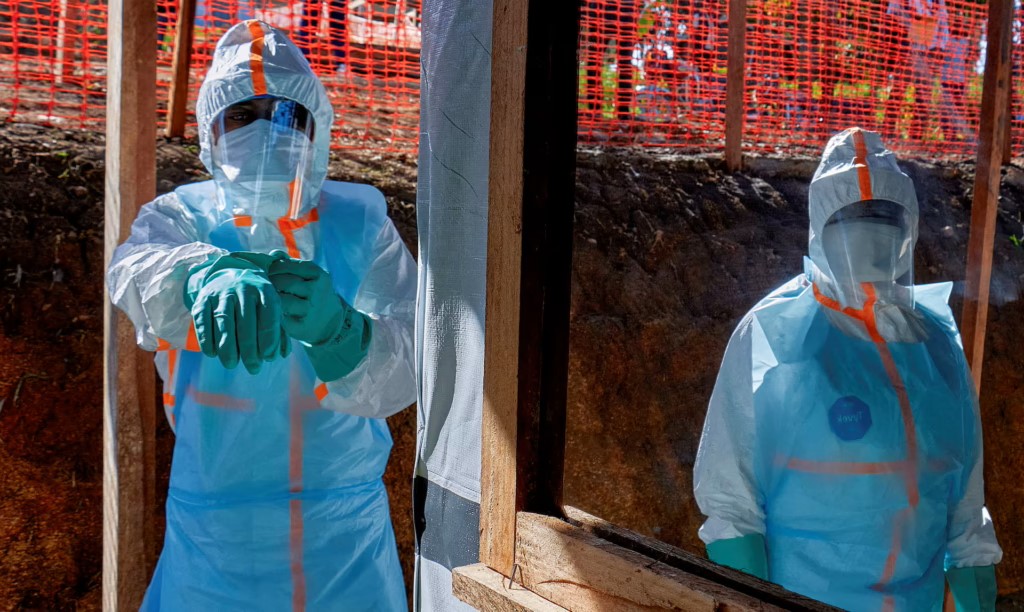
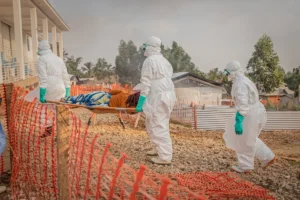
A strike by frontline Ebola health workers in the eastern Democratic Republic of Congo (DRC) is disrupting efforts to contain one of the country’s worst outbreaks in recent years, as infections continue to rise and treatment centres come under increasing pressure.
According to the country’s National Institute of Public Health (NIPH), healthcare workers in Bunia and neighbouring Rwampara, the two hardest-hit areas in Ituri province have remained off the job over unpaid allowances, poor working conditions and inadequate protective equipment, according to Bloomberg.
The strike comes as the outbreak has infected more than 1,700 people and claimed at least 580 lives. Bunia and Rwampara alone account for 829 confirmed infections, representing nearly half of all recorded cases nationwide.
What they are saying
The NIPH warned that the industrial action has compromised the continuity of essential health services, raising concerns that deaths from other preventable diseases could increase as routine healthcare delivery deteriorates.
Also Read
- The Ebola outbreak has placed additional pressure on a healthcare system already weakened by years of armed conflict, population displacement, underfunding and declining international aid.
- Humanitarian organisation Médecins Sans Frontières (MSF) had previously reported that nearly 40% of health workers had abandoned their posts before the current outbreak, while more than half of health facilities in affected areas had either closed or suffered damage. The organisation also noted widespread shortages of essential medicines.
The crisis has intensified as treatment centres approach capacity. Government situation reports showed that facilities admitted more than 100 Ebola patients on consecutive days this weekalmost double the average daily admissions recorded in June.
The World Health Organization (WHO) said it is too early to conclude that the outbreak has stabilised despite ongoing containment efforts.
More insight
Health authorities also confirmed that the virus has spread to Boga in southern Ituri, while more than 12,400 people identified as contacts of infected patients are currently under daily monitoring across 37 affected health zones.
- Community health workers continue door-to-door surveillance, contact tracing and public awareness campaigns while simultaneously maintaining childhood immunisation programmes, maternal healthcare and nutrition services.
- However, humanitarian agencies say many residents are avoiding hospitals due to fears of contracting Ebola, resulting in falling vaccination rates and reduced access to routine medical care.
UNICEF estimates it plans to reach about 900,000 households through community outreach as part of the emergency response.
What you should know
The outbreak continues to pose significant risks to frontline personnel. Official data show that at least 96 healthcare workers have contracted Ebola during the outbreak, with 19 deaths recorded. Many infections occurred after medical staff unknowingly treated patients whose symptoms initially resembled malaria or other common illnesses.
- The latest disruption comes weeks after health authorities launched a clinical trial for the Bundibugyo strain of Ebola, the rare virus driving the current outbreak.
- The World Health Organization (WHO), in partnership with the Democratic Republic of Congo’s health authorities and international scientific partners, began administering two experimental treatments Mapp Biopharmaceutical’s monoclonal antibody therapy MBP134 and Gilead Sciences’ antiviral drug remdesivir to infected patients in Ituri Province.
- The study aims to identify effective therapies for the Bundibugyo strain, which currently has no approved vaccine or specific treatment despite causing the largest outbreak of its kind on record.
- The outbreak has also raised concerns over its broader economic impact. Earlier, the United Nations Development Programme (UNDP) warned that an uncontrolled spread of the virus across Central and East Africa could wipe out more than 328,000 jobs and reduce the continent’s economic output by as much as $3.6 billion.
Meanwhile, the Africa Centres for Disease Control and Prevention (Africa CDC) said treatment centres were operating at 95% bed occupancy, while only 77% of identified contacts were being monitored daily well below the 95% threshold required to effectively contain transmission.