Follow Us on Google Discover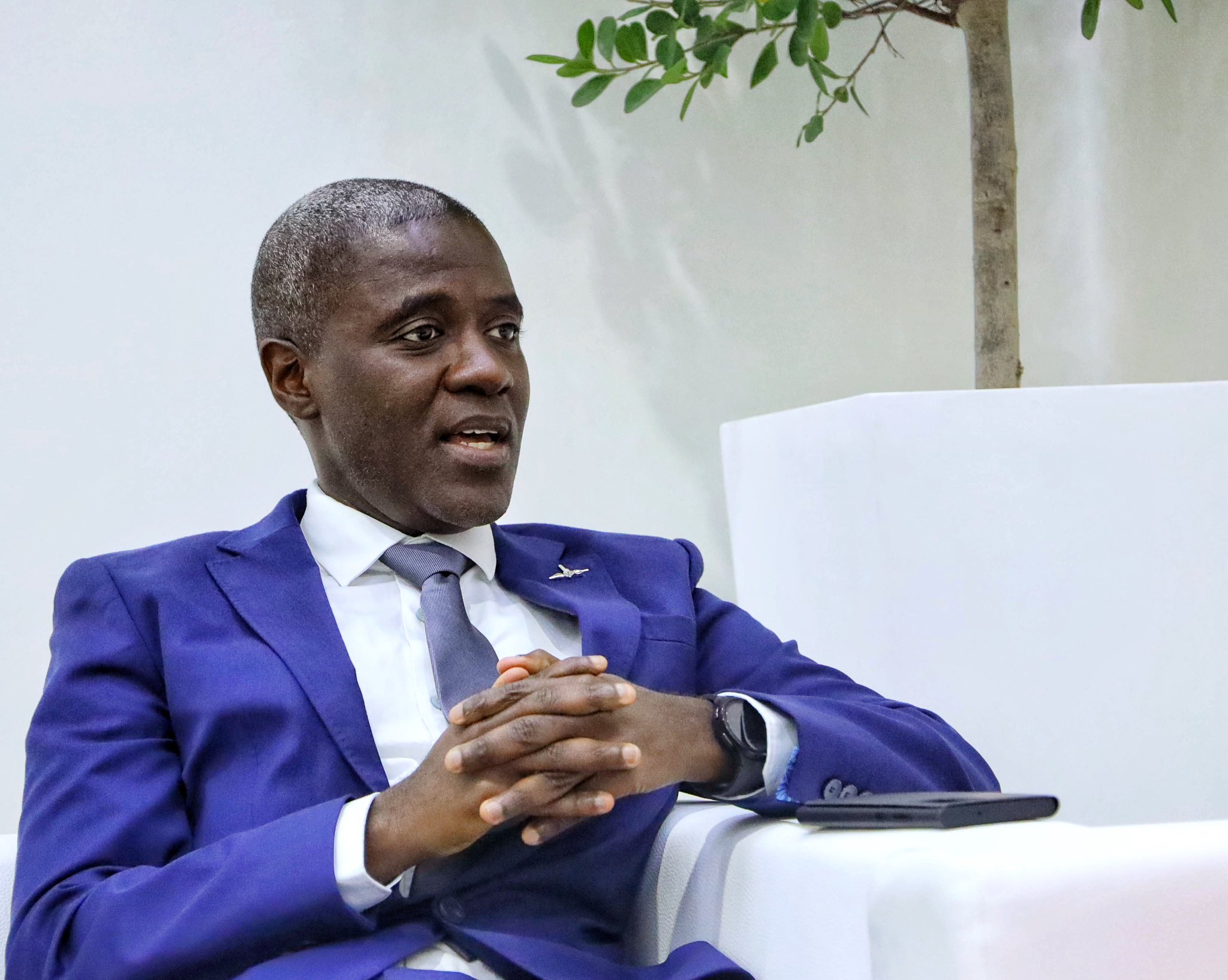
The Nigerian Communications Commission has called for accelerated Fibre-to-the-Home deployment, revealing that there are only about 265,000 FTTH subscriptions across the country.
According to the News Agency of Nigeria, NCC Executive Vice Chairman, Dr Aminu Maida, made the call virtually on Tuesday at the Association of Telecommunications Companies of Nigeria’s Critical Conversation Forum on FTTH in Lagos, themed “Add ressing Challenges, Strengthening Standards and Ensuring Sustainable FTTH Deployment in Nigeria.”
Maida said faster broadband expansion is critical for Nigeria to achieve its one trillion dollar economy ambition, noting that internet connectivity has become essential across education, healthcare, commerce, governance, financial services and innovation.
The commission also warned that despite Nigeria’s broadband penetration rising to 55.67%, fixed broadband remains severely underdeveloped.
What Maida is saying
Maida said the gap between Nigeria’s overall broadband penetration and its fixed broadband subscriber base represents both a significant failure and a significant opportunity.
He noted that Nigeria recorded 154.72 million internet subscriptions in April 2026, with broadband penetration rising to 55.67% from 48.81% a year earlier, while Nigerians now consume about 1.4 million terabytes of internet data monthly, driven by remote work, online learning, cloud services and AI-enabled applications.
Despite that growth, he said fixed broadband remains severely underdeveloped.
- “Fixed broadband remains underdeveloped, with only about 265,000 FTTH subscriptions, presenting significant opportunities for expansion and economic growth,” he said.
He identified Right-of-Way bottlenecks, multiple permits, vandalism, poor deployment standards and weak coordination as the major barriers slowing nationwide fibre rollout.
- “Thirteen states have waived Right-of-Way charges, while 16 adopted the National Economic Council’s recommended N145 per linear metre rate,” he said, urging remaining states to eliminate unnecessary deployment barriers.
Maida said digital infrastructure delivers far greater long-term economic benefits than Right-of-Way revenue, and disclosed that the NCC has inaugurated an Ease of Doing Business Portal to simplify investment by providing state-specific information on approvals, legislation and deployment requirements.
He said telecommunications infrastructure should be incorporated into community planning alongside roads, electricity and water to reduce costs and accelerate broadband deployment.
More insights
Maida disclosed that the scale of infrastructure attacks on Nigeria’s fibre network in 2025 posed a serious threat to the stability of the country’s telecommunications services.
- Operators recorded over 27,685 fibre cuts, 27,000 access denials and 4,210 theft incidents in 2025, disrupting nationwide telecommunications services at significant cost to operators and consumers.
He stressed that protecting telecommunications infrastructure required stronger collaboration among governments, security agencies, lawmakers, operators and communities, following its designation as critical national infrastructure.
- Maida said the Federal Government’s Project BRIDGE would deploy about 90,000 kilometres of fibre-optic cable to improve broadband access across Nigeria’s 774 local government areas, but stressed that national backbone expansion must be complemented by last-mile FTTH connections linking homes, schools, hospitals, businesses and communities.
ATCON President Tony Emoekpere, who also spoke at the forum, called for stronger infrastructure sharing, common deployment standards and greater industry collaboration to support sustainable broadband expansion.
Emoekpere said operators must address poor installation practices and infrastructure duplication to improve network quality, reduce costs and achieve universal broadband penetration across Nigeria.
What you should know
Nairametrics earlier reported that the governments of the United States and Nigeria have signed a $2.095 million grant agreement to support a feasibility study for the deployment of at least 90,000 kilometres of new fibre optic backbone infrastructure across Nigeria.
The dialogue was led by U.S. Deputy Secretary of State Kurt Campbell and attended by a senior Nigerian delegation headed by the Minister of Communications, Innovation and Digital Economy, Bosun Tijani.
The initiative forms part of broader efforts by both countries to strengthen digital infrastructure and deepen collaboration on technology, with the dialogue providing a platform to address opportunities and challenges surrounding Nigeria’s digital transformation.