Follow Us on Google Discover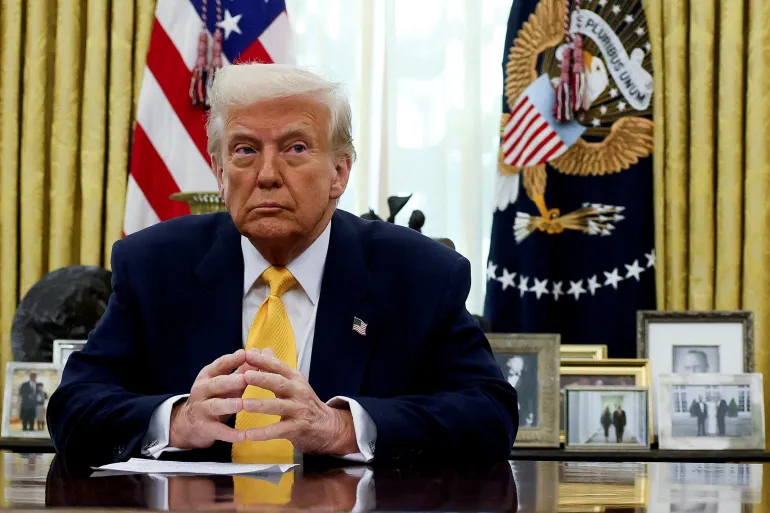
The U.S. Supreme Court has blocked President Donald Trump’s bid to end birthright citizenship, ruling that children born in the United States to parents who are unlawfully or temporarily present in the country are citizens at birth.
According to a ruling issued by the U.S. Supreme Court on Tuesday, June 30, 2026, such children are protected under the Citizenship Clause of the Fourteenth Amendment.
The decision is a major setback for the Trump administration’s immigration agenda, preserving the long-standing principle of birthright citizenship and preventing the enforcement of Executive Order 14160.
What they are saying
The U.S. Supreme Court ruled that children born in the United States to parents who are unlawfully or temporarily present in the country are citizens at birth under the Citizenship Clause of the Fourteenth Amendment, rejecting President Donald Trump’s attempt to end birthright citizenship through Executive Order 14160.
Also Read
The Court held that such children are “subject to the jurisdiction” of the United States, making them eligible for citizenship under both the Fourteenth Amendment and the Immigration and Nationality Act (INA).
- According to the ruling, the case arose after President Trump signed Executive Order 14160, Protecting the Meaning and Value of American Citizenship, on January 20, 2025.
- The order argued that children born to parents who were unlawfully or temporarily present in the United States were not “subject to the jurisdiction” of the country and therefore did not qualify for automatic citizenship.
- “Children born in the United States to parents unlawfully or temporarily present are ‘subject to the jurisdiction’ of the United States and are citizens at birth under the Fourteenth Amendment’s Citizenship Clause. Pp. 2–26,” the ruling stated.
Several parents later filed lawsuits arguing that the executive order violated both the Fourteenth Amendment and the INA.
A federal district court provisionally certified a nationwide class of affected children and issued a preliminary injunction blocking the order before the Supreme Court agreed to hear the case.
More insights
The Supreme Court said the Citizenship Clause must be interpreted in light of its historical background, tracing its origins from English common law through the adoption of the Fourteenth Amendment after the Civil War.
- The Court said the historical record, including the rejection of the 1857 Dred Scott v. Sandford decision, supports the view that birth on U.S. soil generally confers citizenship.
- It noted that only a limited number of long-recognized exceptions apply.
- The ruling means Executive Order 14160 cannot be enforced to deny citizenship to children born in the United States solely because their parents are undocumented immigrants or temporary visa holders.
The decision reaffirms the constitutional protection of birthright citizenship and leaves the existing interpretation of the Fourteenth Amendment unchanged.
Backstory
President Donald Trump signed Executive Order 14160 in January 2025 seeking to end birthright citizenship for children born in the United States to undocumented immigrants. The administration said the policy was intended to stop documents such as Social Security numbers and birth certificates from being issued to affected children.
The executive action formed part of the administration’s broader immigration enforcement agenda.
Several civil rights groups immediately challenged the policy in court, arguing that it violated constitutional protections.
Trump acknowledged legal challenges were likely but maintained that his administration was on “good ground” to end birthright citizenship.
The legal dispute eventually reached the U.S. Supreme Court because of the constitutional questions raised by the executive order.
What you should know
The United States government had earlier, in July 2025, warned that using a tourist visa primarily to give birth in the country was not permitted and could result in visa denial as part of efforts to curb birth tourism.
- The U.S. said visa applicants must be truthful about the purpose of their travel.
- It warned that misrepresenting travel intentions could lead to long-term immigration consequences.
- The U.S. Department of State directed consular officers to deny visa applications where there is credible evidence that an applicant’s primary reason for travel is to give birth in the United States to secure citizenship for their child.
The Supreme Court’s latest ruling, however, confirms that children born in the United States remain entitled to birthright citizenship under the Fourteenth Amendment, regardless of their parents’ immigration status or temporary presence in the country.