Follow Us on Google Discover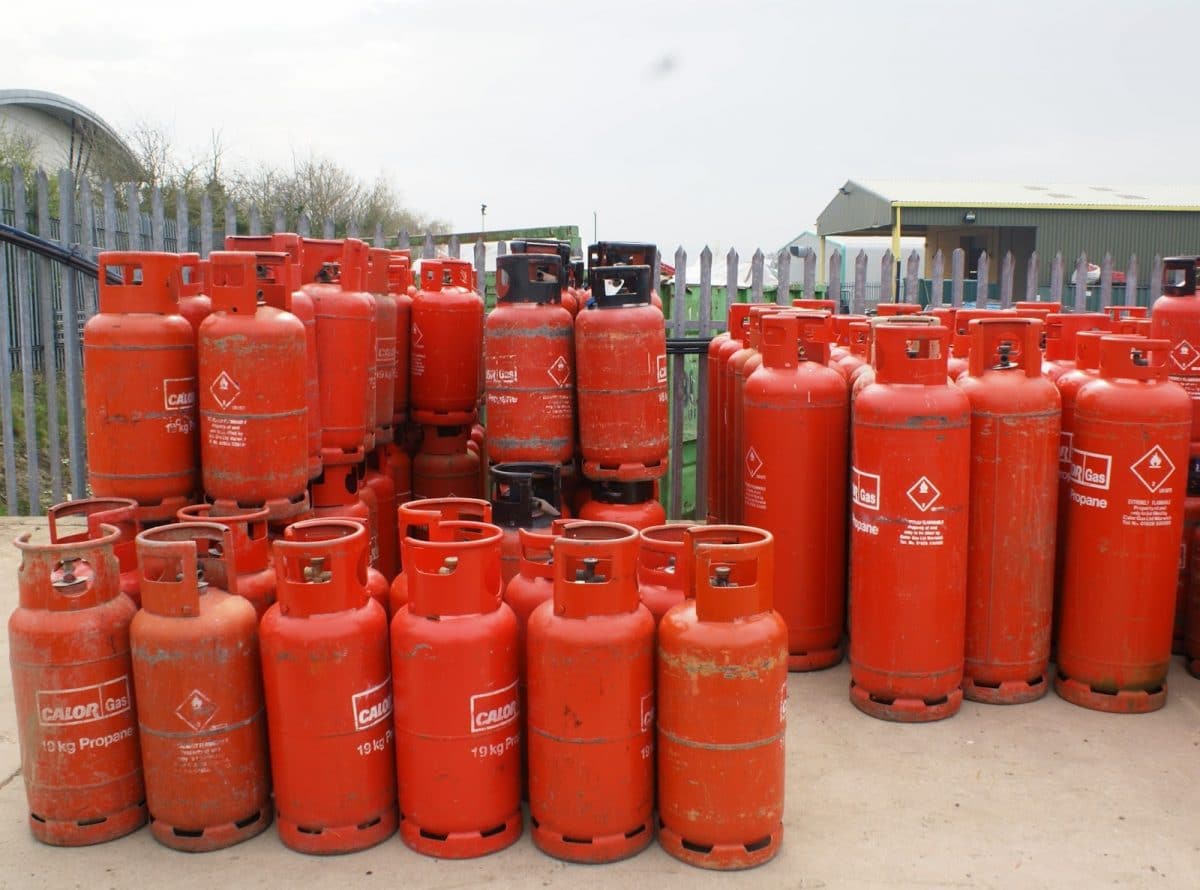
The price of Liquefied Petroleum Gas (LPG), commonly known as cooking gas, has declined across parts of the Federal Capital Territory (FCT), providing some relief to households after months of sustained price increases.
Nairametrics market survey showed LPG now sells for between N1,498 and N1,650 per kilogram across Abuja, depending on the retail outlet and location, compared with recent highs of about N2,000 per kilogram recorded in several parts of the country.
At the current prices, refilling a 5kg cylinder now costs between N7,490 and N8,250, while a 12.5kg cylinder costs between N18,725 and N20,625, down from approximately N10,000 and N25,000, respectively, at the peak of the price surge.
However, some roadside vendors continue to sell LPG for as much as N1,850 per kilogram.
Also Read
What experts, operators, and consumers are saying
Energy analysts have welcomed the recent decline in prices but cautioned that the gains may prove temporary unless structural challenges within Nigeria’s LPG market are addressed.
Energy economist Dr. Dayo Abegunde said the easing in prices suggests that supply conditions have improved, but warned that Nigeria remains vulnerable to international market shocks because a significant portion of domestic consumption still depends on imported LPG.
According to him, sustained price stability will require increased domestic processing, improved storage infrastructure and more efficient distribution networks capable of moving products across the country at lower cost.
- “The recent decline is encouraging for consumers, but Nigeria must deepen domestic production and strengthen its supply chain to avoid recurring price spikes whenever there are disruptions in the global market,” he said.
Oil and gas analyst Edward Bulus argued that improving domestic refining and ensuring that more LPG produced within Nigeria remains in the local market would provide greater price stability over the long term.
- He noted that while enforcement against hoarding is important, expanding infrastructure and improving market efficiency would have a more lasting impact on affordability.
LPG marketers say the recent reduction reflects improved product availability at coastal depots and a gradual easing of wholesale prices.
A Liquefied Petroleum Gas Marketer based in Abuja, Bassey Etanem, said increased product supply has started filtering through the distribution chain, leading to lower retail prices in several locations.
According to him, marketers expect prices to remain relatively stable if supply continues to improve and exchange rate volatility remains limited.
Retail operators in Abuja also confirmed that competition among filling plants has contributed to the price moderation.
- “We are seeing more product availability compared to what happened a few weeks ago. Once supply improves, retailers naturally compete for customers, and prices begin to fall,” an LPG dealer in the Kubwa area said.
However, operators warned that transportation costs remain high, particularly for marketers supplying inland states, adding that further investment in storage facilities and transportation infrastructure would help sustain lower prices.
Despite the recent relief, many households say cooking gas remains expensive compared to levels seen before the latest price surge.
Several consumers who spoke to Nairametrics said they hope the current decline marks the beginning of a sustained downward trend, noting that many families had resorted to using charcoal and firewood after LPG prices approached N2,000 per kilogram.
- Grace Bade, a trader, said “Nigerians are still struggling with low purchasing power, our income is not sufficient to meet our daily needs. The cost of transportation, food, healthcare, education, and rent has all gone up.
- “The government must commit to its Renewed Hope Agenda and ease the sufferings of Nigerians. Making cooking gas very affordable to as low as N500 per kg will be a step in the right direction,” she said.
Consumer advocates also urged regulators to maintain close monitoring of the market to prevent artificial scarcity and ensure that reductions in wholesale prices are reflected at retail outlets.
What FG said
The recent moderation in prices comes after the Federal Government announced measures to address supply constraints and curb market manipulation.
- Minister of State for Petroleum Resources (Gas), Ekperikpe Ekpo, directed the Nigerian Midstream and Downstream Petroleum Regulatory Authority (NMDPRA), other regulators and security agencies to intensify surveillance of the LPG market, investigate product hoarding and diversion, and sanction operators found manipulating prices.
- Ekpo said the Federal Government remains committed to increasing domestic LPG supply, reducing dependence on imports and ensuring locally produced LPG is prioritised for domestic consumption.
- The minister also disclosed that the government is pursuing a local LPG blending initiative involving Nigeria LNG Limited (NLNG), indigenous producers and the Port Harcourt LPG plant operator to reduce logistics costs, improve supply reliability and support more stable prices.
The directives followed an emergency stakeholders’ meeting convened on June 22 to address the persistent rise in cooking gas prices.
The NMDPRA attributed the recent surge in LPG prices to a combination of global and domestic supply challenges.
- The regulator identified global supply disruptions and price volatility arising from the Israel-Iran conflict as major drivers of higher LPG prices.
- It also cited inadequate domestication of locally produced LPG, low import volumes and non-cost-reflective pricing by some wholesalers and retailers.
- Other factors include poor distribution infrastructure, logistics bottlenecks and supply chain constraints, which have increased the cost of moving LPG across the country.
The authority said these factors combined to push retail cooking gas prices to record highs before the recent moderation observed in parts of the FCT.
What you should know
Although prices have started to ease, industry stakeholders say sustained affordability will depend on improvements in domestic supply and distribution.
Energy prices remain a major driver of inflation, particularly for transportation, food distribution, and small-scale businesses dependent on fuel and gas-powered operations.
Earlier this month, Nairametrics reported that Nigeria’s headline inflation rate edged higher to 15.93% in May 2026, up from 15.69% in April.