Follow Us on Google Discover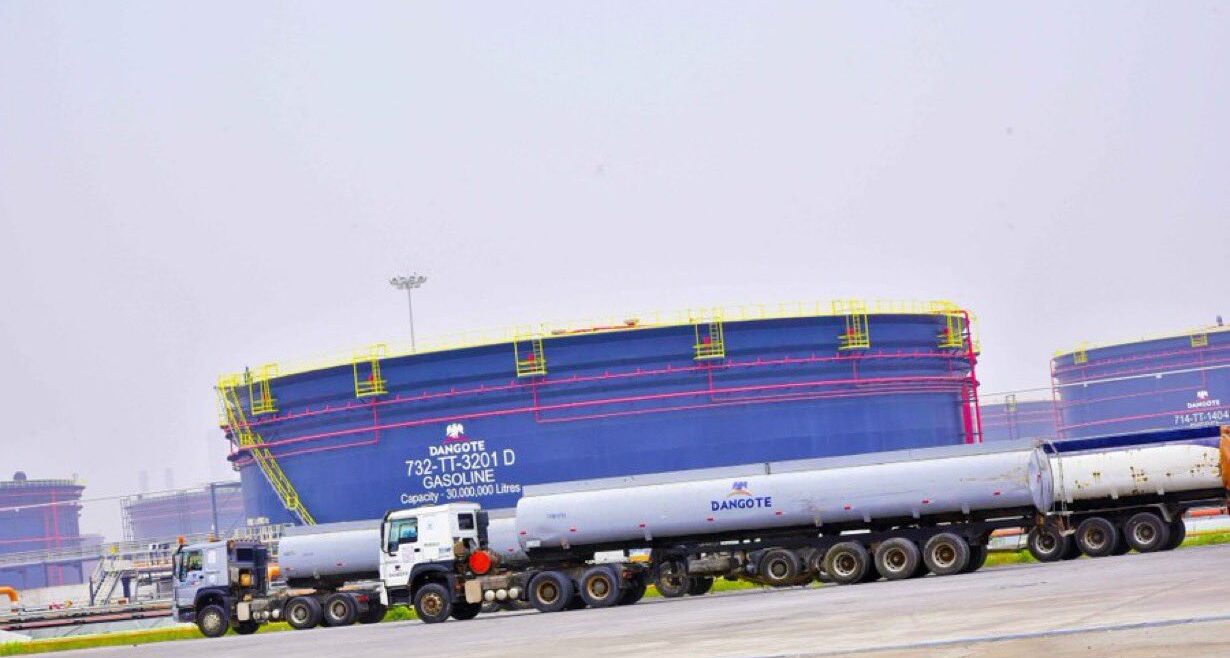
Nigeria’s new vehicle sales are projected to grow by 7.6% in 2026, building on an estimated 20% increase recorded in 2025, as improving fuel supply, easing inflation, and supportive government policies strengthen consumer purchasing power.
This is according to BMI’s latest Sub-Saharan Africa Autos Report, seen by Nairametrics.
The report identifies the full ramp-up of the Dangote Petroleum Refinery, moderating inflation, and incentives for electric vehicles (EVs) as key drivers of growth.
However, it warns that geopolitical tensions, currency pressures, and the dominance of the used-vehicle market could limit the pace of expansion.
Also Read
What the report is saying
According to BMI, the Dangote refinery reaching its full processing capacity of 650,000 barrels per day in February 2026 is expected to improve fuel availability, reduce reliance on imported petroleum products, and provide support for the naira.
- “We forecast new vehicle sales in Nigeria to rise by 7.6% in 2026, following a 20.0% increase in 2025. The continued ramp-up of the Dangote refinery, which reached full capacity of 650,000 barrels per day in February 2026, is a key supporting factor, with enhanced local fuel supply reducing import dependency and supporting the naira,” the report stated.
BMI also highlighted the moderation in inflation as a positive factor for vehicle demand. Annual inflation slowed to 15.1% in February 2026, its lowest level since November 2020, extending an 11-month disinflation trend.
According to the report, easing price pressures could enable households to allocate more income toward discretionary spending, including vehicle purchases.
However, BMI cautioned that renewed depreciation of the naira later in the year could weaken some of these gains by increasing vehicle import costs.
More insights
The research firm projects Nigeria’s automotive market to expand at a compound annual growth rate (CAGR) of 6.4% between 2026 and 2032.
The anticipated growth is expected to be supported by increasing demand for personal mobility, expansion of logistics and transportation networks, and government efforts to promote local vehicle manufacturing.
BMI expects Nigeria’s electric vehicle segment to grow faster than the broader automotive market in 2026.
The outlook is supported by higher fuel costs following subsidy removal, rising private-sector investment in EV infrastructure, and policy measures aimed at encouraging adoption.
The report noted that the reduction of import duties on fully built EVs and the government’s target of achieving 30% local EV production by 2033 could help stimulate demand.
Nigeria’s vast natural gas reserves also present opportunities for the adoption of compressed natural gas (CNG) vehicles, which could reduce dependence on imported petroleum products while lowering transportation costs.
Global risks weigh on regional outlook
Despite Nigeria’s positive outlook, BMI lowered its forecast for vehicle sales growth across Sub-Saharan Africa in 2026.
The firm now expects regional vehicle sales to rise by 1.9% to approximately 1.2 million units, down from its earlier projection of 4.4% growth.
The downgrade reflects concerns over geopolitical instability, particularly the conflict involving Iran, which could push fuel prices higher and increase import costs.
- “SSA consumers are highly price sensitive. The region’s heavy reliance on imported vehicles and automotive components leaves it particularly exposed,” BMI said.
The report also warned of supply chain disruptions affecting key automotive inputs such as aluminium and plastics.
Local production challenges persist
BMI noted that local vehicle production in Nigeria still accounts for less than 20% of total vehicle sales, with used vehicles continuing to dominate the market.
While the Federal Government’s 2026 Fiscal Policy Measures include tariff reductions on certain vehicle imports, industry stakeholders have raised concerns that lower import duties could undermine local assembly operations.
The report also pointed to the pending passage of the National Automotive Industry Development Plan (NAIDP) Act as a key policy issue for the sector.
BMI described the signing of the African Continental Free Trade Area (AfCFTA) Rules of Origin for automotive products in February 2026 as a positive development for the continent’s automotive industry.
According to the report, the framework establishes common rules for tariff preferences and could support greater intra-African trade, supplier localisation, and long-term investment planning.
Africa’s vehicle production is forecast to increase by 6.4% in 2026 to approximately 1.5 million units.
The benefits are expected to be concentrated initially in major manufacturing hubs such as South Africa and Morocco, while countries including Kenya and Ghana are likely to participate more through component manufacturing and sub-assembly activities.
EV adoption faces structural hurdles
BMI expects electric vehicle adoption to improve across Sub-Saharan Africa in 2026, supported by the entry of lower-cost models from Chinese manufacturers such as BYD, Chery, and Great Wall Motor.
The report noted that some EV models are now available at price points below $15,000, making them more accessible to consumers.
In South Africa, the region’s second-largest EV market, sales are projected to surge by 113% to around 8,300 units in 2026.
Nevertheless, BMI said EV penetration across the region will remain relatively low in the near term due to the dominance of second-hand vehicles, inadequate charging infrastructure, and high financing costs.
Country outlooks
BMI’s outlook for key Sub-Saharan African automotive markets includes:
Nigeria: Vehicle sales forecast to rise 7.6% in 2026 after a 20% increase in 2025.
South Africa: Sales expected to decline 1.6% to approximately 596,800 units amid weaker consumer demand and higher fuel costs.
Angola: Vehicle sales projected to increase by 6% on the back of improving macroeconomic conditions and stronger private consumption.
What you should know
The forecast comes months after the Federal Government introduced a series of fiscal measures aimed at reducing inflationary pressures and cushioning the impact of rising global energy prices.
In April 2026, the government waived import duties on electric vehicles, mass transit buses, and manufacturing machinery following directives from President Bola Ahmed Tinubu to mitigate the economic effects of the Middle East crisis.
Under the policy, import duties on electric vehicles were reduced from 5% to zero, while mass transit buses also received a full duty exemption. The measures are expected to encourage cleaner mobility solutions, reduce transportation costs, and support the broader transition toward alternative energy vehicles in Nigeria.