Follow Us on Google Discover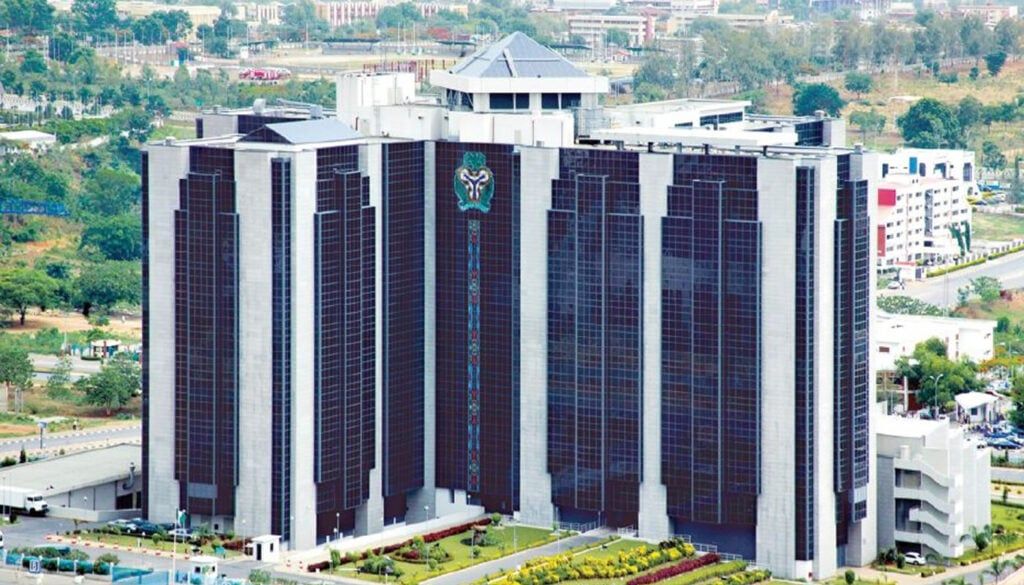
Experts have expressed divergent perspectives over the impact of new regulatory frameworks introduced by the Central Bank of Nigeria (CBN) and the Securities and Exchange Commission (SEC) on Nigeria’s fintech industry.
This follows recent circulars issued by the regulators and comments shared with Nairametrics by industry operators.
Earlier this year, SEC issued a circular mandating cryptocurrency exchanges to meet new capital requirements by January 2027.
Also recently, the CBN issued a directive requiring financial institutions to identify, verify and disclose their Ultimate Beneficial Owners (UBOs).
Also Read
While the measures are designed to improve transparency, data security and regulatory oversight, attracting support from some experts, others are concerned that the growing compliance burden could stifle innovation and push smaller operators out of the regulated market.
What they are saying
Wale Ameen, founder of Cush, a cross-border financial identity platform, described several recent reforms as positive developments for the fintech industry.
According to him, policies covering cybersecurity standards, restrictions on multi-device access, national licence upgrades, beneficial ownership disclosures and data localization are necessary steps toward building a stronger ecosystem.
He singled out the data localization policy for particular praise.
“I think that is a very brilliant policy,” Ameen said.
He argued that Nigeria and Africa have historically remained consumers of global technology services while much of the data generated on the continent is stored abroad.
- “Africa has been doing more of the consumerist side of things. We don’t have our data stored locally. We don’t have data centres equipped to handle our data. Platforms generate data, but they send it to data centres located in the US, Europe and other parts of the world,” he said.
According to him, retaining data domestically could help strengthen local digital infrastructure and position Africa more strategically in the global technology ecosystem, particularly in the age of artificial intelligence.
However, Femi Adegolu, co-founder of Tradepal AI, an AI-powered accounting and payroll SaaS platform built for fintechs, OTC traders, and businesses, criticized the SEC’s decision to increase minimum capital requirements for digital asset exchanges.
According to him, forcing early-stage technology companies to lock up large amounts of capital before achieving product-market fit could cripple local innovation.
- “Forcing an early-stage technology startup to keep over a million dollars sitting dormant in a bank account is a capital death sentence,” he said.
Adegolu argued that higher capital thresholds may inadvertently favour large foreign players while making it harder for indigenous startups to compete.
He also warned that excessive entry barriers could push activity into unregulated channels.
- “It will flow through unlicensed, completely invisible channels with zero AML, zero KYC and absolutely zero accountability,” he said.
According to him, accessible compliance infrastructure—not high capital requirements—is what ultimately creates safer financial markets.
- “If it costs a fortune to be transparent, then invisibility becomes the only viable business model for the next generation of Nigerian founders. We should be lowering the barrier to entry for compliance while aggressively raising the barrier against fraud,” he added.
While DevOps engineer, Akande Adedayo, says the CBN regulations are good for the industry, he pointed out that building a data centre will put more financial burdens on fintechs.
- “The CBN’s initiative to reduce fraud and protect user data is commendable. However, the implementation raises significant cost concerns. Institutions are now required to invest heavily in servers, which means considering substantial capital expenditures. Beyond purchasing servers, companies will now need to handle installation, hire dedicated network and security experts, comply with privacy regulations, and ensure restricted access protocols. Continuous power supply is also critical, adding another layer of expense. While the privacy and security benefits are clear, the financial burden is considerable, and this could place real pressure on fintechs that may struggle to absorb such costs.”
More insights
One of the most significant recent measures is the CBN’s directive requiring financial institutions to identify, verify and disclose their Ultimate Beneficial Owners (UBOs).
The June 2026 circular applies to deposit money banks, payment service providers, mobile money operators and other regulated institutions with digital payment operations.
Under the directive, firms must disclose the natural persons who ultimately own, control or exert significant influence over their businesses, even when ownership structures involve multiple companies, investment funds, trusts or offshore entities.
- “All Deposit Money Banks, Payment Service Providers and Other Financial Institutions with digital payments footprints shall disclose the Ultimate Beneficial Ownership (UBO) of significant shareholders in accordance with applicable extant laws and regulations including Anti-Money Laundering, Combating the Financing of Terrorism and Counter Proliferation Financing regulations.”
Institutions are also required to maintain accurate and up-to-date ownership records and provide them to the regulator upon request.
For many fintech firms that have raised capital from international venture capital funds through complex offshore holding structures, identifying ultimate beneficial owners may prove more challenging than for traditional financial institutions.
Data localization deadline set for 2027
The apex bank has also ordered banks, fintechs, mobile money operators and payment service providers to store all payment transaction data generated within Nigeria on local servers.
The directive forms part of a broader effort to improve regulatory visibility, strengthen oversight and reduce operational concentration risks in the country’s fast-growing digital payments ecosystem.
Affected institutions are expected to fully comply with the requirement by January 1, 2027.
SEC raises capital requirements for crypto firms
At the same time, the Securities and Exchange Commission (SEC) is increasing regulatory requirements for digital asset operators.
Under revised rules issued earlier this year, Digital Asset Exchanges (DAXs) must raise their minimum capital base from N500 million to N2 billion by June 2027.
Other new requirements include:
- Digital Asset Custodians: N2 billion minimum capital
- Digital Asset Offering Platforms (DAOPs): N1 billion
- Real-World Asset Tokenization and Offering Platforms (RATOPs): N1 billion
- Digital Asset Platform Operators (DAPOs): N500 million
- Digital Asset Intermediaries (DAIs): N500 million
- Ancillary Virtual Asset Service Providers (AVASPs): N300 million
The SEC says the measures are designed to strengthen investor protection and improve market integrity as Nigeria’s digital asset ecosystem matures.
What you should know
The CBN’s UBO disclosure requirement comes against the backdrop of increasingly complex ownership structures across Nigeria’s fintech sector.
- Over the past decade, many of the country’s largest fintech firms have established offshore holding companies in jurisdictions such as the United States, the United Kingdom, Singapore, Mauritius and the Netherlands to facilitate fundraising and investor participation.
- While such structures are common in the global technology industry, they can make it difficult for regulators to determine who ultimately controls critical financial infrastructure.
Industry observers say the CBN’s focus on ownership transparency, market concentration, systemic importance and data localization suggests regulators are preparing for a future in which fintech firms play an even larger role in Nigeria’s financial system.
As regulators tighten oversight and fintech companies adapt to higher compliance standards, the debate continues over where the balance should lie between fostering innovation and protecting the integrity of the financial system.