Follow Us on Google Discover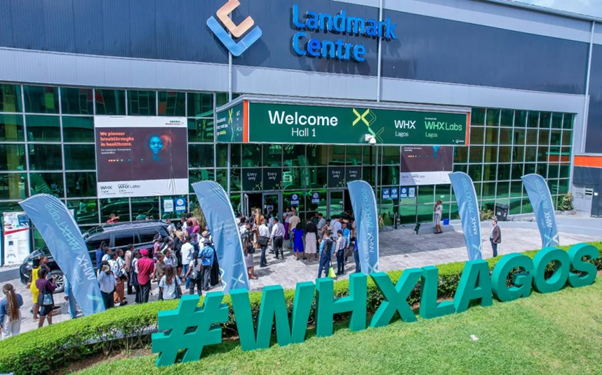
The air at the Landmark Centre in Victoria Island was thick with more than just the humid Lagos breeze; it was charged with the distinct energy of a sector on the precipice of a revolution.
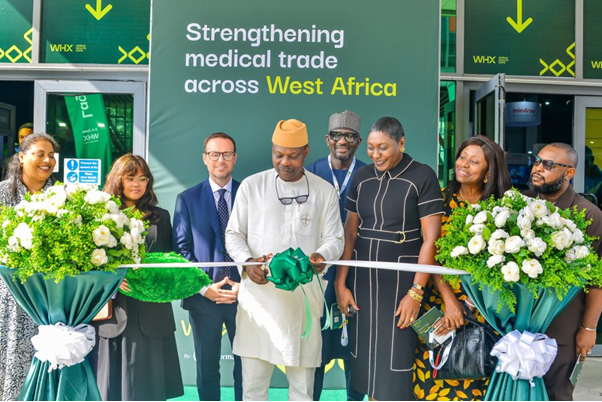
As the 15th edition of the World Health Expo (WHX) the landmark event formerly known as Medic West Africa concluded its three-day residency, the overarching message was clear: African healthcare is no longer just a social imperative; it has matured into a high-stakes, high-value economic and branding frontier.
As the Arabian proverb wisely suggests, “He who has health has hope; and he who has hope, has everything.” For the 8,000 professional visitors and 500 exhibitors from over 40 countries who converged in Lagos, that hope is now being backed by concrete strategies and unprecedented commercial investment.
Day 1: A Gathering of Global Giants and Local Voices
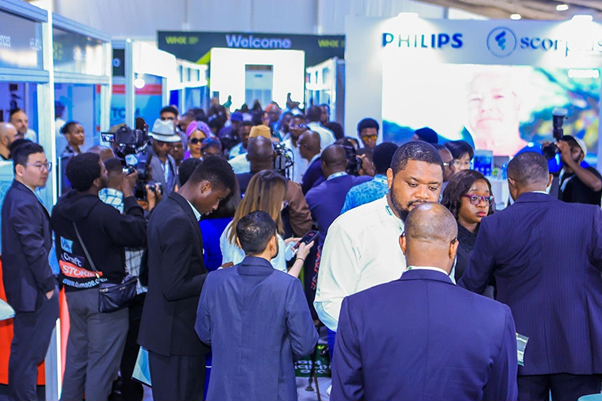
The opening day set a blistering pace, assembling a premier lineup of industry leaders, distributors, suppliers, and policymakers determined to unlock the West African market. From breakthrough AI-driven diagnostics to advanced medical imaging systems, the exhibition floor proved that global markets view Nigeria as a massive, highly dynamic hub for medical commerce.
Also Read
Yet, amidst the showcase of multinational brands, a powerful narrative of local empowerment emerged. Mr. Felix Ofungwu, CEO of ISN Medical, voiced a critical insight regarding the economic drainage of modern medicine, arguing that the persistent practice of referring medical tests abroad “robs the country of the opportunity to develop local expertise.”
This sentiment formed a cornerstone theme of the expo: building a sustainable African healthcare brand requires looking beyond imported hardware toward investing deeply in local capacity. Pointing to the power of new collaborative models, Ofungwu highlighted tangible progress: “We’re now able to use these solutions to not just detect cancer at very early stages, but even predict the likelihood of a patient developing it.”
Day 2: Operationalizing the ‘Five Shifts’
If Day 1 established the what, Day 2 mapped out the how. Focus shifted to the Hospital Investment and Buyer Leadership Forum, where discussions moved from pure innovation to the realities of disciplined execution.
Dr. Jide Idris, Director General of the Nigeria Centre for Disease Control (NCDC), delivered a masterclass in strategic reform. Addressing an audience of clinical and corporate leaders, he emphasized the immediacy of the challenge: “The subject before us is both practical and urgent: how we convert investment, innovation, and partnership into safer care, stronger hospitals, improved outcomes, and more resilient health systems. Reform takes root when the core parts of the health system are deliberately connected.”
Dr. Idris issued a strong call to action for African healthcare providers to evolve into proactive market shapers. “Africa cannot afford a marketplace in which hospitals simply receive whatever products are offered to them,” he asserted. “We need a stronger marketplace, where hospitals act as intelligent buyers.” For brands entering this space, the implications are clear: African healthcare buyers are becoming increasingly discerning, demanding value propositions that are interoperable, secure, maintainable, and aligned with national regulatory frameworks.
Day 3: Economic Realities and the Digital Frontier
The final day brought the dialogue back to the industry’s ultimate stakeholder: the patient. While digital health investments across Africa are projected to reach an estimated US$16.6 billion by 2030, panellists at the Heads of Laboratory Forum provided a sobering reality check regarding accessibility.
Kenneth Okolie, CEO of SYNLAB Nigeria, addressed the branding and operational challenges of delivering healthcare within a tightening economy. “Before the average individual spends on healthcare, they ask themselves: Have I eaten? Have I paid my rent? Healthcare is still largely out-of-pocket in Nigeria, and that creates a major systemic challenge.”
The consensus among experts underscored that for digital and clinical innovations to truly scale, the industry must bridge the affordability gap through expanded health insurance frameworks and robust public-private partnerships (PPPs). Dr. Chibuzo Opara, CEO of DrugStoc, grounded the commercial conversation in its human context, reminding attendees: “This is not just a business; this is also life science.”
The Verdict: Ecosystem Integration Over Isolation
As the curtains fell on WHX Lagos 2026, its impact as a vital bridge between global manufacturers and regional market needs was undeniable. However, industry leaders warned against the dangers of fragmented progress. Dr. Funmi Adewara, CEO of MobiHealth International, noted: “The issue is not a lack of solutions. The challenge is disciplined execution and ensuring that innovations move beyond discussions and pilot projects into large-scale implementation.”
Ultimately, WHX Lagos 2026 served as a powerful statement of intent for West Africa’s healthcare economy one focused on resilience, structural integration, and measurable patient outcomes. As Dr. Hameed Adediran concluded, “The future belongs to ecosystems. No single organization can transform healthcare alone. We must build networks of government, private sector, academia, civil society, and communities working towards shared outcomes.”