Follow Us on Google Discover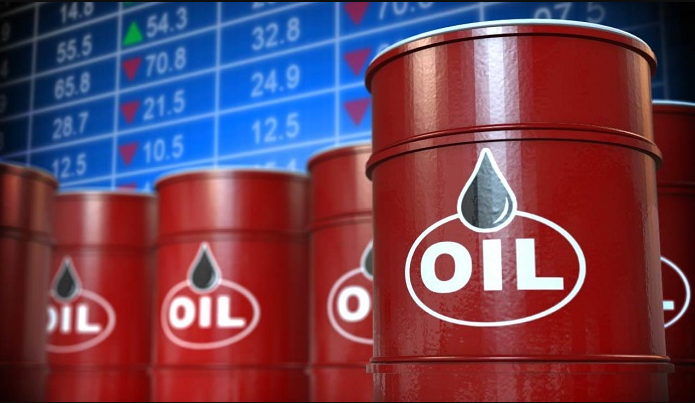
Nigeria’s inflation rate may remain stubbornly high in the coming months even if global oil prices begin to decline, as structural rigidities, exchange rate pressures, and what economists describe as “price stickiness” continue to limit the speed at which costs adjust downward across the economy.
Brent crude had hit a peak of over $125 per barrel early April as the U.S.-Iran war escalated. However, as of May 8, 2026, Brent crude is trading around $101–$102 per barrel as discussions continue between the warring parties.
Analysts say that even if tensions ease and crude oil prices eventually decline, Nigerians may not immediately feel relief because prices of goods and services in the economy tend to adjust upward rapidly but decline very slowly.
The development poses another threat to household purchasing power as prolonged inflation continues to erode real incomes and deepen economic hardship across the country.
Also Read
What they are saying
The Chief Executive Officer of the Centre for the Promotion of Private Enterprise (CPPE), Dr. Muda Yusuf, said Nigeria’s highly unionized and structurally rigid market environment contributes significantly to persistent inflation.
According to him, businesses are often reluctant to reduce prices once consumers have adjusted to higher costs.
- “Since businesses operate for profit maximization, and there are hardly stiff competitions in highly unionized economies, businesses are reluctant to reduce the prices of goods and services when the initial cause of the inflation, usually the cost of energy, falls,” Yusuf said.
He noted that oil prices are only one component of the inflation equation.
- “If the naira remains weak, or if distribution costs remain high, the effect of lower crude prices on inflation will be inadequate,” he added.
Yusuf also pointed to monopolistic market structures and the pricing of essential goods as reasons many businesses resist reducing prices even when economic variables improve.
A development economist at Adeleke University, Professor Tayo Bello, said Nigerians should not expect a direct or immediate drop in prices even if crude oil prices retreat significantly.
- “Prices in Nigeria are downward sticky; they rise quickly when costs increase, but adjust slowly when those costs decline,” Bello stated.
He added that inflation expectations have become deeply embedded in the economy after years of persistent price increases.
Also commenting, economist at CashLinks, Paul Olaleye, said businesses are contending with several layers of operational costs beyond fuel prices alone.
- “Even if one cost, like fuel drops, others remain high, making it difficult for firms to reduce prices,” he explained.
Olaleye said businesses are still burdened by elevated energy costs, insecurity, transportation expenses, rent, and exchange rate volatility.
According to him, prolonged inflation has also forced many firms to build future cost increases into current pricing decisions as a hedge against uncertainty.
More insights
A financial economist at Auchi Polytechnic, Zakari Mohammed, said companies also face operational and administrative costs whenever they attempt to reduce prices.
- “Fine-tuning prices, especially downward, comes with managerial and operating costs such as relabeling, system updates, and renegotiating contracts. Many firms avoid frequent price changes unless absolutely necessary,” he said.
Mohammed added that Nigeria’s large informal sector further slows price adjustments.
- “Pricing is less transparent and often arbitrary in the informal economy, making downward price adjustments slower and inconsistent,” he noted.
- “Once consumers adjust to higher prices, businesses are less incentivized to reduce them, especially if demand remains relatively stable.”
Get up to speed
Nigeria’s inflation climbed to nearly 35% in late 2024 before moderating to around 15% in early 2026, driven largely by fuel price hikes, naira depreciation, and food supply disruptions.
Despite the moderation, the overall price level remains significantly high for millions of Nigerians, particularly the country’s more than 140 million multidimensionally poor, with little evidence of broad-based reductions in the prices of goods and services.
The U.S.-Iran war has worsened the situation for many Nigerians, with petrol now selling around N1,300 per liter, up from around N800 per litre early this year.
This has led to another wave of increase in transportation costs with the attendant hike in prices of foods.
Each wave of inflation leaves lasting scars on household finances because wages and incomes rarely rise at the same pace as consumer prices.
What you should know
According to the latest Stanbic IBTC Bank Purchasing Managers’ Index (PMI) report, Nigeria’s private sector has maintained expansion in April 2026, but rising fuel costs driven by global tensions pushed firms to increase selling prices to the highest level in 16 months.
The report showed that companies passed elevated input costs to customers, with output price inflation accelerating to its strongest level since December 2024.
Headline PMI rose to 52.4 in April from 51.9 in March, marking the third consecutive month above the 50-point threshold that signals expansion in business conditions.