Follow Us on Google Discover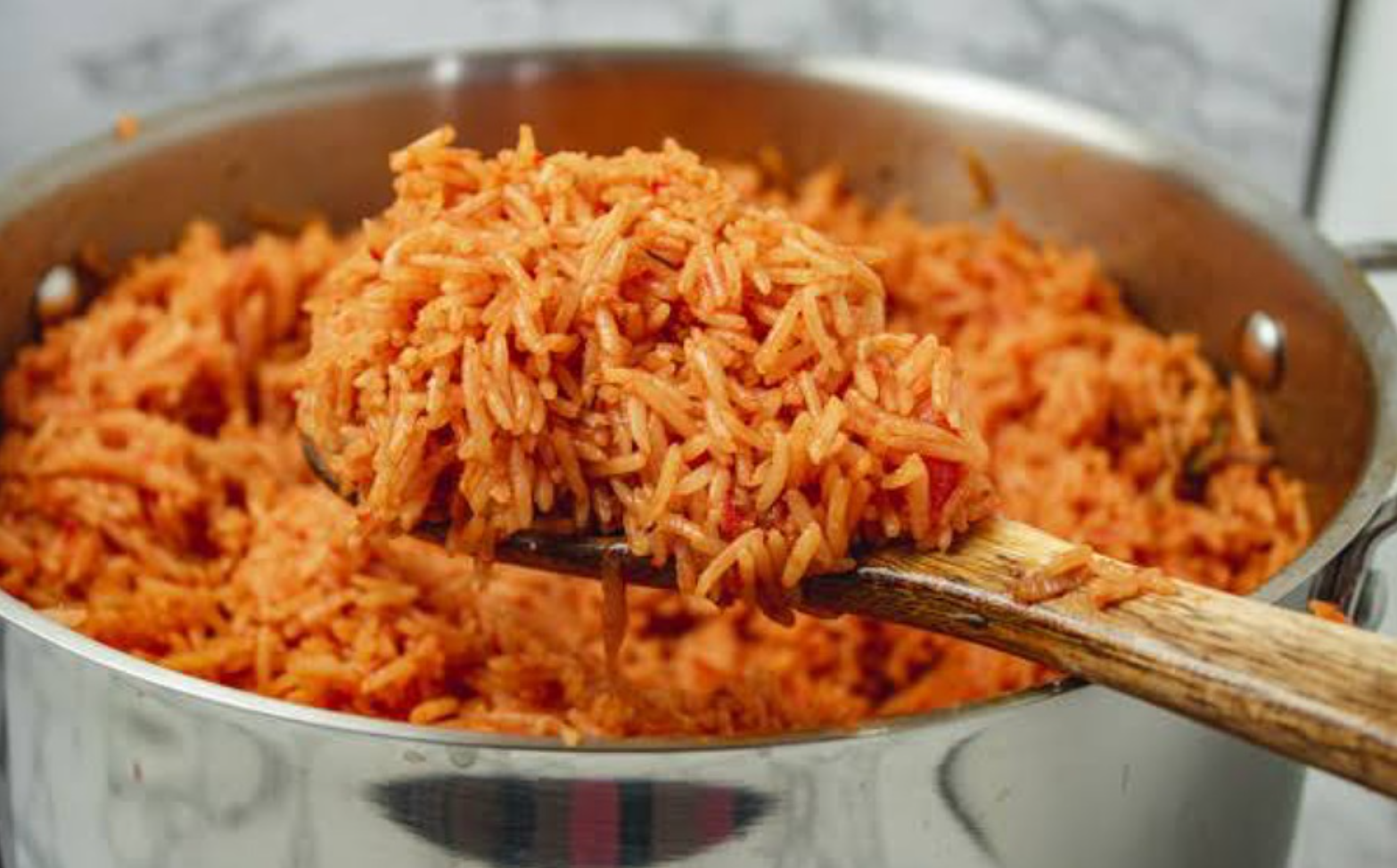
Nigeria’s average cost of cooking a pot of jollof rice for a family of five climbed to N30,435 in March 2026, highlighting the deepening pressure on household food budgets amid rising fuel and transport costs, according to the latest SBM Jollof Index report.
The latest figure represents a 19.4% increase from N25,486 recorded in October 2025, reinforcing how quickly food prices have accelerated within a six-month period.
The increase also means that preparing a basic family meal now consumes a significant share of income, with the report noting that a single pot costs more than 40% of Nigeria’s minimum wage.
What the report says
The report read, “The national average cost of cooking a pot of jollof for a family of five rose 19.4 per cent to N30,435.”
The rise in jollof costs mirrors broader inflationary trends. Headline inflation stood at 15.38% in March 2026, while month-on-month inflation more than doubled to 4.18%, signalling a renewed uptick in price pressures.
- Food inflation, though slightly lower on a year-on-year basis, remained elevated on a monthly basis, underlining persistent cost pressures in the food basket.
- At the core of the surge is a sharp increase in energy costs, triggered by global oil market disruptions.
- The report traced the escalation to geopolitical tensions in the Middle East, which pushed crude oil prices above $110 per barrel and led to a near doubling of petrol prices across Nigeria.
With petrol rising to over N1,300 per litre in major cities and diesel exceeding N1,500, transport fares surged, significantly increasing the cost of moving food items from farms to markets.
This has created a ripple effect across the entire food supply chain, pushing up the prices of key ingredients such as rice, vegetable oil, tomatoes, and protein.
Fuel shocks and logistics costs drive food inflation
The SBM Jollof Index shows that the cost increase is not driven by a single factor but by a combination of energy shocks, logistics bottlenecks, and structural inefficiencies in Nigeria’s food system.
- According to the report, the cost of transporting a tonne of grain from Kano to Lagos rose from N45,000 to about N70,000, illustrating how fuel prices are directly feeding into food inflation. Every stage of the supply chain, from farm harvest to retail sale, has become more expensive.
- This has had a uniform impact across regions, although the intensity varies. For instance, Lagos recorded one of the sharpest monthly increases, with some markets seeing a 23% jump in March alone, driven by its dependence on imports and exposure to global supply chains.
- Abuja also remains one of the most expensive locations to cook jollof, with Wuse II market hitting N36,750, reflecting the capital city’s heavy reliance on transported food.
Meanwhile, Port Harcourt recorded the steepest six-month increase at 55.1%, underlining how logistics constraints and energy costs are compounding inflation even in oil-producing regions.
The report noted that while some markets showed marginal monthly stability, this does not indicate easing prices but rather a demand ceiling. In cities like Kano, prices have plateaued because consumers can no longer absorb further increases, forcing traders to hold prices at already elevated levels.
Households cut meals, switch ingredients as costs rise
Rising jollof costs are now reshaping consumption patterns across Nigerian households. The report highlights widespread coping mechanisms, including reduced meal portions, substitution of expensive ingredients, and changes in cooking methods.
Protein consumption has been particularly affected. Turkey, which now costs between N8,000 and N10,500 per kilogram, has become a luxury item for many households. As a result, families are increasingly replacing meat with cheaper alternatives such as smoked fish, crayfish, or eggs.
Households are also abandoning bulk purchases in favour of “atomised buying”, where food is purchased in small quantities for immediate consumption. This reflects declining purchasing power and growing income uncertainty.
Energy costs are also influencing cooking habits. Many households have shifted from cooking gas to charcoal for main meals, reserving gas for lighter cooking tasks. This transition highlights how rising energy costs are extending beyond transport to directly affect household energy choices.
In some cases, families are skipping meals altogether or reducing the number of meals consumed daily. The report describes this as a sign that the economy is reaching a “pain threshold”, where households have exhausted their ability to adjust further without significant welfare losses.
What you should know
The broader implication is that food inflation is no longer just a price issue but a structural constraint on living standards. As the report notes, the stabilisation seen in some markets is not a sign of recovery but evidence that both consumers and traders are operating at the limits of affordability.
Overall, the steady rise in the average cost of cooking jollof rice shows the real impact of inflation on everyday life, turning a common household meal into a key indicator of economic stress across Nigeria.