Follow Us on Google Discover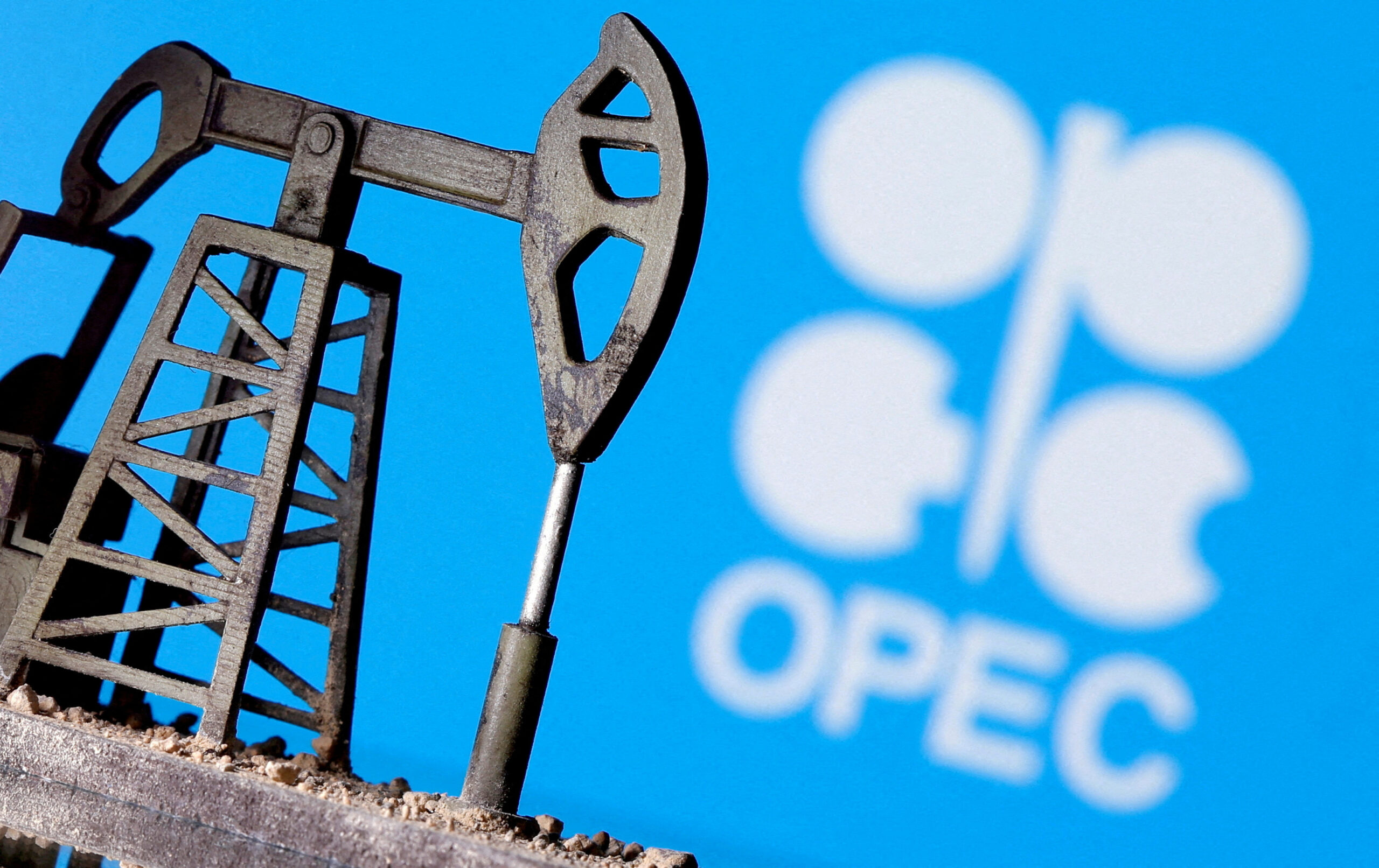
I read the FT piece on the UAE’s exit from OPEC this morning and sat with it for a while.
The UAE is leaving OPEC. Effective May 1.
After nearly 60 years of membership.
It comes on the heels of a Gulf summit in Jeddah, with Iranian-US conflict still brewing and GCC unity looking increasingly fragile.
OPEC was founded in Baghdad in 1960, by Saudi Arabia, Iran, Iraq, Kuwait and Venezuela, primarily as a response to Western oil companies slashing prices on producers with zero consultation.
The 1973 Arab oil embargo then made OPEC famous and frankly, feared. Quadrupled oil prices in months and brought Western economies to their knees.
But the organisation itself seemed to always be about something more fundamental – the right of producing nations to control their own resource destiny.
Africa at the OPEC Table: Always present, rarely powerful
Africa’s relationship with OPEC has always been more about legitimacy than leverage, a central argument I wrote in my LSE undergraduate dissertation on Gabon’s petrol economy, Elf Acquitaine and the petroafrique phenomenon.
Nigeria joined OPEC in 1971 and has spent decades complaining about quotas that constrained ambitions its own infrastructure has struggled to meet from time to time.
Libya joined in 1962 but has been effectively exempt from quota discipline for years; it essentially produces what conflict allows, not what Vienna decides. Algeria joined in 1969 and has grown quieter as its gas story overtakes its oil one.
Gabon left in 1995 over quota frustrations, came back in 2016, largely for diplomatic optics. Equatorial Guinea and Congo joined in 2017 and 2018 respectively. Both are small producers and were seeking a seat at a table where they carry little weight.
Angola joined in 2007, stayed long enough to realise the quotas were designed around Gulf fiscal break-evens, not African ones, and walked out in January 2024.
The pattern continues; the bigger the African producer, the more painful the OPEC relationship. And now the UAE, which in my view has had infinitely more clout than any African member ever had, has essentially reached the same conclusion Angola did, but in a much more heightened and more tense geopolitical climate.
African members came into OPEC carrying the logic that they produce oil, and so they should have a seat at the table where price and volume decisions are made. However, they now need to stop and think about what this actually means since that table is losing its most ambitious guest.
The Iran war didn’t start this, but just made it inevitable
The UAE’s frustration with OPEC quotas has been an open secret for years. Abu Dhabi has some of the lowest-cost, lowest-carbon barrels in the world.
Being told to constrain production while simultaneously trying to monetise reserves before the energy transition catches up is a major headache for any producer country.
In my view, the Iran war just handed them the political moment to do it cleanly. Many reports seem to suggest that the UAE has also been watching its allies carefully during the bombardment.
Over 2,000 Iranian missiles and drones, actually, and Abu Dhabi has concluded, with some bitterness, that it now knows exactly who showed up and who didn’t.
The exit from OPEC+ is equally telling. Leaving OPEC+ means leaving the Russia alignment. That in itself is not a small thing and probably signals that Abu Dhabi is done hedging.
Done with the ambiguity of a bloc that includes a country actively supporting the nation that just spent weeks trying to destroy Emirati infrastructure.
What the consequences mean for African countries
What actually strikes me most – sitting here in Lagos reading this – is what the analysts are quietly saying about the structural consequences.
The FT quotes Jorge León from Rystad saying OPEC will be “structurally weaker” because Saudi Arabia will now be the only member with meaningful spare capacity. That sentence should probably land heavily in Abuja, Malabo, Brazzaville, Tripoli, Algiers, and Libreville.
Nigeria has been punching below its production capacity for years. Infrastructure challenges, IOC exits, security challenges in the Delta, chronic underinvestment in upstream (at least until the last 24 months or so), have posed challenges.
What does it then mean when the institution that was supposed to provide collective pricing leverage is now fracturing, at the exact moment African producers most need external support for their barrels?
The competitive pressure on African crude also intensifies when the UAE operates freely, unconstrained by quota agreements, plus UAE barrels are cheaper to produce and cleaner to refine- all this deserves honest acknowledgment.
How Africa can exist its passenger problem in OPEC
Nevertheless, I always like to see opportunity even amidst disruption. African OPEC members should no longer anchored to quota politics that were never fully designed around African fiscal realities anyway.
Nigeria needs somewhere in the range of $75 a barrel to balance its books. The quota architecture was never built for that math. It was built around Gulf fiscal breakevens and Gulf geopolitical priorities. African producers have largely been passengers in that system, benefitting from the price floor it created but rarely shaping its direction.
I actually hope this moment forces change. This is the moment for African energy ministers, national oil companies and the deal community to have a sharper, more honest conversation about how we price, market and monetise our resources going forward. Not as passengers in a fracturing Gulf-led circle, but as producers with our own buyers, our own infrastructure strategies, our own terms.
Late former Algerian President Houari Boumédiène said something remarkable at the UN in 1974, right after the oil embargo; that OPEC’s action was the first real illustration of the power of producing nations to control the levers of price. A source of hope for the developing world.
Fifty-two years later, the question African energy ministers need to be sitting with is whether that structure fractures under Gulf geopolitics we had no part in creating, what our own leverage is, and whether we are actually organised enough to use it!
The house that oil built is cracking at the foundation, and Africa needs to decide what it’s building next.
Rolake Akinkugbe-Filani is the founding CEO of EnergyInc Advisors, a strategic investment and financial advisory firm focused on energy sector financings across Africa.
In addition her interest in geopolitics, capital and global energy, she is also co-Managing Director of the Nigeria Energy Resource Group (NERG) upstream oil and gas equity closed-end fund at Chapel Hill Denham, and serves on the Investment Committee and Board of All On, a Shell-seeded independent impact investor focused on clean energy in Nigeria.
She has advised on energy and infrastructure transactions across 35 African markets over 18 years, and was previously Group Head of Oil and Gas Research at ETI, and Head of Energy at FBN Capital and FBNQuest Merchant Bank. Asides ALL ON, she also sits on the boards of FSD Africa and UpEnergy.