Follow Us on Google Discover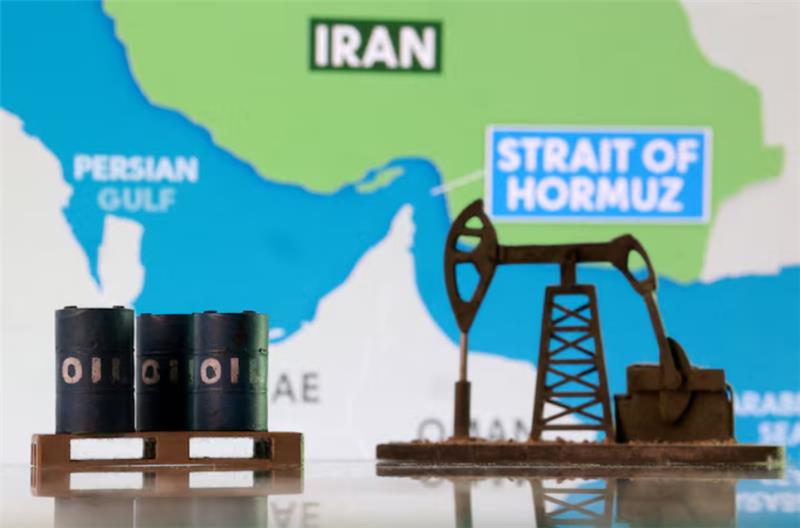
Global oil prices fell sharply on Friday, April 17, after Iran announced that the Strait of Hormuz would be “completely open” for commercial transit during the remaining days of the ceasefire deal between Iran and the United States.
This was disclosed by Iranian Foreign Minister Seyed Abbas Araghchi in a statement shared on X.
Checks by Nairametrics showed that Brent crude fell by 11.64% to $87.75 per barrel, while West Texas Intermediate (WTI) dropped by 11.55% to $83.4 per barrel, at the time of reporting. This marks the lowest level oil prices have traded in the last five weeks.
What they are saying
The Iranian government stated that the decision aligns with ongoing ceasefire efforts, declaring full access to one of the world’s most critical oil transit routes.
Also Read
- “In line with the ceasefire in Lebanon, the passage for all commercial vessels through the Strait of Hormuz is declared completely open for the remaining period of the ceasefire,” Iranian Foreign Minister Seyed Abbas Araghchi wrote in a post on X.
U.S. President Donald Trump, in his response on Truth Social, however, stated that the blockade by the U.S. Navy in the strait would remain in place to restrict Iranian oil shipments.
- “The Strait of Hormuz is completely open and ready for business and full passage, but the naval blockade will remain in full force and effect as it pertains to Iran only until such time as our transaction with Iran is 100% complete,” he said.
Backstory
On April 12, President Trump ordered the United States Navy to begin a blockade of all ships entering or leaving the Strait of Hormuz.
The order came hours after peace talks between the United States and Iran collapsed in Islamabad, according to a press briefing by U.S. Vice President JD Vance, who confirmed that both sides failed to reach an agreement on key issues.
Prior to the U.S. blockade, Iran had also restricted access to the strait, a crucial waterway through which about 20% of the world’s oil supply passes.
What you should know
A second round of talks between Iran and the United States is expected this weekend, although a specific date has not yet been fixed.
- However, when news of a ceasefire was first announced on April 8, global oil prices dropped sharply, with Brent crude and WTI falling by more than 15%, pushing Nigerian crude and major oil contracts below $95 per barrel.
- Since the conflict began on February 28, oil prices have surged, reaching as high as $120 per barrel, largely driven by disruptions around the Strait of Hormuz — a critical route through which about 20% of the world’s oil supply passes.
The impact has extended to economies like Nigeria, where petrol prices have risen sharply from around N799 per litre before the conflict to over N1,200 per litre.