Follow Us on Google Discover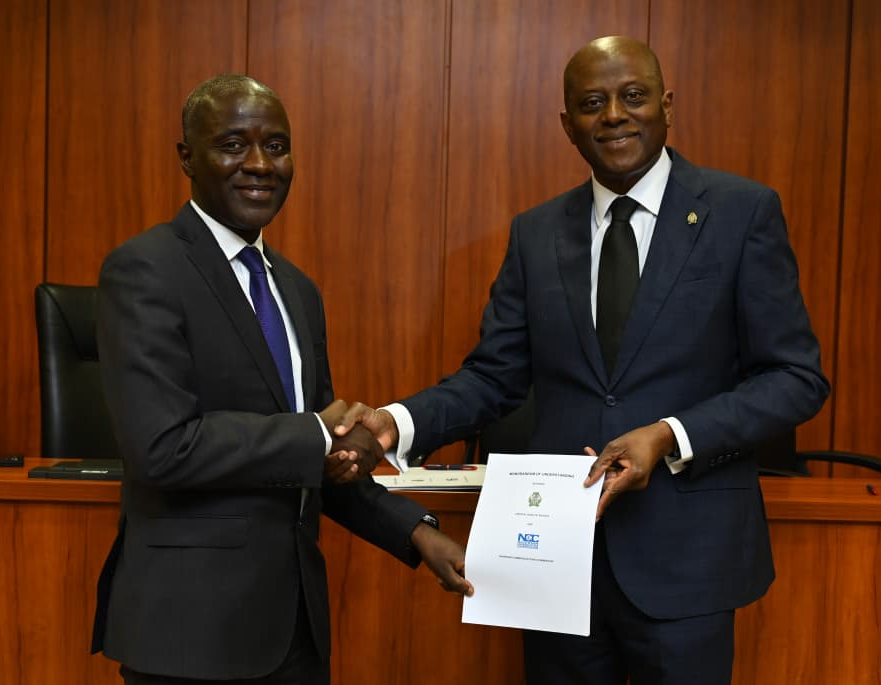
The Nigerian Communications Commission (NCC) and the Central Bank of Nigeria (CBN) have signed a Memorandum of Understanding (MoU) aimed at strengthening consumer protection, combating fraud, and unlocking opportunities across the telecommunications and financial services sectors.
This was disclosed in a statement released on Monday by the Head of Public Affairs Department at the NCC, Nnenna Ukoha.
According to the statement, the agreement was formalised alongside the inauguration of two joint committees: the Joint Committee on Payment Systems and Consumer Protection, and the Joint Committee on Telecoms Identity Risk Management System (TIRMS) Portal.
What they are saying
Executive Vice Chairman and Chief Executive Officer of the NCC, Dr Aminu Maida, said the partnership creates a structured framework for collaboration in areas such as payment system integrity, fraud mitigation, digital inclusion, and protection of consumers as well as micro, small and medium enterprises.
Also Read
- According to him, the arrangement is expected to strengthen trust, deepen inclusion, and support a secure and resilient digital economy.
- He described the MoU as a milestone in Nigeria’s regulatory oversight of the digital economy, noting that it reflects a shared commitment by both institutions to financial stability, digital inclusion, and consumer protection in an increasingly connected ecosystem.
- Maida said the NCC places strong emphasis on collaboration, adding that many of the sector’s milestones have been achieved through strategic partnerships.
He cited the recent resolution of the long standing USSD debt dispute between telecom operators and banks as evidence of the value of coordinated regulation.
- “That intervention restored confidence, preserved service continuity, and safeguarded the interests of consumers, telecom operators, and financial institutions alike,” he said.
Get up to speed
The signing of the MoU comes as the latest in the series of collaborative efforts by the two regulatory bodies.
In February this year, the NCC and the CBN proposed regular joint audits of banks, telecom operators and other ecosystem players as part of a new national framework aimed at tackling persistent failures in airtime and data purchase transactions.
In an exposure draft jointly issued by the two regulators and dated February 5, 2026, the regulators are seeking to address rising consumer complaints linked to failed airtime and data purchases where customers’ bank accounts are debited without successful service delivery.
Under the draft framework, the regulators intend to institutionalise clear accountability across the financial and telecommunications value chains, enforce uniform resolution timelines, and strengthen consumer redress mechanisms.
More insights
Maida said one of the major outcomes of the partnership is the rollout of the TIRMS Portal, which will provide financial institutions with better access to telecom related risk data.
He explained that the portal aggregates information on churned or recycled phone numbers, as well as numbers flagged within the financial sector.
This means banks and other financial institutions can verify whether a phone line is active, swapped, disconnected due to inactivity, reassigned to a new subscriber, or flagged for suspicious activity.
Also speaking, Governor of Central Bank of Nigeria, Mr Olayemi Cardoso, said the MoU will strengthen coordination between both regulators on approvals, technical standards, innovation trials, and sandbox testing.
He said the collaboration would support market led solutions while maintaining financial system stability.
- “Going forward, the Central Bank of Nigeria remains fully committed to working with the Nigerian Communications Commission to deliver a safer, more resilient, and more inclusive digital financial system, one that supports national productivity, protects consumers, and strengthens trust in Nigeria’s digital economy,” Cardoso said.
What you should know
In January this year, the NCC and CBN as part of their joint regulatory efforts, introduced a new consumer refund framework that guarantees subscribers a refund within 30 seconds for failed airtime and data transactions.
The framework was designed to address cases where customers are debited without receiving value.
The framework also strengthens consumer notification rules and resolves long-standing issues around erroneous and misdirected airtime and data purchases.