Follow Us on Google Discover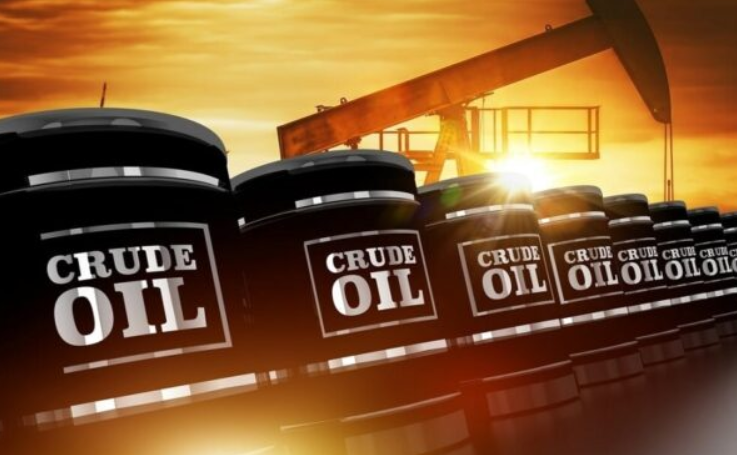
Oil prices surged by more than 5% on Thursday after U.S. President Donald Trump signalled that the United States would sustain its military offensive against Iran for another two to three weeks, raising fears of prolonged supply disruptions.
Trump delivered a prime-time address to the nation in the early hours of Thursday, providing updates on the ongoing U.S. and Israel military operations against Iran, which have now lasted 32 days.
Checks show that global oil benchmarks reacted sharply, with Brent crude futures climbing $6.33, or 6.3%, to $107.49 per barrel, while West Texas Intermediate crude rose $5.28, or 5.3%, to $105.40 per barrel.
What he is saying
The President’s speech signalled that the conflict would persist for several more weeks before the U.S. achieves its military objectives.
- “We are going to finish the job, and we’re going to finish it very fast. We’re getting very close… I can say tonight that we are on track to complete all of America’s military objectives shortly, very shortly,” Trump said.
Within the same address, he warned of intensified strikes on Iran’s capital in the coming days.
- “We’re going to hit them extremely hard over the next two to three weeks. We’re going to bring them back to the Stone Ages where they belong.”
More insights
In the 19-minute speech, Trump reiterated his earlier position that countries dependent on the Strait of Hormuz, a critical route through which about 20% of global crude oil passes, should take responsibility for reopening it.
He also renewed his suggestion that nations struggling to access crude due to the conflict should turn to the United States for supply.
- “To those countries that can’t get fuel… I have a suggestion: number one, buy oil from the United States. Number two, go to the strait and just take it. Protect it. Use it for yourselves,” he said.
However, his more mellowed stance on the Strait comes 11 days after he issued a 48-hour ultimatum to Iran to reopen the strait or face military strikes on its power infrastructure.
Despite the threats, the Strait has remained largely closed, disrupting oil supply chains and triggering a sharp rise in global energy prices.
What you should know
Since the war began on February 28, Nigerians have felt the ripple effects, as rising global oil prices continue to push up the cost of petrol and everyday goods.
In Nigeria, following repeated price adjustments by the Dangote Refinery, petrol prices have climbed to between N1,300 and N1,350 per litre, significantly increasing transportation and logistics costs.
- A recent report by Nairametrics Research showed that food prices across major markets in Lagos surged in March 2026, driven largely by higher fuel costs.
- The report found that a medium bag of pepper rose from N32,000 in February to N80,000 in March, while a large bag jumped from N58,000 to N140,000, representing increases of over 140% and 150%, respectively.
Fish prices also recorded sharp increases, with Kote (horse mackerel) rising from N5,000 to N8,500 per kilogram, and Titus (mackerel) climbing from N7,000 to N9,500, further highlighting the inflationary pressure on household staples.