Follow Us on Google Discover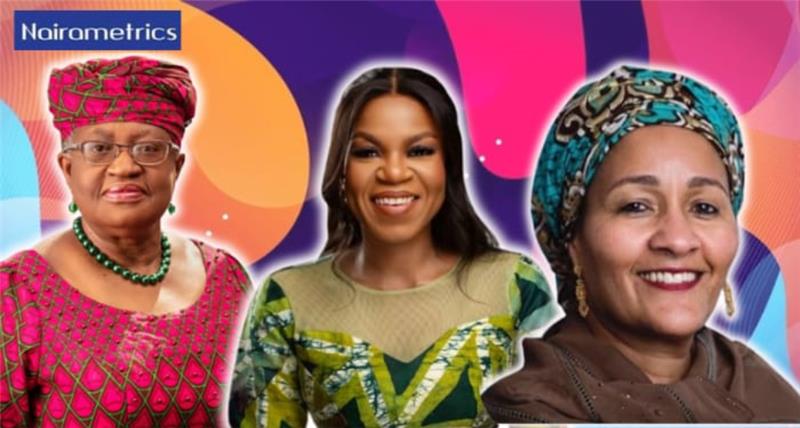
Just 20 years ago, Nigerian women were largely absent from top global leadership positions.
Fortune reported that in 2005, only eight women were leading Fortune 500 companies, representing as few as 1.6% of CEOs.
At the time, the number of women on corporate boards in Nigeria was also single-digit.
There were virtually no Nigerian women holding Class A roles in major multinationals or cutting the mustard in any leadership positions in global institutions.
Other News
More than 20 years on, as women globally are making waves, Nigerian women have not been left out. Women of Nigerian descent are not merely bystanders; they are now in charge, from the boardroom of the World Trade Organization, the United Nations, World Health Organisation execs league.
In 2026, women hold over 10% of Fortune 500 CEO roles, while Nigerian female decision-makers have now risen to over 30%. The country is now seeing a visible cohort of Nigerian women occupying senior decision-making positions across global firms and multilateral organisations.
In celebration of Women’s Month, Nairametrics spotlights 7 of the most powerful women of Nigerian descent operating actively on a global stage today. Their work reflects the growing influence of Nigerian women in global decision-making and institutional leadership.
Arunma Oteh || former Vice President of the African Development Bank
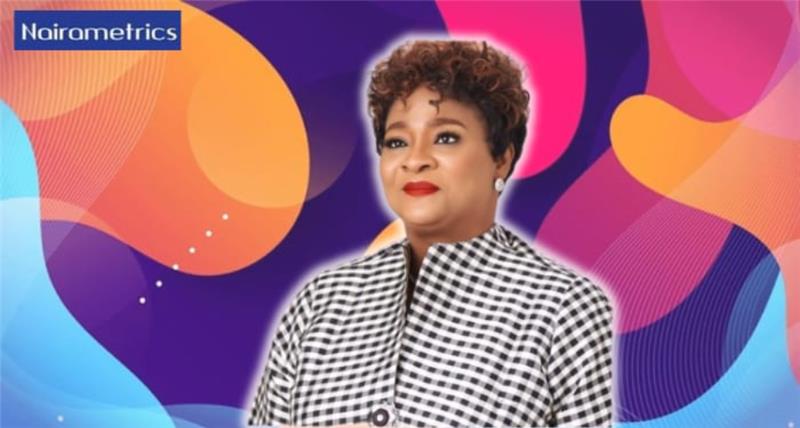
From home in Abia state to the University of Nigeria in Nsukka, where she earned a first-class honours degree in Computer Science, Oteh had always been a shining light.
She then proceeded to the Harvard Business School, where she obtained a master’s degree in Business Administration. Arunma Oteh has become one of Africa’s most respected voices on financial governance, capital-markets reform, and development finance.
With decades of experience in national regulation and global institutions, she is a reference point in global discussions on development banking, regulatory reform, and institutional resilience.
Over the years, Oteh has occupied some of the most influential financial governance roles on the global stage, regardless of race or gender.
- Upon Senate confirmation on December 11, 2009, Arunma Oteh became Nigeria’s Director-General of the Securities and Exchange Commission (SEC) from January 2010 to January 2015.
- She then became the Vice President of the African Development Bank from 2015 to 2018.
- She has also worked with the World Bank Group and has been a member of the FSD Africa Board of Directors since October 2022.
At 61, she has excelled at the heart of development finance, as an astute capital markets regulator who has sat in many multilateral boardrooms and national policy gatherings.
She now lives in the UK and holds academic, advisory, and leadership roles. Since January 2019, she has been an Executive-in-Residence at the Saïd Business School, University of Oxford.
Damilola Ogunbiyi||CEO, Sustainable Energy for All (SEforALL)
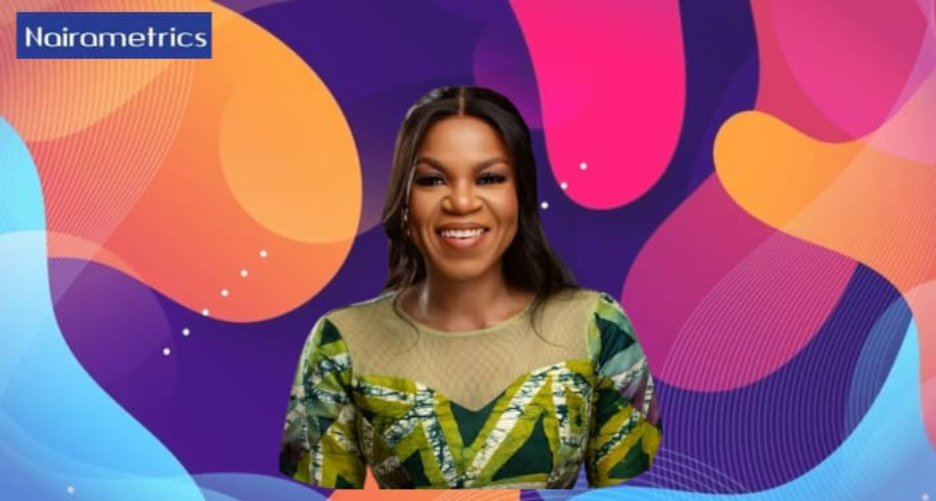
In 1976 when Damilola Ogunbiyi was born, Nigeria, particularly Lagos, where she built much of her early career, struggled with reliable power. Today, she sits at the centre of global energy leadership.
In a sector where women make up only about 20% of the global workforce, she is not just part of the system, but among those shaping opportunities within it. She studied Project Management for Construction at the University of Brighton, UK, at both undergraduate and master’s levels.
- She was the Special Adviser on Sustainable Energy to Governor Akinwunmi Ambode from 2015 until 2017, when she was appointed Managing Director and Chief Executive Officer of the Rural Electrification Agency of Nigeria from 2017 to 2019.
- Her success in national initiatives earned her appointment as CEO of Sustainable Energy for All (SEforALL), a United Nations-founded global organisation for universal energy access and clean energy transition.
- She is also the UN Secretary-General’s Special Representative for Sustainable Energy and co-chairs UN-Energy, the interagency for global energy work of more than two dozen UN bodies.
Her work at both national and international energy equity levels and multilateral diplomacy has made her oversee landmark expansion of off-grid and renewable energy deployment across underserved communities worldwide.
Very few women today sit in rooms where global investment decisions and policy architecture for the post-carbon economy are made. Ogunbiyi is one of those female thought leaders using their wealth of experience to shape the future of energy.
Ndidi Nnoli-Edozien|| Board Member, International Sustainability Standards Board (ISSB), IFRS Foundation
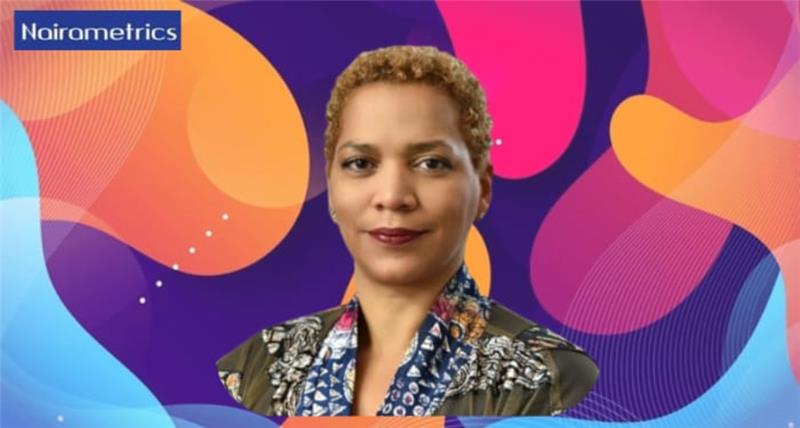
Long before sustainability became a mainstream corporate priority, Ndidi Nnoli-Edozien had built a global career around it.
She studied Computer Science at the University of Nigeria, Nsukka and has fortified her skill sets with numerous further trainings in business and sustainability.
In the last two decades, she has become one of Africa’s most trusted voices on sustainability strategy, integrated reporting, and the institutional frameworks that hold corporations accountable for the world in which they operate.
- She was once Group Chief Sustainability and Governance Officer at Dangote Industries, one of Africa’s largest conglomerates.
- She was appointed to the International Sustainability Standards Board (ISSB) of the International Financial Reporting Standards (IFRS), a global body responsible for setting sustainability disclosure standards used by companies and investors worldwide, in June 2022, with her role taking effect on July 15, 2022.
- She is the founder, Growing Businesses Foundation, an initiative that supports small and mid-sized enterprises across Nigeria.
At ISISB, she and her team and the financial technocrats that set baseline sustainability disclosure standards that dictate how capital markets around the world evaluate corporate value and risk.
Nnoli-Edozien sits at the table that determines what tens of thousands of companies in dozens of jurisdictions across the world must disclose to investors, and how those disclosures are measured.
Ayoade Olatunbosun-Alakija || WHO Special Envoy for ACT-Accelerator

Ayoade Olatunbosun-Alakija was born into a family long involved in Nigerian public life. Building on that foundation, she has built an international leadership career in global health.
She is a trained physician and has specialised in public health, health systems, and global health policy in the last two decades. She is a dependable global voice on issues concerning the world’s most vulnerable populations, particularly during moments of acute global crisis.
- Olatunbosun-Alakija was the Co-Chair of the COVAX Facility’s Interim Distribution Facility during the COVID-19 pandemic, one of the most complex logistical and diplomatic undertakings in the history of global public health, for coordinating vaccine distribution to lower-income countries worldwide.
- On December 16, 2021, she was appointed WHO Special Envoy to add her profound experiences and thought leadership to international health diplomacy at the United Nations’ primary health body.
- She is also chairs She FIND, the global alliance for diagnostics, to ensure that the tests needed to detect infectious disease are available, affordable, and accessible worldwide.
During the pandemic, the 49-year-old’s voice was one of the loudest globally on the vaccine inequity that defined the COVID-19 global response. She led the charge of thought leaders pushing for more equitable distribution across underserved regions worldwide.
Olatunbosun-Alakija’s work has spanned multiple regions. At present, she is also co-founder of Nexus Hub, a global health organisation focused on equity and pandemic preparedness.
Ifeoma Chuks-Adizue||Managing Director, Move Afrika at Global Citizen
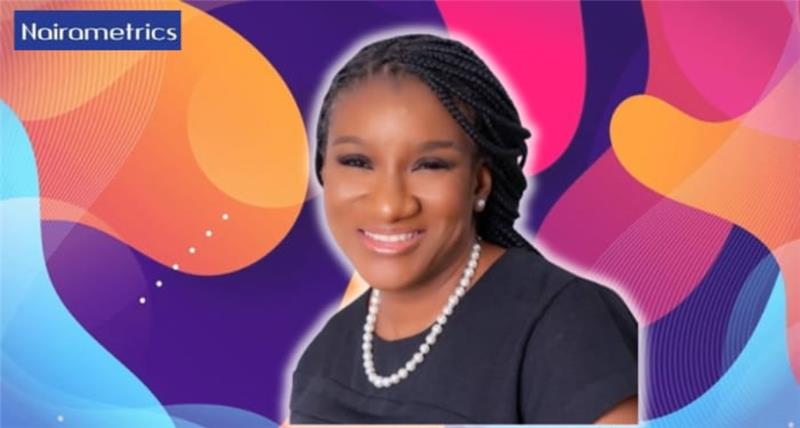
Global Citizen is one of the world’s most high-profile civic organisations today. It has held festivals that have drawn crowds of 60,000 and partnerships with the likes of Beyoncé, Coldplay, and the British government over the years.
Therefore, when the initiative launched Move Afrika, a first-of-its-kind international music touring circuit across the African continent in November 2023, it appointed a Nigerian woman to run it.
Ifeoma Chuks-Adizue, known as Iphie, assumed the role of Managing Director of Move Afrika at Global Citizen in November 2024. Ever since, she has been working to scale a live entertainment circuit across African cities to create sustainable jobs in local economies and to take African musical talent to the world stage.
- She earned a degree in Economics from the University of Jos.
- She is a former Executive Director, Commercial, at Chemical and Allied Products (CAP) Plc, makers of Dulux paint.
- She is an expert in brand management, sales, and media on an international scale, with expertise in consumer engagement across African markets.
She is a Pan-African who helped CAP, where she led sales and marketing teams to quadruple the business in four years.
At 44, Chuks-Adizue embodies the new reality that global cultural institutions are now looking to Nigerians not just to manage African operations, but to define what African ambition looks like from the inside.
Amina Jane Mohammed || Deputy Secretary-General, United Nations
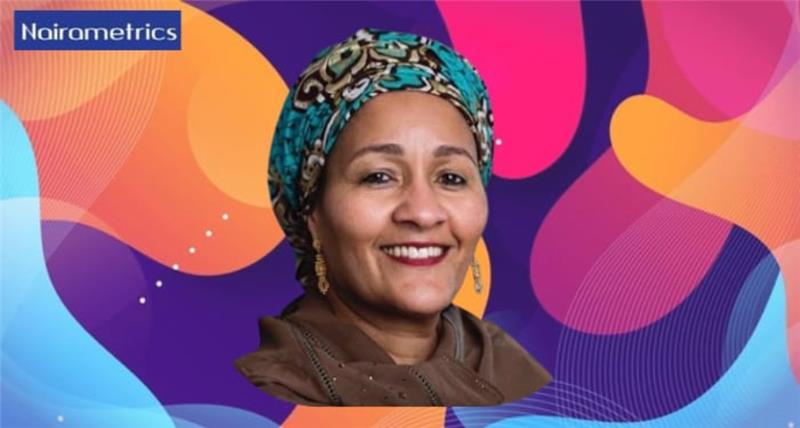
64-year-old Amina Mohammed occupies the second-highest post in the world’s foremost intergovernmental organisation. As the Deputy Secretary-General of the United Nations, the Liverpool-born Nigerian is at the pinnacle of multilateral diplomacy.
Though she spent her early years in Kaduna and Maiduguri, she has built her career over three decades in development, environment, and humanitarian policy.
- President Muhammadu Buhari appointed Amina Mohammed as the Minister of Environment in November 2015, a position she resigned from on February 24, 2017, to take up her role as the United Nations Number Two.
- She was a Special Adviser to former UN Secretary-General Ban Ki-moon on the Post-2015 Development Agenda. This process produced the 17 Sustainable Development Goals, one of the most ambitious international frameworks in history.
- She has co-chaired the UN Sustainable Development Group, coordinating the work of the UN system’s more than 40 agencies, funds, and programmes.
Amina Mohammed is now based in New York, USA. She has been instrumental in global climate finance reform and in championing Africa’s position in negotiations over debt restructuring and the green transition.
In today’s world, the daughter of a Nigerian veterinarian of Fulani origin and a British mother who worked as a nurse is among the most powerful voices in international affairs.
Dr Ngozi Okonjo-Iweala ||Director-General, World Trade Organization (WTO)
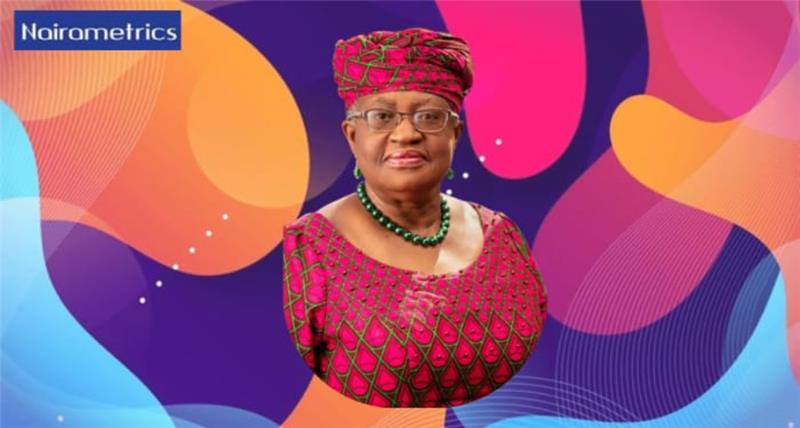
Dr Ngozi Okonjo-Iweala is a woman of many firsts and a perfect example of what it means to hold global power with intellectual precision and moral authority. She is now based in Geneva, Switzerland, but was born in Delta State, Nigeria.
She was trained at Harvard and MIT and became the first woman and the first African to serve as Director-General of the World Trade Organization, assuming office in March 2021. It was no surprise that she was overwhelmingly reappointed to a second four-year term in late 2024.
- Dr. Okonjo-Iweala is the first female Minister of Finance in Nigeria, serving two terms from 2003 to 2006 and 2011 to 2015
- She briefly acted as Foreign Affairs Minister in 2006, making her the first woman to hold either or both roles.
- Forbes ranked her 92nd on its 2025 list of the World’s 100 Most Powerful Women.
- She was not only the first woman but also the first African to lead the WTO, and is expected to remain at the office until August 31, 2029.
The PhD holder in Regional Economics from MIT has been known to spearhead and implement reforms that have shaped both her country and the international fiscal architecture. Before she was appointed WTO Director-General, she was at the World Bank, where she rose to become Managing Director of Operations, the institution’s No. 2 position, after a 25-year career.
She has presided over some of the most turbulent chapters in the history of global trade, including pandemic-era supply chain collapses and the renegotiation of international agriculture agreements. The 71-year-old thought leader has received honorary degrees from 21 universities worldwide and is widely regarded as one of the most respected economists of her generation.
The Bigger Picture
The women profiled here are not outliers. They are only a few among the great women from Nigeria who are adding real value to the global leadership conversation and justifying why the world needs more of them.
Also, as we celebrate women’s month, this spotlight is a statement of intent that Nigerian women are excelling above sector, upbringing, or family background.
In this generation, global excellence for women is not a story about a single sector or a single country. It is a global story that cuts across different walks of life. From health to banking, international development to development economics. Women of Nigerian descent are becoming the main characters of global positive change.