Follow Us on Google Discover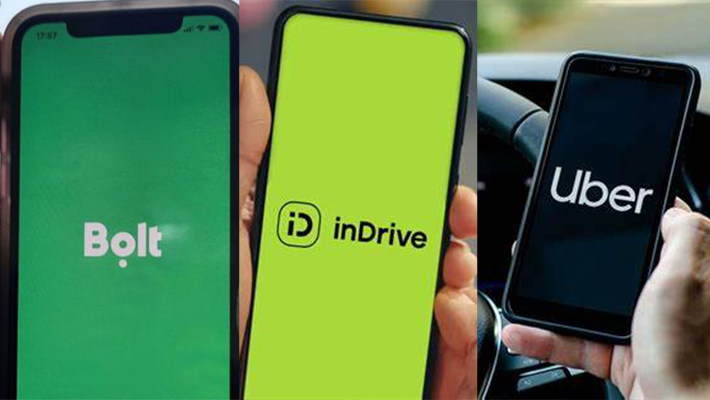
Drivers on the platforms of Uber, Bolt, and InDrive are considering more drastic actions that will include picketing the offices of the e-hailing companies should their 3-day strike fail to yield any positive results.
This comes as the management of the platforms has kept mum even as the strike action embarked upon by the drivers enters day 3.
According to executives of the Amalgamated Union of App-Based Transporters of Nigeria (AUATON), the drivers would use every civil means until their demands are met.
Among others, the drivers are demanding immediate upward review of fares to reflect the current costs of fuel, vehicle maintenance, and inflation.
Also Read
What they are saying
Speaking in an exclusive interview with Nairametrics, AUATON Vice President, South West, Mr. Aina Kolawole, said the union had explored all peaceful means of resolution to no avail before embarking on the strike action.
- “Before now, we have written series of letter to all of them (Uber, Bolt, and InDrive), they acknowledged our letters, but that was where it ended,” he said.
Asked what the next line of action would be after the 3-day strike, Kolawole said:
- “The next is to picket their offices and disrupt their operations. We will use every legal means to make sure they listen to us.”
Also speaking, Chairman of Lagos State chapter of AUATON, Comrade Jaiyesimi Azeez, said the ride-hailing platforms have been exploiting the drivers for years and keep creating an impression to the public that the drivers are making a lot of money.
- “Majority of us are Masters’ holders, but because of the situation of the country, we are using this opportunity to make sure we are not doing anything fraudulent. But we can’t be doing this without any dignity.
- “These people will tell the public that we are making N200,000 per day, which is far from the reality. A lot of us cannot even fuel our car,” he said.
More insights
On the level of compliance with the strike action, which requires drivers in Lagos and Ogun states to stay off the apps, Kolawole said they have been able to achieve at least 70% compliance.
- “Our business is an open business; it is almost impossible to get 100% compliance. But I can tell you that we have achieved 70 to 75% compliance,” he said.
Kolawole said the union does not want to be too strict in enforcing compliance because it understands that many of the drivers live on a daily income. He, however, said that would not deter the union from achieving its goals.
Ride-hailing platforms keep mum over demands
As the drivers’ strike action enters day 3, neither the management of Uber, Bolt, nor InDrive has issued any official statement.
However, in a short response to Nairametrics upon request for comments on the matter, Uber’s spokesperson said the company remains open to engaging with the drivers.
- “Drivers are at the heart of our business, and we remain committed to engaging constructively with them through regular roundtable discussions.
- “Uber operates an incredibly large and dynamic marketplace, but it only works when it works for all users – riders and drivers. Aligning our joint interests is a fundamental principle in how we run our platform,” he said.
The response falls short of addressing the drivers’ concerns and the demand for an increase in fares.
Meanwhile, inside sources from two of the ride-hailing platforms, who would not want to be named because they were not authorized to speak, said the current issue is beyond the Nigerian employees, as decisions have to be taken from the headquarters of the companies.
According to them, this explains why there has been no response to the drivers’ letters and their demands.
Uber is headquartered in California, while Bolt is an Estonian company. InDrive, with major hubs in Kazakhstan, also has its corporate headquarters in California.
Backstory
AUATON had on Sunday declared a 3-day strike action in Lagos and Ogun over what they described as poor working conditions and unsustainable fares offered by ride-hailing platforms.
- The union has presented 10 demands to ride-hailing companies and government authorities, including an immediate fare review to reflect the current costs of fuel, vehicle maintenance, and inflation.
- Other demands include a reduction in commission charged by ride-hailing companies, the introduction of a regulated minimum base fare to prevent extremely low-paying trips, improved rider verification systems, functional emergency panic buttons, and faster response mechanisms to security threats.
The union also called for comprehensive accident, health, and life insurance coverage for drivers while they are active on ride-hailing platforms.
What you should know
The ongoing U.S.-Iran war has seen prices of crude oil surge over the last two weeks, a development that has seen the price of petrol jump by nearly 50%.
The app-based drivers had a similar issue with the platforms in 2023 as the government removed fuel subsidy, leading to a steep increase in fuel prices.
Although the platforms increased their fares to reflect the market reality, the argument at the time was that the rate was not commensurate with the fuel price.
This led to a practice where some drivers resorted to offline negotiations with riders after booking on the app.