Follow Us on Google Discover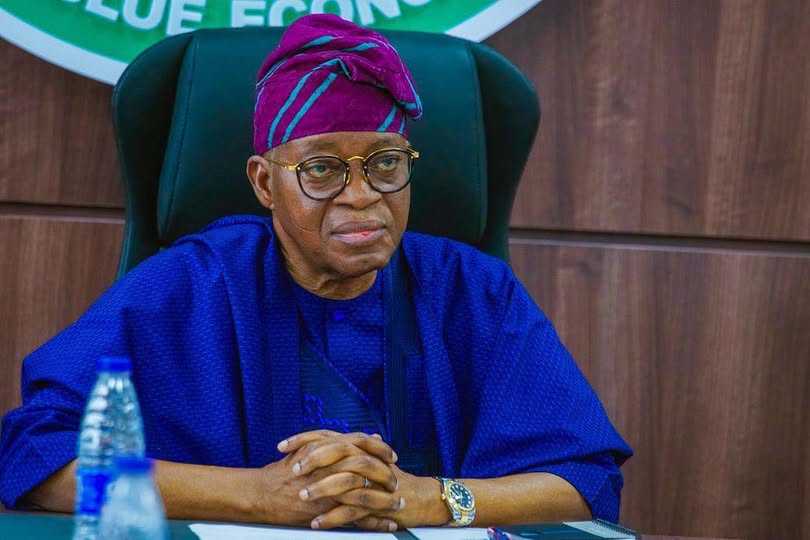
The Federal Government has unveiled a £746 million financing agreement with the United Kingdom to modernise Nigeria’s seaport infrastructure.
This was disclosed in a statement by the Special Adviser to the Minister of Marine and Blue Economy, Bolaji Akinola.
The investment targets major upgrades at the Apapa and Tin Can Island ports in Lagos.
What the minister said
According to the statement, the financing arrangement, backed by UK Export Finance (UKEF), will fund the comprehensive upgrade of the Lagos Port Complex, Apapa, and the Tin Can Island Port Complex.
Also Read
Minister of Marine and Blue Economy, Dr Adegboyega Oyetola, described the deal as a transformative milestone for Nigeria’s maritime sector.
- “This financing agreement represents a defining moment for Nigeria’s maritime sector,” he said.
He noted that the project marks the first comprehensive overhaul of the ports since their establishment, adding that the facilities have not kept pace with modern global shipping demands.
- “What we are set to do is not merely an upgrade, but a comprehensive transformation that will bring our ports into alignment with international best practice,” Oyetola said.
More details
The two ports account for over 70% of Nigeria’s imports and exports, making them critical to the country’s trade system.
- The modernisation programme will introduce advanced cargo-handling systems, expanded capacity, and digitalised operations, aimed at eliminating long-standing bottlenecks.
- According to the minister, the reforms are expected to significantly reduce vessel turnaround time and cargo dwell time, while improving efficiency, transparency, and reliability.
- He added that faster cargo clearance and reduced logistics costs will support businesses and boost economic growth.
The agreement is scheduled to be formally signed during President Bola Ahmed Tinubu’s state visit to London on March 18 and 19, 2026.
What you should know
The Lagos Port Complex, Apapa, established in 1913, remains Nigeria’s oldest and busiest seaport, while Tin Can Island Port, commissioned in 1977, was built to complement its operations.
Despite their strategic importance, both ports have faced years of congestion, delays, and outdated infrastructure.
The current project is regarded as the largest port modernisation effort in nearly 50 years, aimed at repositioning Nigeria as a key maritime hub in West and Central Africa.
The deal also reflects deepening economic ties between Nigeria and the United Kingdom, particularly in infrastructure development and trade facilitation. Bilateral trade between Nigeria and the United Kingdom has risen to about £8.1 billion annually.