Follow Us on Google Discover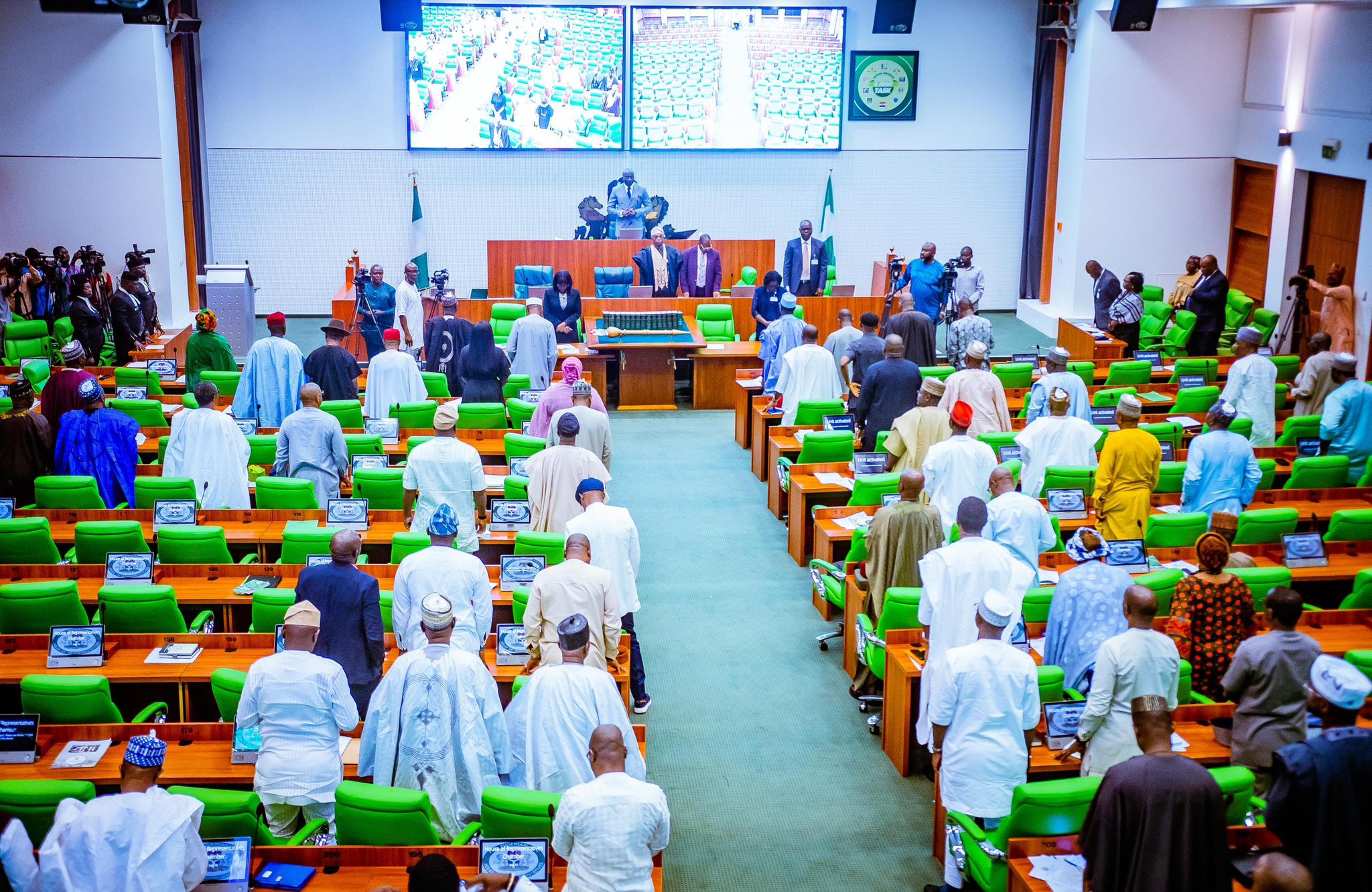
The House of Representatives has approved a $516 million external loan request by President Bola Tinubu to fund sections of the Sokoto–Badagry Superhighway project.
The approval was granted on Tuesday during plenary in Abuja, following the presentation of a report by the deputy chairman of the House Committee on Aids, Loans and Debts Management, Abdullahi Rasheed.
The development comes after President Tinubu, in a letter dated Thursday, April 23, sought the approval of the National Assembly to secure a $516,333,007 syndicated loan from Deutsche Bank AG to finance the proposed highway project.
What they are saying
Lawmakers approved the request after considering the committee’s report presented during plenary. The House Committee on Aids, Loans and Debts Management recommended the approval of the facility to enable the federal government proceed with the project.
Meanwhile, Senate President Godswill Akpabio, while reading the president’s letter to the Senate last week, defended the borrowing plan, noting that infrastructure-driven loans can strengthen economic growth and repayment capacity.
- “It is better to borrow for projects and infrastructure so that, at the end of the day, we can repay through the infrastructure,” he said.
More insights
The loan is expected to fund sections 1, 1A, and 1B of the Sokoto–Badagry Superhighway, covering approximately 120 kilometres in the first phase of the project.
The broader project spans about 1,000 kilometres and is designed to link Sokoto, Kebbi, Niger, Kwara, Oyo, Ogun, and Lagos states, connecting Illela to Badagry and improving movement across major economic corridors.
- According to the president, the financing will be sourced through a syndicated facility arranged by Deutsche Bank and backed by a partial risk guarantee from the Islamic Corporation for the Insurance of Investment and Export Credit.
- The loan has a tenure of nine years, including a three-year grace period, and carries an interest rate pegged at the Chicago Mercantile Exchange SOFR plus 5.3 per cent per annum.
In addition, the Federal Government is expected to provide over N265 billion in counterpart funding to cover land acquisition, compensation, and related infrastructure costs.
What you should know
The borrowing plan has elicited mixed reactions from Nigerians, with some stakeholders raising concerns about fiscal sustainability.
Former Vice President Atiku Abubakar, in a statement issued by his aide Phrank Shaibu, questioned the government’s fiscal discipline, while Seun Onigbinde warned about the risks of poorly structured loans.
- Nigeria’s rising debt profile has continued to draw scrutiny. Data from the Debt Management Office shows that total debt service rose to about N16 trillion in 2025, up from N13.02 trillion in 2024, representing a 22.9 per cent increase.
A breakdown indicates that Federal Government bonds accounted for about N5.35 trillion, roughly 65 per cent of total domestic interest payments. On the external side, debt service stood at $5.15 billion in 2025, accounting for 46.2 per cent of total debt servicing, highlighting the growing pressure of external obligations.