Follow Us on Google Discover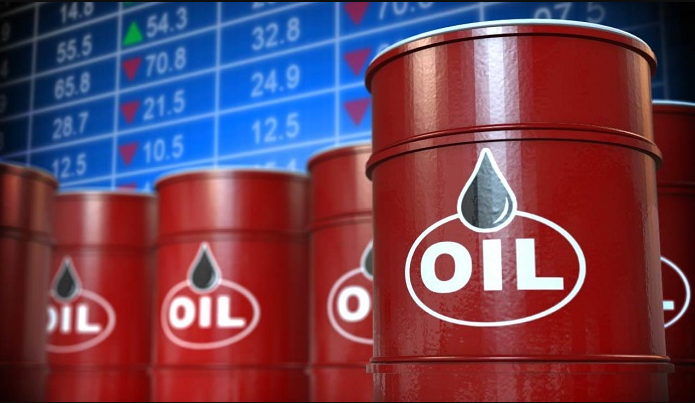
Oil prices plummeted to around $91 on Tuesday after soaring to a more than three-year high in the previous session.
According to Reuters, this came as United States President Donald Trump predicted the war in the Middle East could end soon, easing concerns about prolonged disruptions to oil supplies.
The development may bring some little relief to the globe after almost two weeks of crisis in the Middle East caused by the US-Israeli war against Iran.
What the report is saying
Global oil prices dropped by seven per cent following Trump’s comment on ending the war soon, even though Iran’s reaction does not align.
Also Read
- Brent futures were down $7.15, or 7.2%, at $91.81 a barrel by 1307 GMT, while U.S. West Texas Intermediate (WTI) crude was down $6.26, or 6.6%, at $88.51 a barrel. Both contracts fell as much as 11% earlier in the day.
- Trading volumes in Brent dropped to about 328,000 contracts, the lowest amount since February 27, just before the start of the U.S.-Israeli war on Iran. Volumes in WTI fell to 296,000 contracts, the lowest since February 23.
Oil surged to more than $119 a barrel on Monday, its highest since mid-2022, as supply cuts by Saudi Arabia and other producers stoked fears of major disruptions to global supplies.
Prices later retreated after Russian President Vladimir Putin had a call with Trump and shared proposals aimed at a quick settlement to the war, according to a Kremlin aide, easing concerns about oil supply.
What Trump said
Trump said on Monday in a CBS News interview that he thought the war against Iran was “very complete” and that Washington was “very far ahead” of his initial four- to five-week estimated time frame.
- “Clearly, Trump’s comments about a short-lived war have calmed markets. While there was an overreaction to the upside yesterday, we think there is an overreaction to the downside today,” said Suvro Sarkar, energy sector team lead at DBS Bank.
He added that the market was under-appreciating risks at these levels for Brent.
- “Murban and Dubai grades are still well above $100 per barrel, so practically nothing much has changed in terms of ground realities,” he added, referring to benchmark Middle Eastern oil grades.
Backstory
Iran’s Revolutionary Guards said on Tuesday they would not let any oil be shipped from the Middle East if United States and Israeli attacks continue.
According to Reuters, this prompted President Trump to say the US would hit Iran much harder if it blocked exports.
The rhetoric did little to quell a fall in crude prices and a rally in global shares after Trump hinted that the war may end soon.
- “We are the ones who will determine the end of the war,” a spokesperson said, describing Trump’s comments as “nonsense,” according to state media.
What you should know
Iran on Monday appointed Mojtaba Khamenei as the country’s new supreme leader, succeeding his father, Ali Khamenei. The ongoing conflict involving Iran, the United States, and Israel continues to escalate.
- Analysts believe the move further signals a tightening hardline grip in Iran amid the crisis and appears to run counter to the interests of the Trump-led United States.
- Trump has said US attacks could increase sharply if Iran sought to block tanker traffic through the Strait of Hormuz, which handles one-fifth of the world’s oil supply.
The Strait is the world’s most vital oil export route, connecting the biggest Gulf oil producers with the Gulf of Oman and the Arabian Sea.
The war has already effectively shut the Strait of Hormuz, leaving tankers unable to sail for more than a week and forcing producers to halt pumping as storage facilities fill.