Follow Us on Google Discover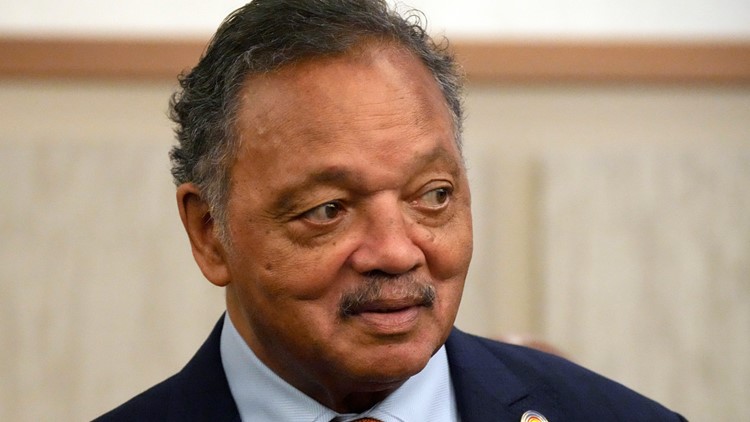
Reverend Jesse Jackson, the iconic American civil rights activist whose global advocacy helped amplify the struggle against apartheid in South Africa, has died at the age of 84.
Jackson passed away on Tuesday, February 17, 2026, according to a statement by his family, who described him as a “servant leader” devoted to the voiceless and marginalised across the world.
Although no official cause of death was disclosed, Jackson had lived with progressive supranuclear palsy for over a decade and had survived multiple hospitalisations related to COVID-19 in recent years.
For South Africans, Jackson’s legacy extends far beyond American politics. At a time when global opposition to apartheid was still fragmented, he emerged as one of the most vocal international figures willing to confront the Pretoria regime head-on, repeatedly labelling it a “terrorist state” and calling for comprehensive economic sanctions.
Also Read
Jesse Jackson’s early life
Born in South Carolina in 1941, Jackson rose from the segregated American South to become one of the most recognisable faces of the US civil rights movement.
- A protégé of Martin Luther King Jr., he was present during the 1968 assassination of his mentor in Memphis an event that shaped his lifelong commitment to racial and economic justice.
- He later founded the Rainbow PUSH Coalition, leveraging boycotts and political pressure to push corporations and governments toward inclusion and reform.
- Jackson’s ties to South Africa deepened in 1979 when he visited the country following the death of Steve Biko. While many Western leaders remained cautious, Jackson openly engaged communities in Soweto and other flashpoints of resistance, using his platform to draw global attention to the brutality of apartheid.
He forged particularly strong bonds with Winnie Madikizela-Mandela, whom he met while she was under a banning order. Jackson often credited her resilience for keeping the anti-apartheid movement alive while Nelson Mandela was imprisoned on Robben Island. When Mandela was released in 1990, Jackson was present in Cape Town, later describing the moment as a triumph not just for South Africa, but for global justice.
His ties with South Africa post apartheid leadership
Jackson also maintained close ties with South Africa’s post-apartheid leadership, including President Cyril Ramaphosa, and was part of the official US delegation at Mandela’s 1994 inauguration.
- In 2013, he received the Order of the Companions of OR Tambo in Silver for his role in advancing South Africa’s liberation.
- In his later years, Jackson remained outspoken about persistent economic inequality, warning that political freedom had not yet translated into economic justice. His message that freedom without equality is incomplete continues to resonate across continents.
Jackson is survived by his wife, Jacqueline, and six children, leaving behind a legacy that bridged struggles in the United States and Africa, and reshaped the global civil rights movement.