Follow Us on Google Discover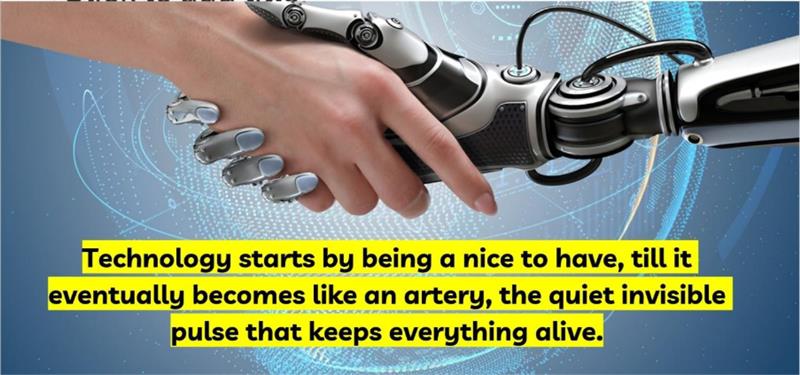
We all know the frustration.
It’s your meeting disconnecting mid-sentence.
It’s the POS terminal failing for the third time when you need it most.
It’s the potential client trying to reach you while you sit in digital silence. It’s the anxiety of a ride-hailing driver unable to find you because the map won’t load.
Whether it’s a student missing a lesson or a vendor waiting for a transfer that won’t go through, they go beyond just technical glitches.
They are missed opportunities and disrupted lives that we may never recover. The digital world is a lifeline until it snaps.
All it takes is one accidental cut, one moment of negligence damaging a fibre cable, to send ripple effects through the entire economy. When the optic data fiber breaks, almost everything stops.
The impact of fiber cuts is affecting everyone.
In addition to network masts, fibre optic cables are the veins of Nigeria’s fast-growing digital economy.
These cables are buried underground, running through roads, bridges, estates, cities, villages, and business hubs. They connect telecom networks, banks, fintechs, data centres, cloud platforms, offices, telcos, and everyday consumers. But as Nigeria expands rapidly — road construction, rail development, power line maintenance, and private building projects — fibre cables are constantly in the line of fire.
Fiber Cuts and downtimes are becoming now common place. According to recent numbers, between January and August 2025 alone, operators recorded 19,384 fibre-cut incidents, 3,241 cases of equipment theft, and thousands of site access denials.
A fibre cut occurs when underground fibre-optic cables are damaged — usually during road construction, drainage works, real-estate development, or outright vandalism and theft.
In Nigeria today, operators record over 1,000 fibre cuts weekly, with tens of thousands of incidents annually.
The financial cost runs into tens of billions of naira every year, but the real damage extends far beyond repair bills that Telecommunication companies bear.
Banks see failed transactions, POS terminals stop working, fintech apps go offline, flights and logistics are delayed, hospitals struggle with digital records, schools lose online access, students access to exams and a results, small businesses lose income they may never recover.
Consumers face poor service, higher data costs, and growing distrust in digital platforms, while repeated outages slow productivity, weaken security systems, and hurt investor confidence. What looks like “bad network” is often broken infrastructure underneath — and in a country depending more on digital services every year, these disruptions are no longer minor inconveniences. They are a growing national risk that touches everyone.
Future at risk
Nigeria is accelerating quickly towards an innovative, digital-first economy, and that future is at risk every time a fibre cable is cut.
This is no longer just a technical problem for telecom engineers — it is a real threat to how money moves, how businesses operate, and how people live.
In a digital economy, constant downtime is not just frustrating — it is dangerous. The cost of ignoring fibre cuts is already rising, and if nothing changes, everyone will keep paying the price.
Telcos and governments are pushing hard, but we need more
Though the challenge facing the sector is escalating, telecom operators and government agencies have not stood still; they are responding with increasing urgency and coordination.
Nigerian Communications Commission (NCC) and Association of Licensed Telecom Operators of Nigeria (ALTON) have worked together with government ministries and security agencies to address the rising menace of fibre cuts in Nigeria.
In February 2025, the Federal Ministry of Works (FMoW) and Federal Ministry of Communications, Innovation and Digital Economy (FMoCIDE), together with NCC, inaugurated a Joint Standing Committee on the Protection of Fibre Optic Cables.
This collaborative approach was aimed at integrating fibre-network protection into roadworks, planning and execution.
This was done to ensure cables aren’t accidentally cut by contractors and guided in their work. This creates a stricter baseline security standard for fibre infrastructure and tower sites.
With this setup, the joint task forces and security agencies are cracking down on vandalism and illegal digging. But the scale of the problem is bigger than regulation and enforcement alone.
Just like electricity, fibre cables run through communities, business districts, construction sites, and neighbourhood streets, places where government and companies cannot watch every minute.
Without the cooperation of contractors, businesses, estate managers, community leaders, and everyday citizens, fibre cuts will continue. Protecting Nigeria’s digital backbone cannot be left to telcos and government alone; it requires everyone who benefits from connectivity to help protect it.
The NCC and ALTON have also embarked on massive awareness campaigns to ensure the people understand and are aware of the impact and implications of the deliberate and unconscious damage and theft of network and optical fibre equipment in and around communities.
Through coordinated and syndicated digital adverts, social posts and SMS across all network providers, they aim to drum up conscious and educated awareness for customers, citizens around communities.
Fibre cables don’t self-cut; most times, someone does it
Fibre cables don’t break on their own. While some cut because of aging and being obsolete, most fibre cuts happen because someone dug without checking, rushed a road job, ignored warnings, an attempt to steal, ransom or people simply didn’t care.
From Private Corporation and Government construction crews to utility contractors and vandals, human action is usually the cause. Some fibre cuts re-occur because some people and communities find it profitable.
That’s why fixing fibre cuts after they happen is not enough; prevention is where the real solution begins.
Once the work of the NCC comes together as the centerpoint of policies, we will see better planning, clear area mapping for business cables, proper permits, coordination between agencies, and real penalties for damage can stop many of these incidents before they happen.
If Nigeria wants reliable connectivity, we must stop treating fibre damage as unavoidable and start treating it as preventable.
We all now have a huge responsibility to make this happen.
The Solution: A shared responsibility framework
Fixing the fibre-cut problem requires everyone playing a clear role. The government must set firm rules, enforce penalties, and coordinate work across agencies. Telcos must invest in better mapping, deeper protection, and network redundancy.
Telcos and network utility partners can begin to explore the possibilities of technology in detection and mapping.
There also needs to be a clear unified fibre mapping to ensure the government and interested parties have access to this mapping to guide construction and utility imperatives. Corporations, construction companies and utility providers must stop digging blindly and treat fibre like any other critical infrastructure.
Communities must protect what runs through their streets and report suspicious activity early. Fibre and Network Vandalism and Theft need to be punished in a way that deters others. Businesses and consumers must support awareness and prevention efforts. No single group can solve this alone, but when each does its part, Nigeria’s digital backbone becomes stronger, safer, and more reliable.
The future vision: Smart protection
The future of fibre protection must go beyond manual repairs and emergency responses. Nigeria needs smarter systems — digital maps of underground infrastructure, mandatory “call-before-you-dig” processes, real-time monitoring, and stronger coordination between telcos, contractors, and government agencies. With better data, planning, and technology, many fibre cuts can be prevented before they happen.
Smart protection is about shifting from reacting to damage to stopping it in the first place — by exploring how AI & IOT systems can detect vibration on the lines before the cut happens—but then, technology cannot fix human negligence.
The Call to Action
Fibre cuts may happen underground, but their impact hits everything above ground — our money, our businesses, our safety, and our future.
Nigeria cannot build a cashless economy, a digital government, or a globally competitive tech sector on fragile networks that are cut every day without consequence.
This is the moment to stop treating network infrastructure and fibre damage as “normal” and start treating it as the national risk it truly is. Government must enforce, telcos must strengthen, businesses must comply, communities must protect, and citizens must speak up. Because in a digital economy, when the fibre breaks, everything else breaks too — and fixing it is a responsibility we all share.
- Adeola Kayode lives at the intersection of Strategy, Marketing, and Technology. He is a Marketing Communications Expert working in the Telecommunications Industry. He spends his time supporting helping businesses and startups grow through clear strategy, meaningful storytelling, squads and systems for Growth. He can be reached at [email protected].