

Electric vehicle charging stations are quietly becoming part of Nigeria’s transport landscape, with a small but growing network of chargers emerging, challenging the long-standing dominance of petrol and diesel.
According to 6Wresearch, Nigeria’s electric vehicle market is expected to grow at a Compound Annual Growth Rate (CAGR) of approximately 6.8% between 2025 and 2031.
Nigeria’s push toward electric mobility is influenced by policy signals and climate commitments.


Under the Energy Transition Plan, the federal government aims to reach net-zero emissions by 2060 by cutting transport emissions, introducing a 10 percent biofuel blend by 2030, and transitioning fully to electric vehicles by 2060
This is also backed by the Federal Government’s National Action Plan for the Development of Electric Vehicles, with the target of the plan being to achieve at least 30% local production of electric vehicles by 2032, a goal that places charging infrastructure at the heart of the transition.
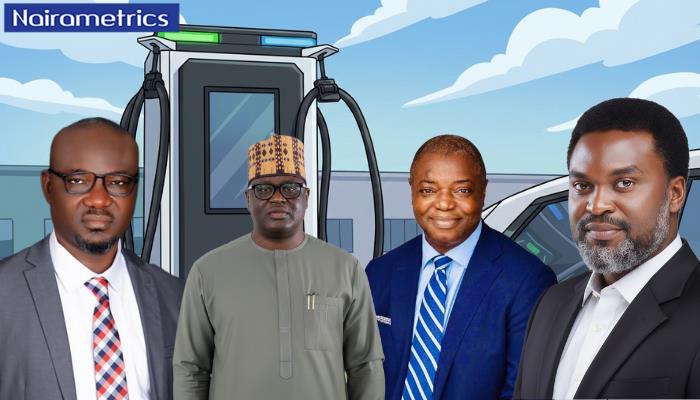
As Nigeria moves toward cleaner transport, key individuals and companies are playing a defining role in how fast electric mobility can take hold with early EV charging networks.
Here are the owners of electric vehicle charging stations who are positioning themselves for the next phase of Nigeria’s transport evolution.
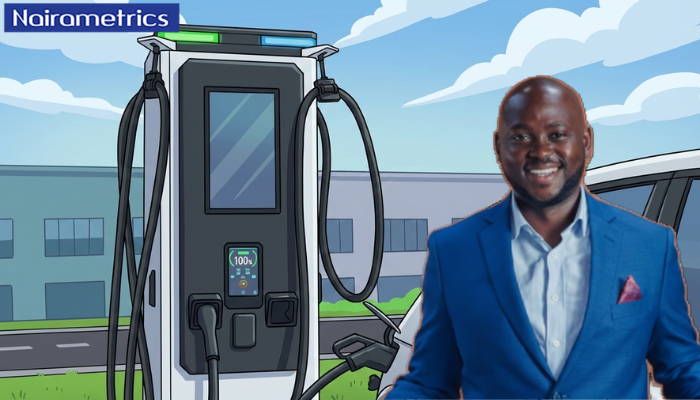
NEV Electric is one of Nigeria’s electric mobility companies, founded by Mosope Olaosebikan.
The company combines local vehicle assembly, fast-charging infrastructure, and innovative financing models to make electric mobility accessible at scale.
He has extensive experience in mobility, technology, and civic innovation, and has previously founded Possible EVs, the Discovery Museum, Art Tech District, and Civic Innovation Lab in Abuja. Olaosebikan holds a Bachelor of Arts in International Relations from Redeemers University.
He is also the Founder of Possible EVs, an African-based company accelerating EV adoption in Nigeria, the Discovery Museum and Art Tech District, which showcases Nigeria’s culture through technology, and the Civic Innovation Lab, Abuja.
His education includes a Bachelor of Arts in International Relations from Redeemers University.
The company focuses on mass transit, micro-mobility solutions, and Pay-As-You-Drive (PAYD) fleet financing, aiming to modernize transport while reducing emissions and has deployed over 120 EV chargers across the nation.
Its state-of-the-art factory produces 500 vehicles monthly, engineered for Nigerian road conditions with over 85% locally sourced components.












Nairametrics is doing great. Keep it up