

Electric vehicle charging stations are quietly becoming part of Nigeria’s transport landscape, with a small but growing network of chargers emerging, challenging the long-standing dominance of petrol and diesel.
According to 6Wresearch, Nigeria’s electric vehicle market is expected to grow at a Compound Annual Growth Rate (CAGR) of approximately 6.8% between 2025 and 2031.
Nigeria’s push toward electric mobility is influenced by policy signals and climate commitments.


Under the Energy Transition Plan, the federal government aims to reach net-zero emissions by 2060 by cutting transport emissions, introducing a 10 percent biofuel blend by 2030, and transitioning fully to electric vehicles by 2060
This is also backed by the Federal Government’s National Action Plan for the Development of Electric Vehicles, with the target of the plan being to achieve at least 30% local production of electric vehicles by 2032, a goal that places charging infrastructure at the heart of the transition.
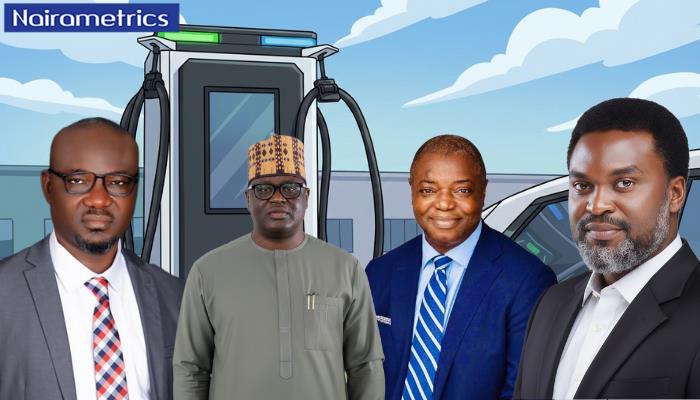
As Nigeria moves toward cleaner transport, key individuals and companies are playing a defining role in how fast electric mobility can take hold with early EV charging networks.
Here are the owners of electric vehicle charging stations who are positioning themselves for the next phase of Nigeria’s transport evolution.
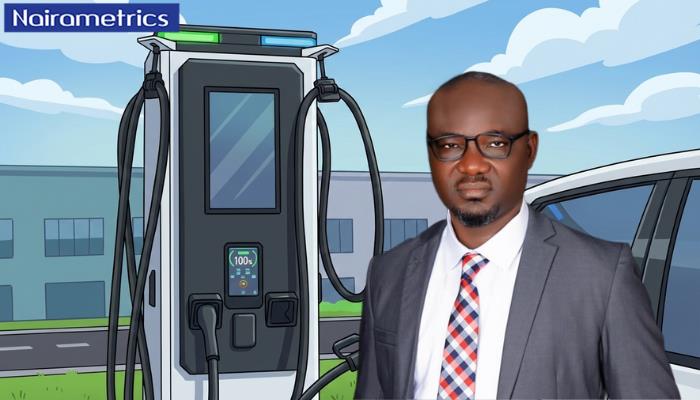
Roxettes Motors, a subsidiary of the Roxettes Group, was founded and led by Kelechi Orji, a Nigerian architect and entrepreneur. The company is a licensed vehicle manufacturer and assembler in Nigeria, producing a wide range of vehicles, including compact and subcompact cars, midsize sedans, SUVs, luxury cars, pickups, and transit buses.
Roxettes also specializes in vehicles powered by electric, hybrid, and compressed natural gas (CNG) technologies, reflecting its commitment to innovation and sustainable mobility across Africa.
Orji earned his BSc, Master’s, and PhD degrees in Architecture from Abia State University before founding Roxettes Motors. Under his leadership, the company operates a factory at the Eco-Drives Green Metropolis (EDGM) in Obuaku Industrial City Free Trade Zone, Abia State, where both electric and traditional fuel vehicles are assembled.
To support EV adoption, Roxettes has five charging stations in key locations across Nigeria. In Lagos, the station is located at 1 Marina Street, Lagos Island; in Enugu at 10 Okpara Square; in Imo State at 89 Nwankwo Square, Orlu; in Anambra at 23 Chuka Lane, Onitsha; and in Abia State at 78 Ifeoma Road, Aba.
Beyond automotive manufacturing, Roxettes Group has expanded into sectors such as construction, fintech, manufacturing, food retail, and real estate.










Nairametrics is doing great. Keep it up