
 Follow Us on Google Discover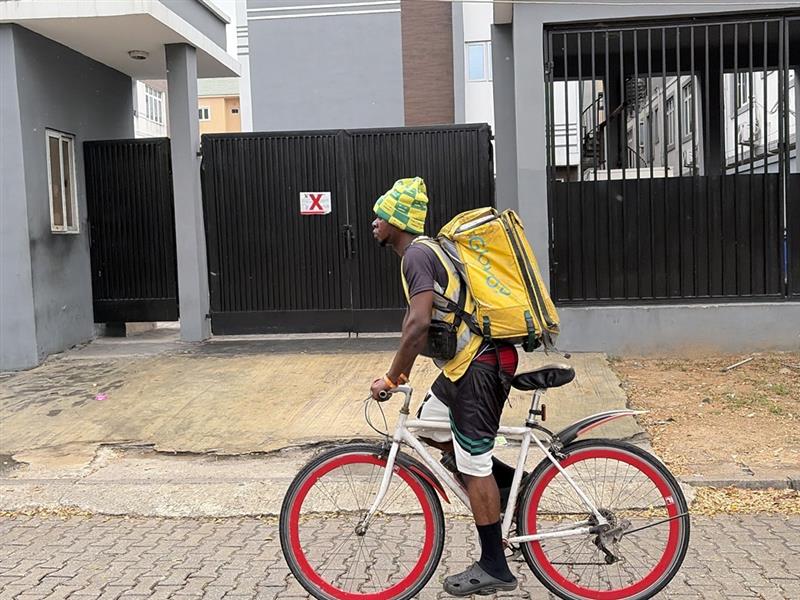
It was about 4 p.m. in Lekki, that familiar hour when the sun still burns but patience has long evaporated.
At the traffic light near Admiralty Way, a white passenger bus, locally known as a korope, revved impatiently as the light flicked green.
Beside it, almost invisible in the visual chaos, a delivery bicycle rider leaned forward, equally eager to beat the gridlock.
The collision that followed was sudden and unsurprising.
The rider sprawled onto the asphalt, bruised but fortunate, helped up by passersby as the bus disappeared into the afternoon traffic, already late for its next stop.
Scenes like this are no longer remarkable in Lagos. Driving in the city has always been a test of temperament, reflexes, and sometimes faith.
Private car owners contend daily with commercial buses that treat traffic laws as optional guidelines, while okada riders often behave as if every road were a racetrack and every junction a suggestion.
Since the ban on motorcycle passenger transport in many parts of the city, these riders have not disappeared.
Instead, they have rebranded. Delivery is now the new hustle, and speed is the currency that keeps it profitable.
The economics are straightforward and unforgiving. The faster you deliver, the more jobs you complete, and the more money you earn. Nairametrics explained this here.
Riders working with major logistics and food delivery platforms can earn between N1,500 and N2,500 per delivery, with some reporting daily earnings north of N25,000.
Bicycle delivery riders, covering shorter distances, earn slightly less but can still make up to N15,000 on a good day.
In a country grappling with high unemployment and underemployment, these figures are understandably attractive. From the rider’s perspective, the risks are simply part of the trade-off.
Yet cities are not meant to function on calculated recklessness. In most modern urban environments, bicycles and motorcycles operate within clearly defined systems.
Dedicated lanes, enforced speed limits, protective gear, and strict penalties create a balance between efficiency and safety.
Riders are visible, regulated, and predictable. Lagos, unfortunately, offers a different reality. Delivery bicycles weave between lanes, ride against traffic, mount sidewalks, and appear suddenly from blind spots.
Many operate on major highways and express roads where they were never intended to be, often without helmets or reflective gear, particularly after dark.
December amplifies everything. “Detty December,” as Lagosians proudly call it, is a season of concerts, weddings, house parties, and endless social gatherings. The city becomes louder, busier, and more impatient.
Consumption spikes, and so does the demand for fast, on-demand delivery. Food, drinks, fashion items, and last-minute purchases must arrive now, not later. Delivery riders respond rationally to this pressure by riding harder, longer, and faster.
The roads, already hostile, become outright dangerous.
What makes this situation more troubling is that much of the risk is structurally encouraged. Some platforms reward riders with higher job allocations if they maintain near-perfect acceptance rates, discouraging breaks and thoughtful refusals.
Others indirectly incentivize dangerous speed by ranking riders on delivery times without sufficiently weighting safety metrics.
During peak periods, some riders work for multiple platforms simultaneously, juggling apps, notifications, and deadlines while navigating some of the most chaotic roads on the continent. This is not resilience; it is systemic risk masquerading as productivity.
To be clear, this is not an argument against delivery work or those who do it. These riders are the arteries of Nigeria’s rapidly growing e-commerce economy, an industry worth billions of dollars and still expanding.
Without them, the promise of convenience collapses at the last mile. Until drones, autonomous vehicles, or other futuristic solutions become practical realities, human riders will remain essential.
The issue is not their presence but the absence of adequate guardrails around their operations.
Responsibility cannot rest solely on government, though regulators certainly have a role to play. Enforcement of existing traffic laws is inconsistent, and infrastructure for non-car road users remains inadequate.
However, the platforms that profit directly from this labor must do more than offer onboarding training and branded jackets.
Continuous monitoring, mandatory safety gear, realistic delivery timelines, enforced rest periods, and insurance coverage should be non-negotiable. Safety should be built into algorithms, not treated as an afterthought.
Riders themselves face disproportionate danger compared to bus drivers or private motorists, simply by virtue of their exposure. One mistake, whether theirs or someone else’s, carries far greater consequences.
Pedestrians, too, are increasingly at risk as sidewalks become unofficial delivery lanes. A city cannot function sustainably when speed consistently trumps safety, and when efficiency is measured only in minutes saved rather than injuries avoided.
Lagos has always thrived on hustle, ingenuity, and controlled chaos. But chaos, when left unchecked, stops being productive. Delivery bikes are not inherently a menace. The system that rewards recklessness is.
If platforms, regulators, and city planners fail to act, collisions like the one in Lekki will remain everyday occurrences, briefly noticed and quickly forgotten. That is not progress. It is negligence moving at full speed.

It’s a heartbreaking irony: the very riders we rely on to bring us comfort are the ones most at risk of losing their lives on the way to our doorsteps. The scene you described in Lekki isn’t just a traffic issue; it’s a symptom of a city trying to run a 21st-century digital economy on 19th-century road logic.
If we want the “menace” to stop, we have to stop treating the riders like the problem and start looking at the invisible pressure that’s pushing them into traffic.
The real solution isn’t just more “don’t do it” posters or police crackdowns. It’s about changing the math of the hustle. Right now, the algorithm is the boss, and it only speaks one language: speed. Here is how we actually fix this:
Humanize the Algorithm: Platforms need to stop penalizing riders for being stuck in “Lagos-style” traffic. If a rider chooses to wait for a light or avoid a sidewalk, the app shouldn’t punish their rating or lower their next payout. We need “Safe-Arrival” windows, not “Instant-or-Else” deadlines.
The “Litre of Fuel” Benefit: Instead of just branded jackets, companies should provide high-vis gear that actually works—like LED-integrated vests—and subsidize health insurance as a standard, not a perk. When a rider feels valued, they’re less likely to drive like they’re disposable.
Micro-Infrastructure: We don’t need a ten-year highway project. We need “Delivery Pockets” in high-density areas like Admiralty Way—small, off-road zones where riders can wait for orders without clogging sidewalks or darting out from behind buses.
Ultimately, as customers, we have to look in the mirror too. We can’t demand a “Detty December” meal in 15 minutes and then complain about the rider who broke three laws to get it to us.
If we want safer roads, we have to be willing to wait five more minutes for our jollof. We have to value the human on the bike as much as the package on the rack.