Follow Us on Google Discover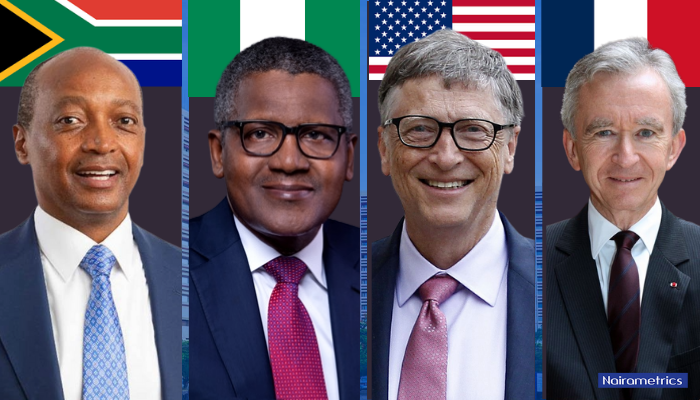
There are six high-profile business leaders whose decisions resonate and may shape global economies and policy decisions in 2026, according to Financial Derivatives Company (FDC) Limited.
Beyond their companies, their sphere of influence can shape commodity prices, investor sentiment, technology adoption, and even government policy priorities. Note that the list is not limited to these six alone.
At the latest edition of LBS Breakfast Session, FDC Chief Executive Officer, Mr. Bismarck Rewane, listed the six multi-billionaires, including:
- Patrice Motsepe – South African
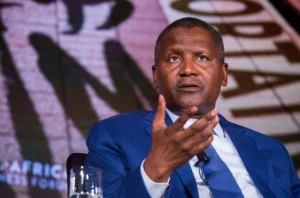
- Aliko Dangote – Nigerian
- Mukesh Ambani – Indian
- Bill Gates – American
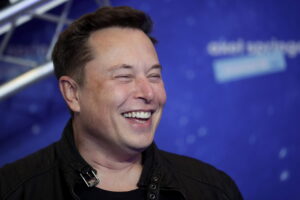
- Elon Musk – South African– American
- Bernard Arnault – French
What FDC is saying:
The financial advisory and economic research firm is saying that by 2026, global economic outcomes will increasingly be shaped not only by governments, but by private capital decisions made by individuals whose businesses operate across borders.
Yet they remain rooted in national economic realities of their specific countries and regions.
The mix of high-net-worth individuals is drawn from strategic sectors including mining, energy, telecoms/consumer goods, software/philanthropy, electric vehicles/space, and luxury.
These are industries that tend to shape global headlines and shifts in macro conditions. And in 2026, with tighter capital allocation, increasing geopolitical competition, and fast-moving technology cycles, the actions of these figures may matter even more than usual.
Patrice Motsepe
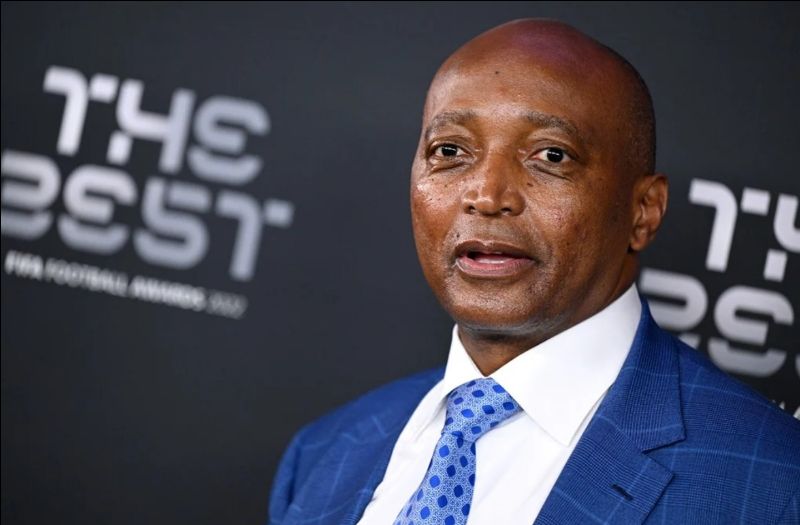
He is the founder and executive chairman of African Rainbow Minerals (ARM) and CAF chairman, with net worth listed as $3 billion.
Background and influence:
Patrice Motsepe is one of South Africa’s most prominent mining entrepreneurs. Through ARM, he built a major footprint across minerals critical to industrial output—exactly the kind of exposure that becomes more strategic when the world talks about energy transition minerals, supply-chain resilience, and resource nationalism.
Beyond mining, Motsepe’s profile extends into continental visibility via sport administration (CAF). That role keeps him in rooms where corporate interest, public policy, sponsorship money, and national priorities often intersect, especially in Africa.
He is right at the centre of big-ticket infrastructure and extractive industries and frequently sit close to government decision-making.
Why he’s one to watch in 2026
Commodity cycles:
Mining earnings can swing sharply with prices
Any major strategic shift (acquisitions, divestments, new projects) can alter how investors view Africa’s resource plays.
Africa’s industrial push:
As African countries push local value-addition (processing, refining), large mining groups are pressured to invest domestically rather than simply export raw output.
Soft power and capital:
Motsepe’s influence criss-crosses business and public visibility, which can support fundraising, partnerships, and cross-border expansion.
Aliko Dangote
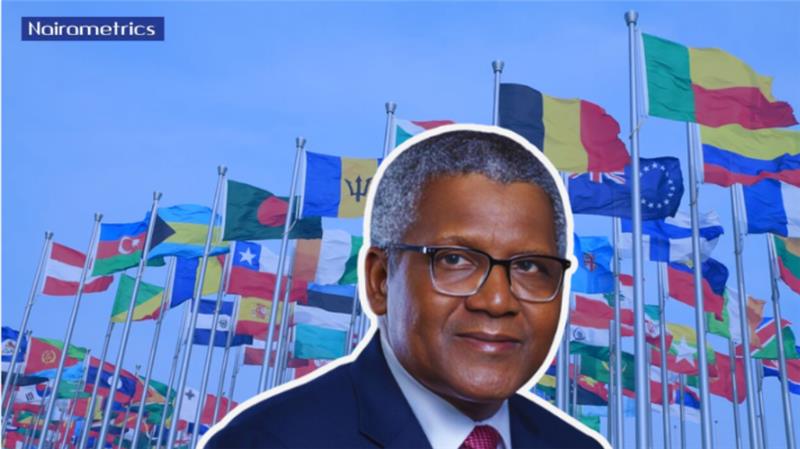
He is the founder and chairman of Dangote Group. His net worth, according to Forbes, stood at $26 billion and an estimated $68 billion.
Background and influence:
Aliko Dangote is widely regarded as Africa’s most consequential industrialist. His empire spans cement, sugar, salt, fertiliser. Most notably, in the current year, Dangote became better known with his Dangote Petroleum Refinery and Petrochemicals project in Lagos.
His importance is not only about personal wealth, but about how his businesses plug into Nigeria’s fundamentals: energy supply, import substitution, FX demand, logistics, and industrial jobs.
In practical terms, major operational wins or setbacks around refining, fuel distribution, and product pricing can spill into broader conversations about inflation, the naira, and manufacturing competitiveness.
Why he’s one to watch in 2026
Refinery execution and market structure:
The year 2026 could be a defining year for sustained capacity utilisation, product mix, and pricing influence, especially as Nigeria debates what a “competitive” downstream market should look like.
Capital-market implications:
Any credible stock listing event, debt refinancing, or large-scale funding move can reshape investor expectations. And Dangote is expected to list a portion of his entities. If it happens, it can change how Nigerians think about “big industrial” equities.
Policy interplay:
Large refining and petrochemical operations naturally intersect with regulation, FX dynamics, and infrastructure bottlenecks—meaning business performance can become a national conversation.
Mukesh Ambani
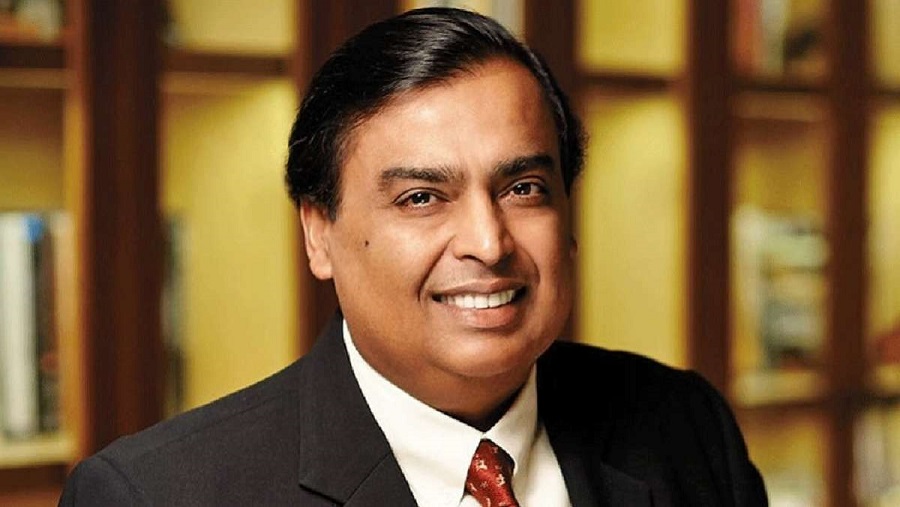
He is the Chairman and largest shareholder of Reliance Industries, with a net worth listed as $104 billion.
Background and influence:
Mukesh Ambani oversees Reliance Industries, one of India’s most powerful conglomerates—touching energy, petrochemicals, retail, and telecoms.
Reliance’s telecom arm (via its ecosystem) has been central to India’s mass digital inclusion story, while its retail footprint influences consumer supply chains at huge scale.
Ambani’s influence is magnified by how Reliance tends to operate: large capital commitments, aggressive expansion, and ecosystem-building—where telecom, payments, content, and retail reinforce each other.
Why he’s one to watch in 2026
Tech and consumer convergence:
In many emerging markets, the most valuable companies are those that sit at the intersection of data, distribution, and daily spending.
Energy transition strategy:
Reliance’s energy background means its future bets, whether in cleaner energy, efficiency, or new industrial capacity, can influence investor expectations for India’s broader transition.
Competitive pressure:
Big moves in telecom and retail often trigger industry-wide reactions, affecting pricing, margins, and innovation pace.
Bill Gates
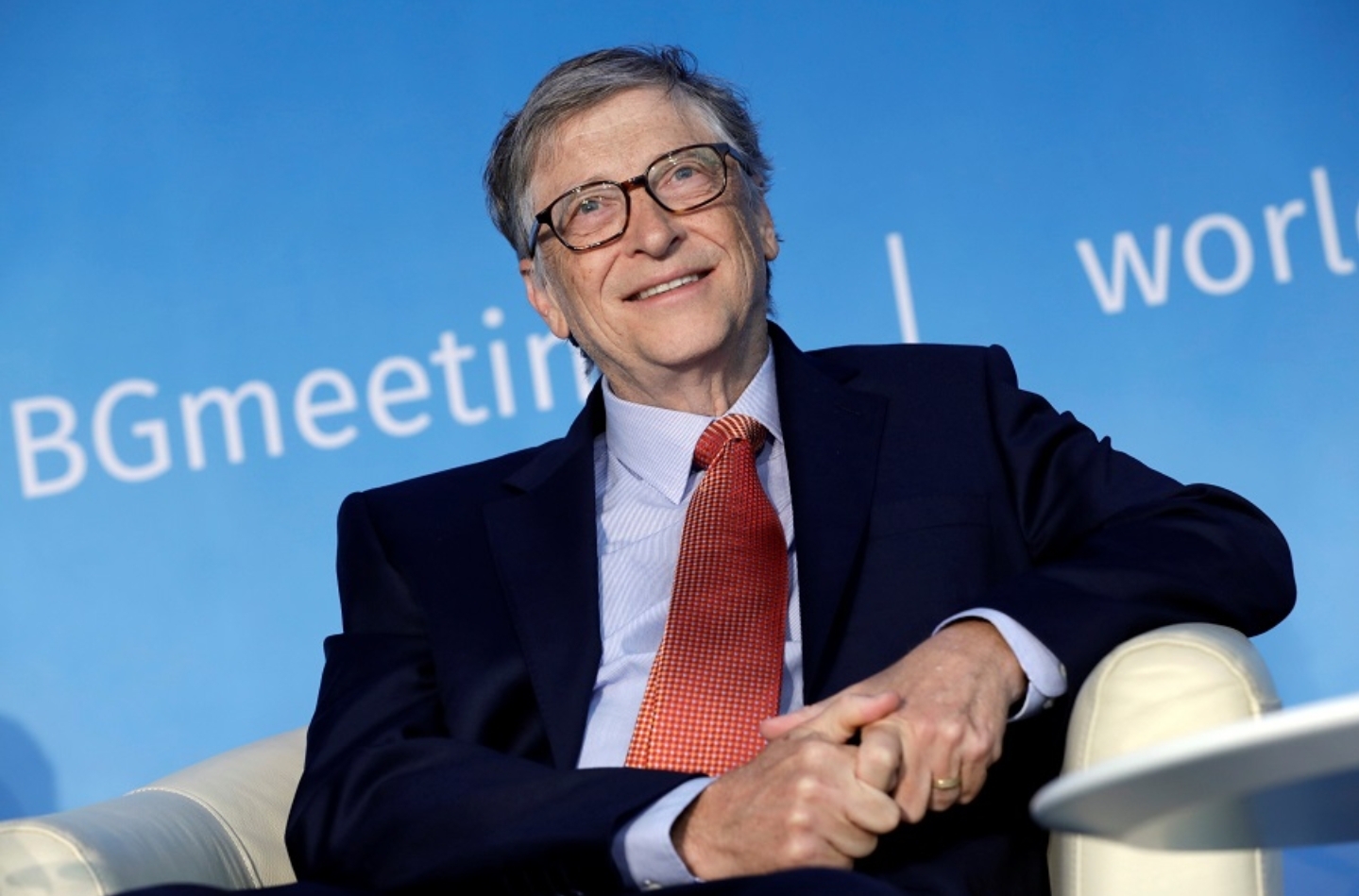
He is the co-founder of Microsoft and a principal investor, with net worth listed as $105 billion.
Background and influence:
Bill Gates remains one of the most influential figures in global technology and philanthropy. His direct operational role at Microsoft is history, but his impact persists through:
- long-term investment approaches,
- public positioning on innovation and global development, and
- philanthropy platform that shapes global health and education priorities.
In the public mind, Gates still functions as a symbol of “big tech solutions”: how technology scales, how platforms shape society, and how private capital participates in public problems.
Why he’s one to watch in 2026
AI governance and credibility:
As AI moves from hype to policy and implementation, voices with technical history and institutional reach often get louder in shaping AI discourse.
Health and development funding priorities:
Shifts in philanthropic focus can influence which global problems receive momentum. Gates is well known for health and development funding.
Tech investment cycles:
Even without running a company day-to-day, Gates’ positioning can move narratives—especially around what matters next after the initial AI surge.
Bernard Arnault
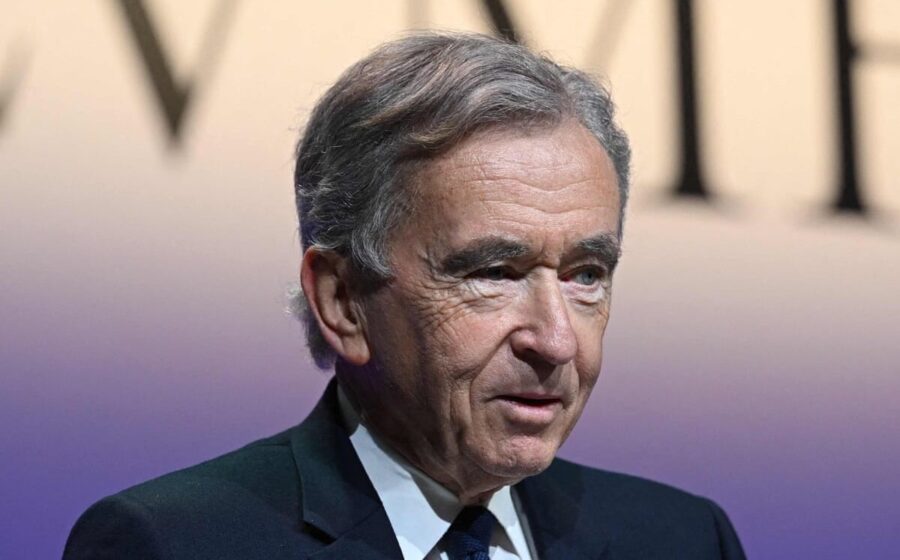
He is the Chairman and controlling shareholder of LVMH, with net worth listed as $182 billion.
Background and influence
Bernard Arnault leads LVMH, the world’s dominant luxury group, spanning fashion, leather goods, watches, jewellery, wines, spirits, and beauty. Luxury is often misunderstood as “soft,” but it is a serious economic indicator. It tracks global consumer confidence, wealth effects, tourism flows, and aspirational spending.
Arnault’s influence lies in brand-building discipline, acquisitions, and maintaining pricing power across multiple cycles.
Why he’s one to watch in 2026
Global demand signals:
Luxury performance often reveals where wealth is concentrating—and how resilient high-end consumption remains under interest-rate or geopolitical pressure.
China, US, and travel dynamics:
Luxury groups are highly sensitive to travel recovery patterns and consumer mood in key regions.
Brand premium under scrutiny:
When consumers tighten belts, the real test becomes whether brands can defend margins without losing momentum.
Elon Musk
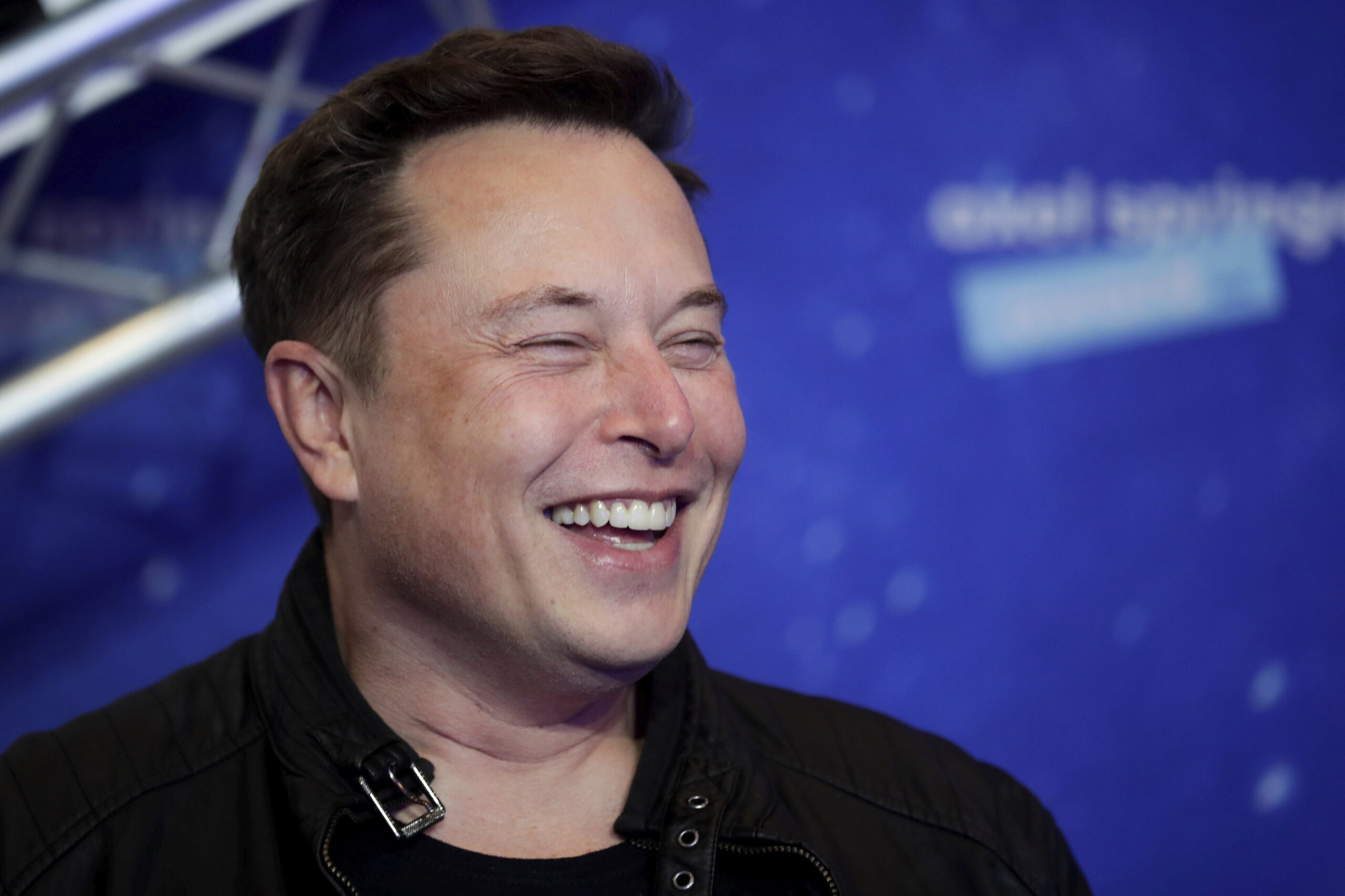
He is the CEO and major shareholder of Tesla and founder of SpaceX. Networth is listed as estimated $1 trillion, but Forbes listed $485 billion.
Background and influence
Elon Musk is arguably the most market-moving individual entrepreneur of the current era. His companies sit in sectors where expectations are emotional and capital-intensive: electric vehicles, space launch, satellite connectivity, AI ambitions, and platform-like technology bets.
Musk’s influence is not only operational; it is narrative-based. Markets react to him because he can pull attention, talent, and funding towards his priorities faster than traditional corporates.
Why he’s one to watch in 2026
EV competition and margins:
Tesla’s standing is constantly judged against global competitors, pricing pressure, and delivery performance.
Space and satellite economics:
SpaceX and satellite infrastructure shape connectivity, defence partnerships, and commercial launch markets.
Regulation and public discourse:
Musk tends to force governments and regulators into response mode—whether on technology, speech, safety, or competition.
Outlook of 2026 with the Big Six
These “big six billionaires” tell a clear story: 2026 is likely to reward scale, infrastructure, and ecosystems—whether that is mining supply chains, refining capacity, telecom distribution, AI-driven productivity, space connectivity, or brand power.
It also implies something else: the market may pay less attention to “noise” and more to operators who can execute at scale—because execution is what typically separates headlines from lasting impact.