
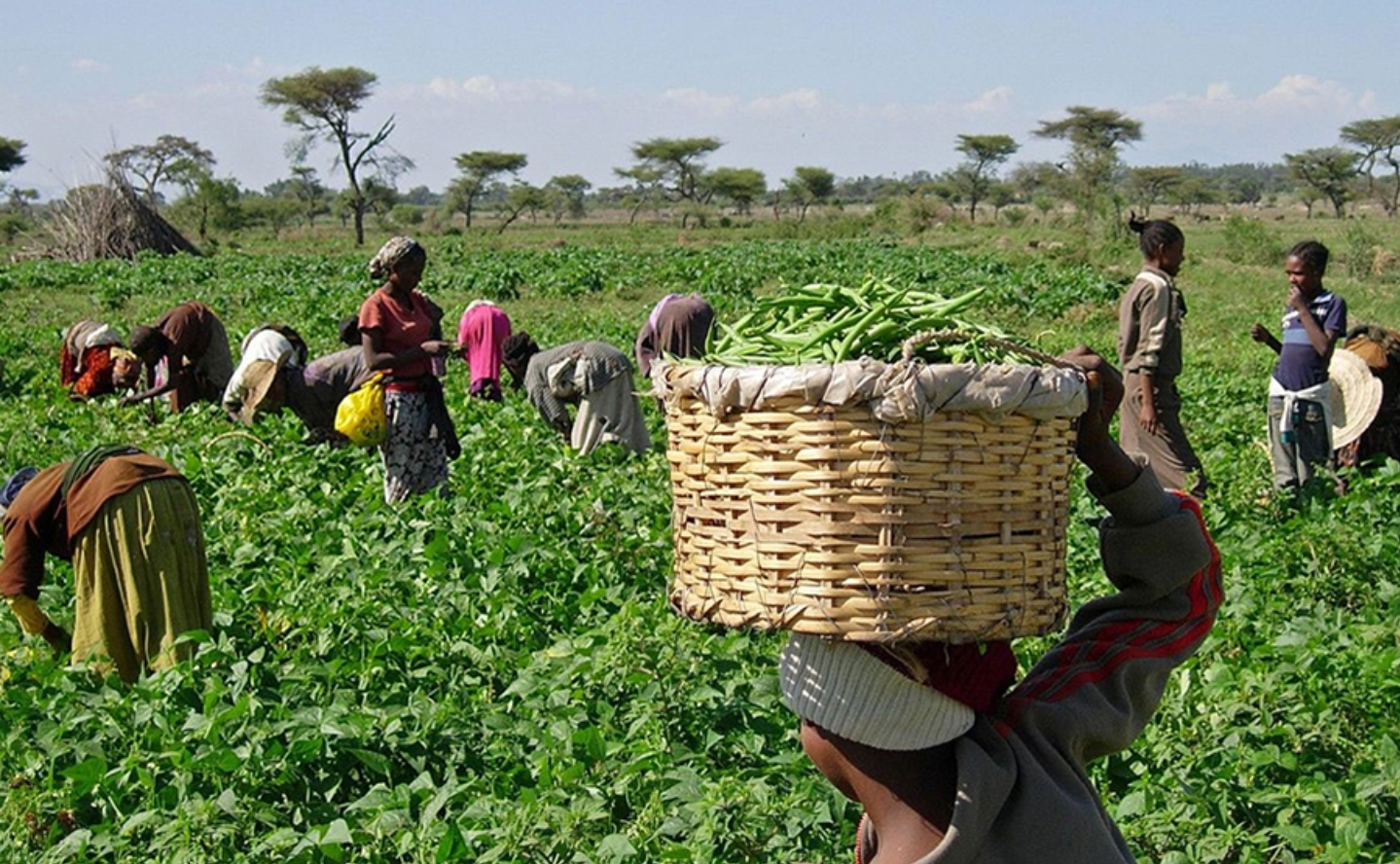
ARN Foods Limited is a Nigerian agro-commodity trading and food-processing company incorporated in 2019.
The company operates across the trading, logistics, and storage of key agricultural commodities, including rice, maize, sesame seeds, soya beans, cocoa, and sorghum, competing with established agro-traders such as Olam Nigeria and other regional grain aggregators.
Beyond commodity trading, the company is expanding food processing to support growth and margin improvement.


A key milestone is the development of a privately owned rice mill in Itunu City, Epe, Lagos, with a processing capacity of 192 tonnes of paddy per day. The facility is expected to strengthen value capture, support local employment, and enhance supply to the Lagos consumption market.
To fund working-capital needs, the company has launched a N7 billion Series 1 Commercial Paper under its N15 billion CP Programme, marking a return to the short-term debt market after the successful redemption of its debut paper.
The offer, which is open to eligible investors, is expected to close on Wednesday, December 17, 2025, according to the programme documents.
Key details of the issuance
- Tenor: 364 days
- Discount rate: 19.36 per cent
- Effective yield: 24.0 per cent
- Minimum subscription: N5 million and multiples of N1,000 thereafter
Based on a N5 million investment, an investor would earn about N1.2 million over the tenor, bringing the total maturity value to roughly N6.2 million.
Track record in the CP market
The new programme succeeds ARN Foods’ N5 billion CP Programme registered in 2024, under which the company raised N3.86 billion in its debut Series 1 issuance.
Although the original target was N3 billion, the offer was oversubscribed.
Notably, the company fully repaid investors on November 7, 2025, three days ahead of the scheduled maturity date of November 10, reflecting a repayment discipline and commitment to debt investors.
That repayment history sits alongside a balance sheet that has changed meaningfully over the past year.
- At the end of 2024, ARN Foods carried limited interest-bearing debt of N175 million, at a time when profits were rising and financing costs remained manageable.
- Earnings were more than sufficient to meet interest obligations, providing a comfortable buffer.
By the third quarter of 2025, borrowing had increased sharply to N2.31 billion.
This shift pushed interest costs higher and narrowed the margin of safety between earnings and finance charges.
While profits in the nine-month period were still adequate to cover interest payments several times over, the cushion was notably thinner than in the previous year.
Put simply, ARN Foods is now more leveraged than it was in 2024, introducing a different risk profile.
The company is no longer operating with excess balance sheet slack, but neither is it under immediate strain.
Its ability to service short-term obligations now depends more heavily on steady cash flows and smooth execution of its growth plans as a key consideration for the current commercial paper issuance.
Revenue, profit and cash flow trends
So far, the operating numbers suggest the business is still generating scale.
- Revenue grew from N3.62 billion in 2023 to N5.52 billion in 2024, reflecting strong demand across its agro-commodity trading and logistics activities.
- That momentum continued into 2025, with N4.29 billion recorded by the third quarter, keeping the company on pace for another high-revenue year.
Profitability has followed a similar path.
- Net profit rose to N746 million in 2024, up from N510 million a year earlier, while ₦697 million was recorded by Q3 2025, indicating that earnings have remained resilient despite higher financing costs and expansion-related pressures.
More importantly for short-term debt investors, cash generation has remained positive.
- Net cash flow from operating activities stood at N2.09 billion in 2024, before moderating to N658 million by Q3 2025.
- While the slowdown reflects heavier working-capital demands, operations are still producing cash.
Taken together, the picture is of a business that is still growing and profitable but now operating with less room for error than in the past.
Revenue momentum and operating cash flow provide support for the commercial paper, but the increased reliance on debt means sustained execution matters more than before.
For investors, the ARN Foods commercial paper ultimately comes down to a simple question: can the company keep cash flowing steadily over the next year, because that is what will pay for this paper?
Yield versus risk
On a 24.0% return, the ARN Foods commercial paper also stands out in today’s market.
- The yield is well above Nigeria’s inflation rate of 16.05 per cent and higher than the average return on Federal Government risk-free instruments, which are currently below 18%.
- In effect, investors are being paid a clear premium for taking on corporate risk over a short one-year period.
But is the risk worth taking? That depends on how investors weigh the higher return against the company’s credit standing.
ARN Foods is rated BBB+ on the long term and A2 on the short term by DataPro Limited, placing it in the investment-grade category for Nigerian corporate issuers.
- In practical terms, the rating agency views the company as having a reasonable capacity to meet its obligations, while also noting that its financial strength could be affected if operating conditions weaken or expansion plans fall behind schedule.
For commercial paper investors, the A2 short-term rating is particularly relevant.
It signals that, despite higher borrowing than in previous years, ARN Foods is still viewed as capable of meeting near-term payment obligations.
The rating does not remove risk, but it suggests that the 24 per cent yield is being paid on a business that remains creditworthy, rather than one under financial strain.