Follow Us on Google Discover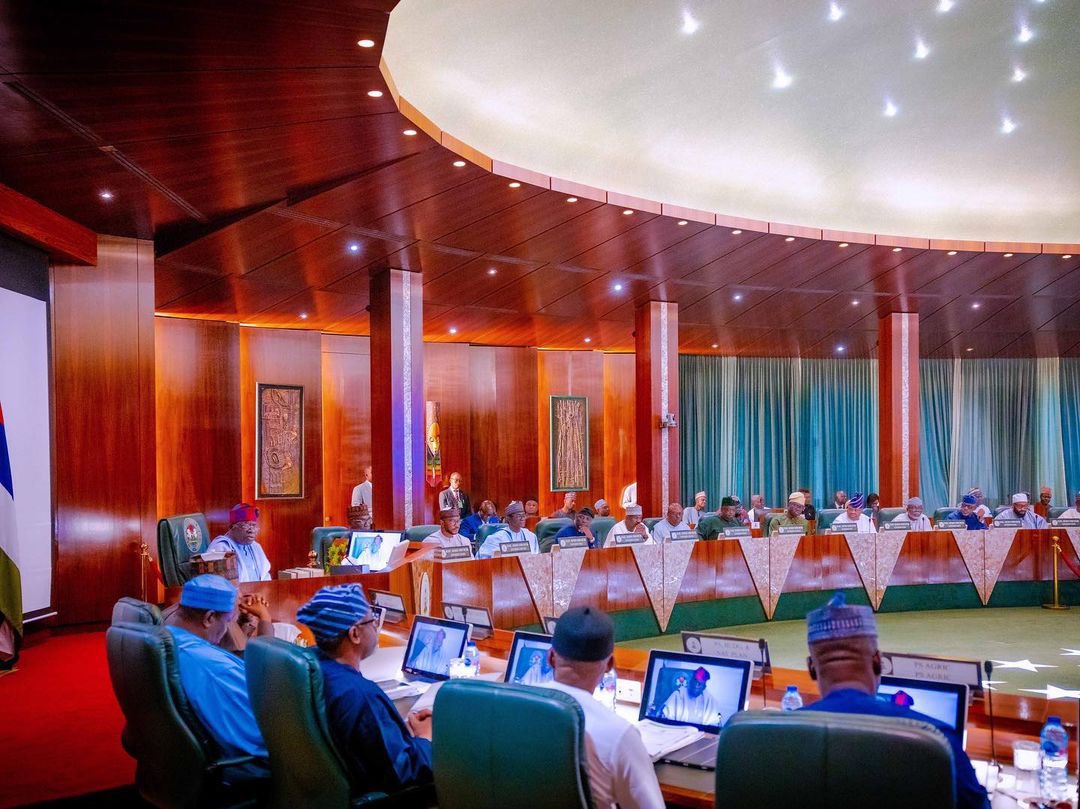
The Federal Executive Council (FEC) has approved the upgrade of remote-controlled Very High Frequency (VHF) radio systems at Lagos, Abuja, and several other airports to improve communication reliability and boost air safety.
The Minister of Aviation and Aerospace Development, Mr Festus Keyamo, announced this after the FEC meeting chaired by President Bola Tinubu in Abuja on Wednesday, according to the News Agency of Nigeria.
He said the upgrades are part of a broader plan to modernise Nigeria’s aviation infrastructure and ensure safer, more efficient air travel.
Keyamo explained that the VHF radio systems, which enable pilots and air traffic controllers to communicate clearly during takeoff, landing, and flight, will be replaced or enhanced at nine airports. These include Lagos, Port Harcourt, Ilorin, Abuja, Kano, Maiduguri, Sokoto, Wukari, and an additional Abuja site.
Also Read
“We are upgrading VHF radio systems in Lagos, Port Harcourt, Ilorin, Abuja, Kano, another Abuja site, Maiduguri, Sokoto and Wukari airports,” he said.
More insights
The minister added that the council approved the installation of an aeronautical frequency monitoring and interference detection system.
This system, he noted, will strengthen communication integrity and reduce the risk of miscommunication between pilots and ground controllers.
Keyamo further revealed that FEC’s aviation approvals include advanced surface movement guidance systems and biometric-enabled e-gates at all international airports to enhance passenger processing.
What you should know
Over the past months, the Federal Executive Council (FEC) has made significant approvals for major upgrades across Nigeria’s airports.
In August, the council approved N987 billion for nationwide airport infrastructure projects.
Lagos’ Murtala Muhammed International Airport (MMIA) received the largest allocation of N712.26 billion as part of this plan.
- The upgrade of MMIA will involve a complete rebuild of Terminal One, which was originally constructed in 1979 and now houses Wings D and E. Years of neglect have left the terminal obsolete.
- The project will strip the building to its structural frame, reconfiguring it into a modern terminal that meets global standards.
- The plan also includes expanding Terminal Two, enlarging the aircraft apron to accommodate more wide-body jets, and constructing two dedicated ring roads for arrivals and departures.
- Additionally, a new bridge will link passengers directly to the upper floor of the departure lounge, improving access and easing traffic flow.
The approvals aim to modernise Nigeria’s aviation infrastructure to provide safer, more efficient, and higher-quality airport services.