Follow Us on Google Discover
African female startup founders entered 2025 with the same determination that has long defined their place in the continent’s tech ecosystem.
Despite operating in markets where investor confidence has been uneven and capital flows remain tight, these women still managed to carve out room for themselves, securing funding rounds that signalled both resilience and ambition.
Their progress was not loud, but it was steady enough to cut through a landscape that often overlooks their contributions.
According to recent data from Africa: The Big Deal, only about 2% of total funding in the first quarter went to female‑led startups, a mere US$10 million out of US$460 million raised.
Also Read
Between January and September 2025, these female-led ventures raised a combined $45.4 million, a figure that may not rival the continent’s biggest rounds but stands out in a year marked by caution and shrinking investment appetite.
This amount raised so far this year highlights the scale of the gap that remains. These founders are building beyond the odds, delivering solutions rooted in African markets and navigating environments that rarely give them the benefit of the doubt.
Here are the female startup founders who raised funding $1million and above by September 2025.
Dabchy– $1 million

Dabchy is a Tunisian peer-to-peer online fashion marketplace where users can buy and sell new and pre-owned clothing, accessories, and beauty products startup co-founded by Ameni Mansouri, Ghazi Ketata and Oussama Mahjoub.
The startup leverages innovative tech solutions to streamline online shopping and enhance customer experiences, aiming to address challenges in e-commerce logistics and accessibility across Tunisia and the broader North African region.
The company in February raised $1 million in a Pre-Series A funding round, attracting investment from Janngo Capital, Renew Capital, and a group of angel investors.
The $1 million investment will be used to expand Dabchy’s platform to new markets, broaden its product offerings, and enhance its platform for a growing user base.
SalphaEnergy – $1.3 million

Salpha Energy is a Nigerian clean‑energy company founded by Sandra Chukwudozie, dedicated to expanding access to affordable solar power in underserved and off‑grid communities across Nigeria.
The company assembles and distributes turnkey solar home and commercial systems from 150 Wp up to 100 kWp, often bundled with battery storage and smart inverters.
Their technology enables efficient energy distribution, supports economic activities in off-grid regions, addressing critical infrastructure gaps in Nigeria’s energy sector. These systems power homes, schools, clinics, small businesses, and other essential infrastructure.
Salpha Energy raised $1.3 million in debt financing, supported by All On, a Shell-funded investment company focused on Nigeria’s off-grid energy market.
The purpose of the funding is to scale deployment of Salpha’s energy expand their reach to more communities, and strengthen operational capacity to deliver reliable off-grid services.
Liquify – $1.5 million

Liquify is a Ghanaian digital invoice‑financing platform for African exporters. It was co‑founded by Nadya Yaremenko (CEO) and Alberta Asafo-Asamoah (Co‑founder). The platform aims to help SMEs across Africa convert export invoices into immediate working capital, rather than waiting weeks or months for payments.
Liquify’s platform allows exporters to upload unpaid invoices; the system then performs onboarding, KYC/AML checks, credit assessments, and investor settlement, all digitally. This lets exporters receive funds within hours, instead of weeks, while offering global investors access to short-term, lower‑risk investment opportunities backed by real trade flows.
Since launching the platform’s beta in late 2024, Liquify has processed over 150 transactions, totalling around $4 million in invoice volume. The startup raised $1.5 million in an oversubscribed seed round led by Future Africa, with participation from Launch Africa Ventures, 54 Collective (formerly FFA), Digital Africa, Equitable Ventures and angel investors.
The fund will be used to expand its Ghana hub, into both Anglophone and Francophone markets, and upgrade its AI tools for due diligence and credit checks.
Farm to Feed – $1.6 million

Farm to Feed is a Kenyan agritech startup focused on reducing food waste and post-harvest losses.
The company was founded by Claire van Enk, with co-founders Anouk Boertien and Zara Benosa, with the mission to connect farmers with surplus or cosmetically imperfect produce to buyers, turning potential losses into profitable, sustainable supply chains.
Farm to Feed operates a digital platform that aggregates produce from smallholder farmers, including items often rejected for appearance or surplus. The company sorts, grades, and delivers the produce to institutional buyers such as restaurants, schools, and food processors, or converts it into semi-processed products. This model helps farmers increase income, improve food availability, and reduce waste in Kenya’s food system.
Farm to Feed raised $1.6 million in seed funding, backed by Delta40, Catalyst Fund, DEG (Germany), Draper Richards Kaplan Foundation, Holocene, 54 Collective (ex-FFA), Marula Square, and angel investors.
The purpose of the funding is to expand the company’s operations, onboard more farmers, enhance logistics, improve the digital platform, and develop semi-processed product lines to reach more buyers.
Altera Biosciences – $1.6 million

Altera Biosciences is a South African biotech startup working to enable off-the-shelf cell and gene therapies for a global market.
Altera was co-founded by Alexandra Miszewski (CEO) and Professor Michael Pepper (Chief Scientific Officer), combining entrepreneurial acumen with deep immunology and cellular-medicine expertise.
The company is building a “universal donor cell” platform, using gene-silencing and advanced cell engineering to remove immune-compatibility barriers. This could allow donor cells or tissues to be transplanted across genetically diverse patients without rejection risk.
In July 2025, Altera closed a pre-seed round raising US$1.6 million (about R29 million), led by OneBio Venture Studio and E Squared Investments.
The funding will support lab research and development, recruitment of translational-science talent, and early efforts to validate the universal donor-cell platform
WeThinkCode– $2 million

WeThinkCode is a South African tech‑education startup (academy) focused on closing the continent’s tech skills gap. The organisation was co‑founded by Nyari Samushonga, along with co‑founders Justinus Adriaanse and Camille Agon.
WeThinkCode offers tuition‑free, aptitude‑based training in software development and emerging technology skills, targeting young people — including those from underserved backgrounds. The academy’s model emphasises making quality tech education accessible and equipping learners with work‑ready skills rather than simply academic credentials.
In June 2025, WeThinkCode secured a $2 million grant from Google.org to expand its curriculum into artificial intelligence (AI) training. The grant is to empower up to 12,000 youth across South Africa and Kenya with vital AI skills by 2026.
With this funding, WeThinkCode plans to roll out a free, extracurricular AI programme — courses will last 40 to 80 hours and include two tracks: one for aspiring software engineers, and another for non‑tech professionals (in sectors such as legal, education, and health) looking to integrate AI tools into their workflows.
Neopenda– $2.6 million

Neopenda is a Ugandan healthcare startup focused on improving neonatal care in low-resource settings. The company was founded by Sona Shah(CEO), alongside co-founder Teresa Cauvel(CTO), with the mission to reduce infant mortality through innovative health technology solutions.
Neopenda develops wearable medical devices that monitor vital signs of newborns in hospitals and clinics. Their technology enables healthcare providers to detect early signs of complications, improving response times and patient outcomes. The company addresses critical gaps in neonatal care, particularly in regions with limited medical resources, positioning itself as a leader in pediatric health innovation in Africa.
Neopenda raised $2.6 million in a Venture Round through the crowdfunding platform WeFunder. The funding round attracted contributions from individual investors passionate about health tech solutions in emerging markets.
The purpose of the funding is to scale production of their neonatal monitoring devices and expand outreach to more hospitals and clinics.
BidhaaSasa – $2.6 million

Bidhaa Sasa is a Kenyan energy, water, and household-goods distribution startup co-founded by Rocio Perez Ochoa and David Disch. The company aims to improve living standards in rural Kenya and Uganda by making clean energy, cooking, and household goods affordable and accessible — especially targeting low-income families and women.
The company uses a “women-to-women” sales model and offers flexible payment plans, allowing clients many with limited access to traditional credit to acquire solar lamps and systems, efficient cook stoves, LPG kits, water-storage equipment, and other essential household items. Products are delivered to homes, and payment is made over time via mobile money.
Bidhaa Sasa raised $2.6 million in grant funding from Modern Cooking Facility for Africa (MCFA) to scale distribution of electric cooking appliances.
With such support, Bidhaa Sasa plans to scale distribution of clean-cooking and energy products across rural areas, deepen customer training and after-sales support, and expand reach to more underserved households.
Kasha – $4 million
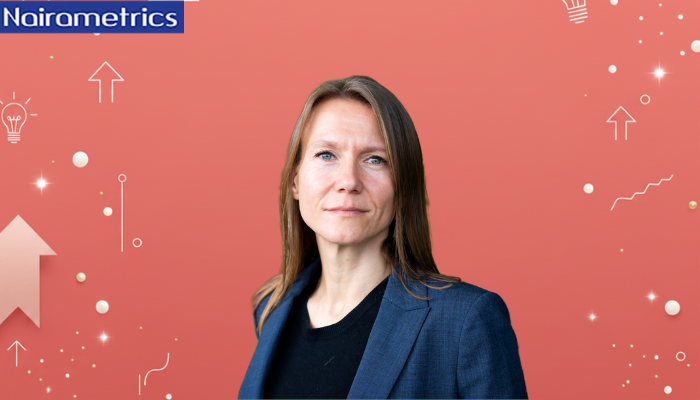
Kasha is a Rwandan e-commerce and retail-health startup. It was founded by Joanna Bichsel. The company’s mission is to improve access to health and personal-care products, especially for women, through an online platform and last-mile distribution across Rwanda and beyond.
Kasha operates a digital retail platform that delivers pharmaceuticals, sanitary and hygiene products, maternal and reproductive-health items, and other household essentials. The company serves a broad customer base, individual consumers, small retailers, pharmacies, clinics and hospitals offering discreet ordering (via web, mobile or USSD) and delivery, often targeting underserved or hard-to-reach populations.
Kasha raised $4 million in a venture round, backed by Boehringer Ingelheim.
The funding is intended to support Kasha’s growth, likely to scale its distribution network, expand reach, and improve its ability to deliver health and personal-care products across more markets.
Jetstream – $5 million

Jetstream Africa is a Ghana-based e-logistics and trade-finance startup focused on simplifying cross-border trade and supply-chain financing for African importers and exporters. The company was co-founded by Miishe Addy (CEO) and Solomon Torgbor (COO) in 2018.
Jetstream provides an integrated platform combining logistics, freight forwarding, and trade financing. It allows cargo owners to book and monitor shipments, and offers working capital financing for entire shipments, paying vendors directly (shipping lines, customs brokers, warehousing, transporters) rather than relying on lengthy traditional letters of credit. This structure helps accelerate trade finance and reduces friction for businesses operating across borders.
The company in June secured a total of US$13 million in a pre-Series A round that bundled both equity and debt. The debt portion came from Cauris Finance, backed by additional financing from development-finance institution Proparco through its bridge fund. Equity investors included firms such as Octerra Capital, Wuri Ventures, Seed9, The MBA Fund, and others.
The funding is for expanding Jetstream’s reach across West Africa, helping businesses grow despite working capital constraints.
AfrigenBiologics – $6.2 million
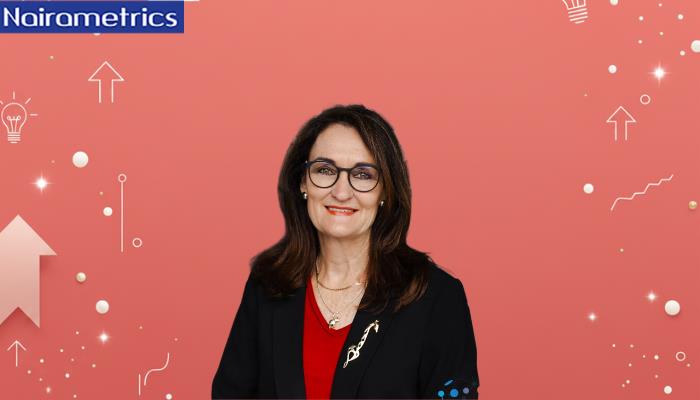
AfriGen Biologics is a South African biotech company based in Cape Town, renowned for its work in vaccine research and pharmaceutical innovation. The company rose to prominence for establishing Africa’s first mRNA vaccine technology hub, a landmark initiative aimed at reducing the continent’s reliance on imported vaccines.
At the core of AfriGen’s mission is building local manufacturing capacity across Africa. The company focuses on vaccine development, formulation science, and technology transfer, training scientists, supporting regulatory readiness, and sharing mRNA expertise with partner countries to enable independent vaccine production.
The company is led by CEO Prof. Petro Terblanche and secured $6.2 million in grant funding from the Coalition for Epidemic Preparedness Innovations (CEPI), in January.
Beyond vaccines, AfriGen is also active in biologics manufacturing, including therapeutic proteins and advanced drug delivery systems.
Odyssey Energy Solutions – $7.5 million
Odyssey Energy Solutions is a clean-energy and infrastructure-finance startup that provides a digital platform to support solar mini-grid and off-grid renewable energy projects in Africa.
The company was founded in 2021 by Nour Taher (CEO) and Omar Mansour to help developers handle procurement, financing, logistics and project management for renewable energy deployment.
In September 2025, Odyssey secured a $7.5 million financing facility from British International Investment (BII), the UK’s development-finance institution.
The funding is directed at accelerating deployment of solar mini-grids and standalone renewable energy systems under the Distributed Access through Renewable Energy Scale-Up (DARES) programme, a World Bank-backed initiative aimed at extending electricity access to underserved and off-grid communities in Nigeria.
With this facility, Odyssey supports developers by removing upfront cost barriers for equipment procurement (solar panels, batteries, storage, etc.), offering flexible payment terms tied to project revenue, and handling full logistics from import to last-mile delivery and installation
Intella– $12.5 million '/%3E%3C/svg%3E)

Intella is an Egyptian AI startup focused on Arabic-language speech and conversational intelligence. The company was co-founded by Nour Taher (CEO) and Omar Mansour (CTO), with a mission to build enterprise-grade AI tools tailored to Arabic dialects.
Intella develops AI models and products, including speech-to-text engines and a conversational AI agent called Ziila, optimized for more than 25 Arabic dialects. Their tools enable contact-centres and other enterprises to transcribe, analyse, and automate voice and text interactions in a linguistically diverse region.
In September 2025, Intella raised $12.5 million in a Series A funding round led by Prosus Ventures, with participation from investors including 500 Global, Wa’ed Ventures, Hala Ventures, Idrisi Ventures and HearstLab.
The funding is to be used to accelerate research and development, expand Intella’s product suite, scale its sales and operations across the Middle East and North Africa region, and further improve its dialect-recognition models.