
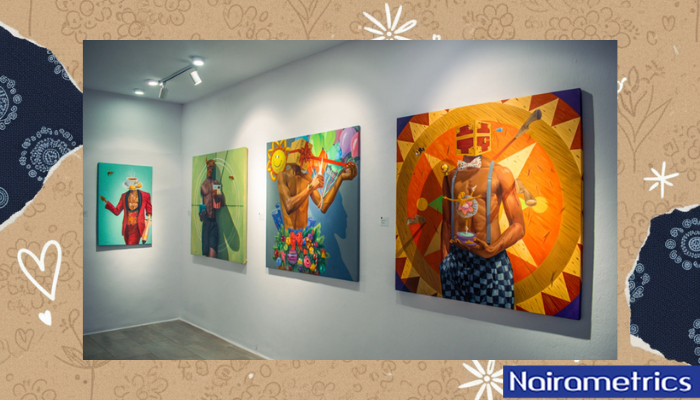
Nigeria’s art scene has evolved from a quiet niche into a vibrant national conversation, driven by a surge in creativity, investment, and global attention. Once limited to a few cultural centres, the country now boasts a thriving ecosystem where artists, collectors, and enthusiasts converge to celebrate and trade contemporary art.
According to recent industry data, there are about 2,004 registered art galleries across Nigeria as of October 2025, with Lagos and Ogun State leading the count at 453 and 260, respectively. Lagos alone accounts for roughly 22.6% of the country’s total.
The Nigerian art and crafts market itself was valued at $143.5 million in 2024 and is projected to reach $254 million by 2033.

This rapid expansion reflects a broader transformation in how Nigerian art is created, consumed, and valued. Commercial fairs are drawing international collectors, while a growing domestic market has placed the nation at the heart of West Africa’s art economy.
Beyond their commercial value, these galleries serve as vital cultural institutions, spaces for exhibition, dialogue, and preservation that link artists to audiences and foster deeper appreciation for local creativity.
The presence of galleries in major cities has helped make art more accessible, offering spaces where culture, commerce, and community intersect.
Here are the top 10 art galleries in Nigeria based on the number of branches.
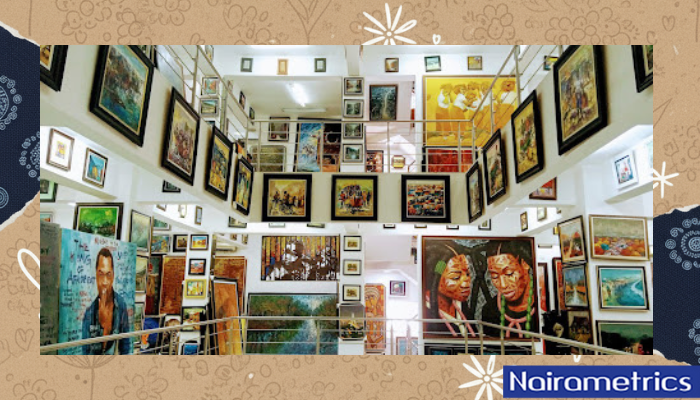
Nike Art Gallery began in 1983 in Oshogbo; today it has grown into one of West Africa’s largest and most influential art institutions. The gallery houses an impressive collection of more than 15,000 artworks created by over 5,000 artists from across Nigeria, making it a central hub for contemporary and traditional art.
The gallery was established by veteran textile artist and educator Chief Dr. Nike Davies-Okundaye, fondly known as Mama Nike. Her vision for a space that celebrates Nigerian creativity was inspired by a 1974 trip to the United States, where she observed how galleries could serve as vibrant community centres. Determined to replicate that model at home, she began building what would become one of Nigeria’s most recognisable art brands.
Mama Nike’s expansion reflects a lifetime commitment to art as empowerment. After opening her first art centre in Oshogbo, she went on to establish an Adire and Aso Oke textile workshop in Ogidi-Ijumu, Kogi State, in 1996, followed by the Nike Art and Culture Research Centre in Abuja in 2002. In 2009, she opened the five-storey flagship gallery in Lekki, Lagos, a space that showcases thousands of paintings, sculptures, and textiles under one roof.
Today, Nike Art Gallery is more than a display space — it is a cultural institution that drives education, economic empowerment, and national identity. Through the Nike Art Foundation, the gallery continues to train and mentor young artists, ensuring that indigenous techniques and creative traditions remain at the heart of Nigeria’s growing art economy.