
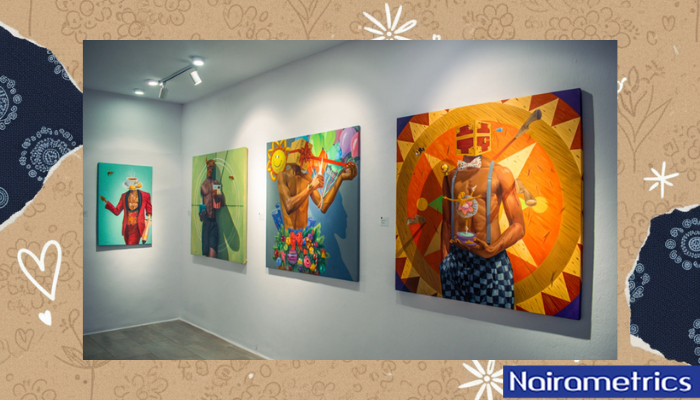
Nigeria’s art scene has evolved from a quiet niche into a vibrant national conversation, driven by a surge in creativity, investment, and global attention. Once limited to a few cultural centres, the country now boasts a thriving ecosystem where artists, collectors, and enthusiasts converge to celebrate and trade contemporary art.
According to recent industry data, there are about 2,004 registered art galleries across Nigeria as of October 2025, with Lagos and Ogun State leading the count at 453 and 260, respectively. Lagos alone accounts for roughly 22.6% of the country’s total.
The Nigerian art and crafts market itself was valued at $143.5 million in 2024 and is projected to reach $254 million by 2033.

This rapid expansion reflects a broader transformation in how Nigerian art is created, consumed, and valued. Commercial fairs are drawing international collectors, while a growing domestic market has placed the nation at the heart of West Africa’s art economy.
Beyond their commercial value, these galleries serve as vital cultural institutions, spaces for exhibition, dialogue, and preservation that link artists to audiences and foster deeper appreciation for local creativity.
The presence of galleries in major cities has helped make art more accessible, offering spaces where culture, commerce, and community intersect.
Here are the top 10 art galleries in Nigeria based on the number of branches.

The Yusuf Grillo Museum, located in Ikeja, Lagos, is housed in the former studio and residence of the late master artist Yusuf Adebayo Cameron Grillo, one of Nigeria’s most celebrated modernist painters and educators.
Yusuf Grillo’s artistry is celebrated for its signature blue tones and the fusion of Yoruba traditional aesthetics with modernist techniques, which made him a defining figure in Nigeria’s post-independence art scene.
The museum’s exhibitions include Grillo’s paintings, stained glass works, preparatory sketches, maquettes of large-scale commissions, and collected works from his contemporaries. The studio also preserves photographs, personal notes, and archival materials that document his creative journey, providing a layered understanding of both the artist and his process.
Beyond his works, the studio was a hub for mentorship and artistic dialogue, hosting students, contemporaries, and emerging artists who sought guidance from Grillo during his tenure at Yaba College of Technology and as the founding president of the Society of Nigerian Artists.