
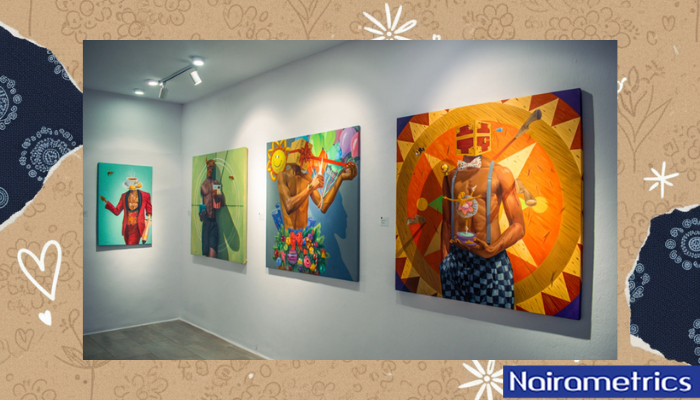
Nigeria’s art scene has evolved from a quiet niche into a vibrant national conversation, driven by a surge in creativity, investment, and global attention. Once limited to a few cultural centres, the country now boasts a thriving ecosystem where artists, collectors, and enthusiasts converge to celebrate and trade contemporary art.
According to recent industry data, there are about 2,004 registered art galleries across Nigeria as of October 2025, with Lagos and Ogun State leading the count at 453 and 260, respectively. Lagos alone accounts for roughly 22.6% of the country’s total.
The Nigerian art and crafts market itself was valued at $143.5 million in 2024 and is projected to reach $254 million by 2033.


This rapid expansion reflects a broader transformation in how Nigerian art is created, consumed, and valued. Commercial fairs are drawing international collectors, while a growing domestic market has placed the nation at the heart of West Africa’s art economy.
Beyond their commercial value, these galleries serve as vital cultural institutions, spaces for exhibition, dialogue, and preservation that link artists to audiences and foster deeper appreciation for local creativity.
The presence of galleries in major cities has helped make art more accessible, offering spaces where culture, commerce, and community intersect.
Here are the top 10 art galleries in Nigeria based on the number of branches.
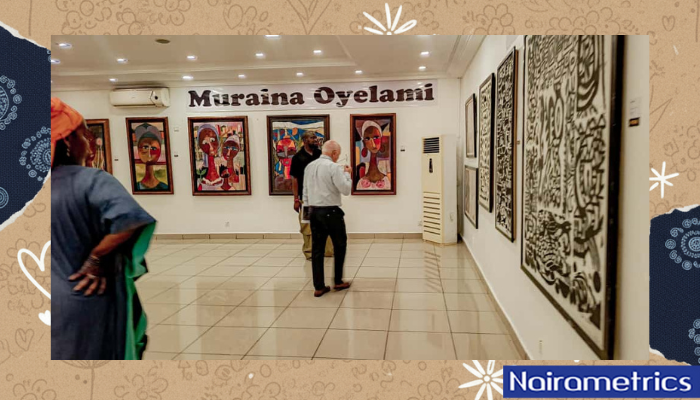
Thought Pyramid Art Centre (TPAC) is one of Nigeria’s most vibrant art institutions. Founded in 2007 by curator and gallerist Jeff Ajueshi.
The gallery began in Abuja, occupying two floors with large exhibition spaces, and has since expanded to three other locations, Lagos (Ikoyi), Benin City (GRA), and Oghara, Delta State.
Ajueshi, who was born in Benin City to a Benin mother and an Urhobo father, created the centre out of a deep passion for preserving and promoting African art. His journey started with the Abuja branch in 2007, followed by Lagos in 2017, and later Benin City in 2023, a milestone he describes as a homecoming that honours his cultural heritage.
The gallery displays a wide range of paintings, sculptures, installations, and mixed-media works, featuring both emerging and established African artists. It is best known for curating exhibitions that balance tradition with innovation and for its Undiscovered Series, a programme that spotlights young talents and connects them with broader audiences.
TPAC also runs initiatives that promote art education, creative research, and cultural exchange. It also partners with organisations like the Wiki Niger Delta Heritage Collective to train young Nigerians in visual storytelling and heritage documentation, reinforcing its role as both an art space and a centre for empowerment.