The Nigerian political space has become a very interesting one since the commencement of this fourth republic in 1999, with many commentators express their regret on lack of progress.
One of the major challenges the country is facing has always been the recruitment process for the political leaders at the Federal level and the sub nationals with many of them demonstrating lack of capacity as well as unwillingness to cater to the needs of the people they govern.
There has been a lot of agitation for the more participation of private sector leaders or technocrats in politics, either for elective offices or appointments into political offices due to the perceived failures of the typical professional Nigerian politicians.


Nigeria’s economic setup is largely shaped by its private sector, which accounts for over 80% of GDP and employment.
Private sector leaders are increasingly showing more interest in Nigerian politics, often through partnerships with government, funding initiatives, advocacy for specific policies, appointments into public offices or even actively contesting for elective positions.
This trend points to paradigm shift in Nigerian politics, where technocratic credentials and private sector experience are gaining appeal among voters and party powerbrokers alike.
For these set of politicians, decades spent navigating market volatility, managing enterprises, and driving capital investment have become assets in addressing Nigeria’s fiscal and governance challenges.
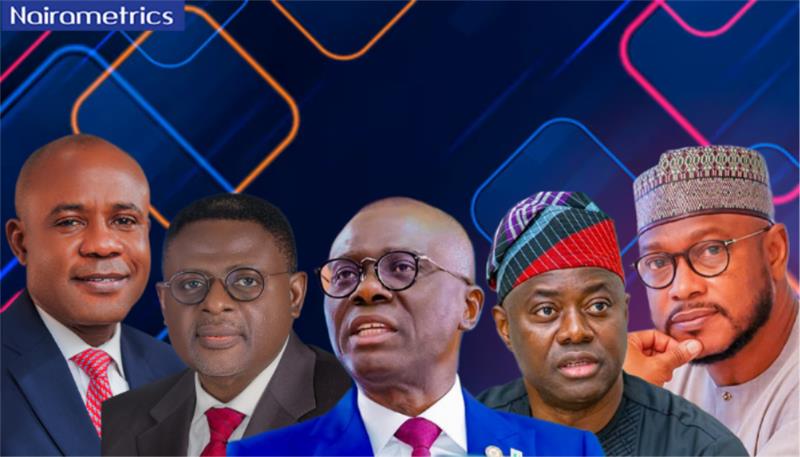
This list highlights Nigerian current state governors who came from the private sector, detailing their professional journeys

Umar Namadi, governor of Jigawa State, is an experienced accountant and business leader with a solid track record in both the private and public sectors. He earned his BSc and MBA in Accounting from Bayero University, Kano, before starting his career in audit and consultancy at Abdu Abdurrahim & Co. Chartered Accountants.
Namadi’s private sector journey included key roles at the National Board for Community Banks and Kaduna Textiles Limited. He later joined the Dangote Group, rising from Assistant General Manager of Finance to Financial Controller at Dangote Sugar Refinery and the wider group.
Between 2006 and 2013, Namadi brought his financial expertise to the National Health Insurance Scheme, managing finance and contribution departments. Afterward, he returned to private business, leading Namadi, Umar & Co. Chartered Accountants, and chairing Danmodi Food Processing and Danmodi Farms Limited.
His blend of corporate leadership and financial management experience paved the way for his move into public service as Jigawa’s Commissioner for Finance and Economic Planning from 2015 to 2019. There, he introduced reforms that improved the state’s financial transparency and efficiency.
Namadi was elected deputy governor in 2019 before winning the governorship. His career reflects a mix of professional rigor and practical business management, which he now applies to Jigawa’s governance.