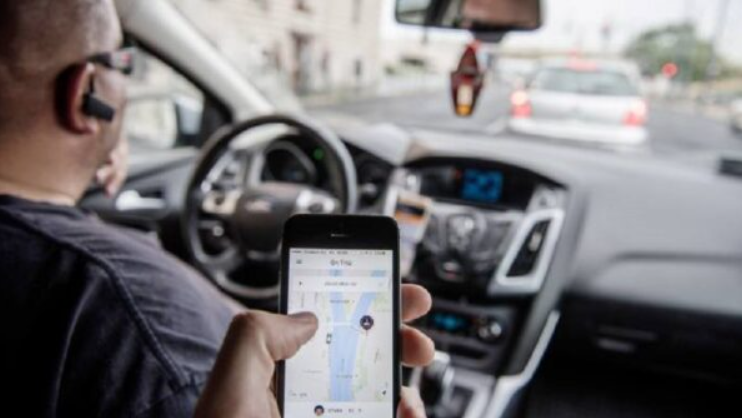
Once sleek and tech-driven, Nigeria’s ride-hailing revolution is starting to feel like a throwback to the yellow-and-black taxi era. What went wrong?
A few weeks ago, I was heading to the airport on a trip back to Nigeria and did what many of us have grown accustomed to requested a ride through an app.
I selected a regular sedan and, as was often the case abroad, a clean, sleek Tesla showed up. Smooth ride, air-conditioned, silent hum, polite driver. It was the kind of experience that reminded you how far technology has taken transportation.


Fast-forward a few days. I land in Lagos and repeat the same process, booking a ride using one of the familiar apps. The car that shows up? Well… let’s just say it was no Tesla.
It was a proper jalopy wheezing engine, torn upholstery, and door handles that felt like they might come off in your hand. A car with the soul of a Peugeot 504 and the tired bones of a vehicle that’s been in one too many pothole battles.
This isn’t just a one-off. The ride-hailing landscape in Nigeria is slowly but surely resembling the very thing it once disrupted: the legendary yellow-and-black cabs that used to roam Lagos like territorial lions. If you grew up in Lagos, you know exactly what I mean.
Those old, creaky taxis—Peugeots, Nissan Sunnys, and Toyota Crowns—piloted by stern-faced men with decades of driving experience and very little interest in conversation. These cars were often held together by hope, wire, and duct tape.
Then came the ride-hailing revolution.
But fast-forward to 2025, and things are starting to fall apart literally. The cars are older. The seats are torn. The air conditioning? Struggling to breathe out. The drivers? Often overworked and underpaid.
Many of the vehicles now moonlighting as ride-hailing cars are modern-day jalopies, trying to pass for sedans.
If you’ve taken a ride from the Abuja airport recently, or hailed one in the outskirts of Lekki, you’ve probably had the pleasure of sitting in one: a car that should be collecting a pension.
So what happened?
Well, it’s a cocktail of economic misfortune and broken business models.
First, the platforms themselves have moved away from the high-burn, growth-at-all-costs model. In the early days, drivers were rewarded handsomely—bonuses, high per-trip earnings, and generous incentives. But today, with the focus on sustainability and profit, payouts are leaner, and bonuses are rare. Drivers are earning less per trip, even as their expenses rise.
Second, the cost of acquiring and maintaining a decent vehicle has shot through the roof. The naira has been battered by devaluation, making it nearly impossible to import fairly used cars at the price point that once sustained the industry.
A Toyota Camry 2010 used to be a respectable ride-hailing car. These days, drivers are clinging to decade-older Corollas with 300,000km on the odometer and suspensions that scream at every bump.
Then there’s fuel. What used to cost N160 per litre now hovers around N1000. Larger cars consume more fuel, so drivers understandably default to smaller, more fuel-efficient (albeit weary) vehicles.
And because earnings haven’t kept up, maintaining the cars is a luxury many drivers can no longer afford.
Let’s also not forget the social shift. In the early days, middle-class Nigerians looking to make extra money listed their cars on ride-hailing platforms.
Now, that demographic has either japa’d or found better-paying side hustles. What’s left is a crop of full-time drivers, many of whom are just trying to survive in a punishing economy.
A tale of two markets
Now compare this to cities in North America or Europe, where Teslas, Toyotas, and well-maintained sedans still dominate ride-hailing fleets. Yes, they have their share of older cars too—but the business model makes financial sense.
A 10-minute trip in Toronto could cost $20, about N32,000. In Lagos, the same trip might be N1,500.
A 50-minute airport run abroad can set you back $100 (N160,000), compared to around N25,000 in Nigeria—if you’re lucky, it could cost less.
This isn’t just about labour costs. It’s also about access to credit.
In the West, buying a car on credit is as normal as buying bread. Drivers can finance decent vehicles and still turn a profit. In Nigeria? Good luck.
Without collateral or a strong credit profile, it’s nearly impossible to access financing for a car suitable for ride-hailing.
Many resort to leasing already-battered vehicles on punitive terms or settling for Nigerian-used cars—vehicles that have already seen several lifetimes.
What’s next for ride-hailing?
The decline in the quality of ride-hailing cars isn’t just inconvenient—it’s a growing safety concern.
It also chips away at consumer trust in what was once a promising upgrade to Nigeria’s chaotic transport ecosystem. But unless something changes, the trend will only get worse.
So, what can be done?
- Credit schemes for drivers – Government and private sector players can collaborate to provide structured credit for vehicle acquisition. These could be tied to ride earnings and managed through reputable channels. Some are doing this already, but it needs to be more aggressively implemented.
- Leverage the automotive policy – Nigeria’s vehicle assembly industry could be plugged into the ride-hailing economy. Let local assemblers produce affordable cars that meet basic standards. This creates jobs while solving a mobility crisis.
- Tackle the macroeconomic pain points – You can’t fix ride-hailing without addressing inflation, foreign exchange instability, and energy costs. A stable naira, affordable fuel, and better access to credit would go a long way.
- Minimum standards enforcement: – Ride-hailing companies should enforce basic vehicle quality thresholds and support driver upgrades through partnerships or lease-to-own models.
Until then, brace yourself. The next time you order a ride in Lagos or Abuja, don’t be surprised if your “Corolla” turns out to be a rebadged jalopy with a drive that is just hustling to survive.