
 Follow Us on Google Discover
Talks of $100 oil have started resurfacing. Banks including JPMorgan, Goldman Sachs and Barclays have recently reiterated their long-term bull case for oil or have even increased their forecasts for prices.
Total also made a claim for $100 oil last week. Analysts have called Oil “the leader of the commodities surge.”
Those at Plot 33, Abubakar Tafawa Balewa Way, CBD, Abuja-Nigeria would feel excited about these forecasts as the country could do with some more inflow. A quick glance at the foreign reserves chart on the CBN website shows the declining trend in Nigeria’s foreign reserves.
READ: Nigeria’s external reserve falls to lowest in 10 months
Also Read
'/%3E%3C/svg%3E) Source: CBN
Source: CBN
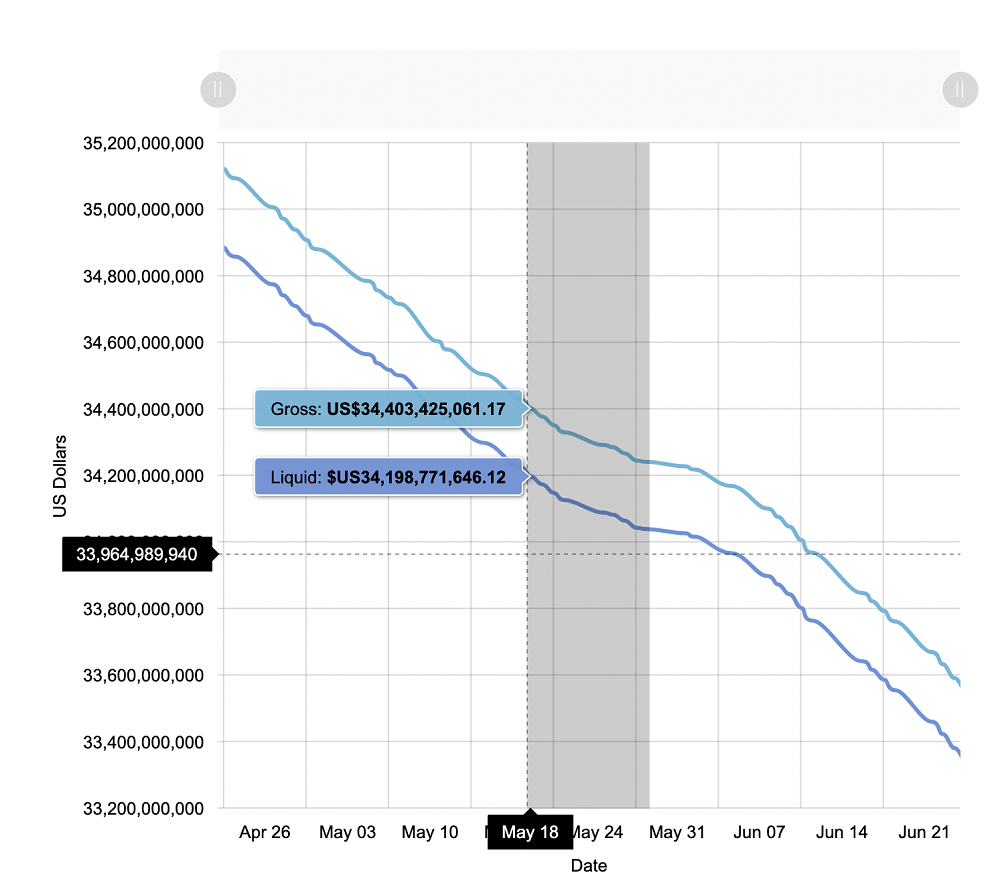
Nigeria faced a terrible foreign currency crisis in 2020 as the fall in oil prices, global lockdown due to Covid-19 and a dearth in capital importation affected Nigeria’s foreign currency balances forcing multiple devaluations during the year and a wide disparity between the official and parallel market exchange rate.
The paradigm shift from a market with oversupply last year to a market of shortage has to be one of the highlights of oil in the last decade. India’s oil minister expressed his “deep concern on increasing crude oil prices and its impact on consumers as well as on smart recovery.” He further added, “that high crude prices are adding significant inflationary pressure on India.”
READ: CBN pays $4.45 billion external debt to World Bank, others in 2-month
With the OPEC+ alliance meeting soon to decide on increasing output (which analysts believe they would), the oil rally might halt. With more oil in the market, higher prices would lose steam.
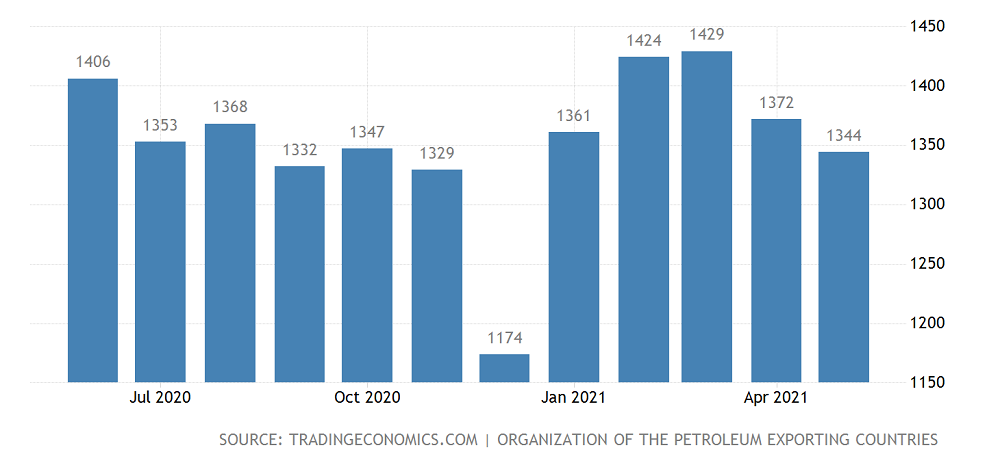
Countries like Nigeria can begin to increase their prices albeit with their compensation obligations still active. As seen on Tradingeconomics.com, Nigeria produced 1.344 million barrels in May (lowest for the year). With more output, more dollars would flow into the economy.
The demand for oil is now well on the road. Highway traffic is at pre-pandemic levels in the U.S., China and large parts of Europe. It also appears that flights have started picking up. According to Bloomberg, the number of passengers passing through security at U.S. airports surpassed 2 million a day for the first time since March 2020, while European air traffic has risen by one-third in the past month. The U.K has also increased the number of countries on its Green list.
Good news everywhere. So what is this supercycle?
According to Fortune500, a supercycle can be defined as a sustained spell of abnormally strong demand growth that producers struggle to match, sparking a rally in prices that can last years or in some cases a decade or more.
READ: Why Nigeria’s external reserves is stuck at $35 billion
Financial Times puts it as “a disconnect between demand and supply, fuelling a lasting surge in prices, which are the basic conditions of a so-called supercycle.”
Saudi Arabia’s energy minister, Prince Abdulaziz bin Salman recently warned against a “new super-cycle in global oil prices” caused by weak new investments in oil. Brent is up 43% so far this year. Although the Saudis would profit if oil continues to go up, the threat of U.S. production benefitting causes a dilemma.
The last supercycle was around 2002 when China entered a phase of roaring economic growth, fueled by a rollout of modern infrastructure and cities on an unprecedented scale. The demand for oil grew sporadically within that period as prices roared from $20 to $100. The market is experiencing a similar surge in demand and production is not following the same pace with a decline in inventories.
Nigeria would need more output to capture and benefit from these high prices. The fate of Nigeria’s supply increase would rely on what will happen at the monthly OPEC+ meeting. Tariq Zahir, managing member at Tyche Capital Advisors, advised that “Traders need to watch the OPEC+ meeting on July 1 to see if the group agrees on a production increase.”
Until Nigeria can diversify its economy to depend less on oil revenue, we would still be observing supercycles and oil developments for forex respite.

Let’s hope the refineries would be running by then. Highers oil prices = higher petroluem products prices. Even if imports are eliminated or refuced substantially, lical prices would still reflect global prices, less transportation, customs clearance etc.. Remember? Commodity extraction is highly mechanised and creates very few jobs. We need manufacturing and process industries to create jobs and that can only be achieved through uninterrupted electricity supply at the appropriate frequency and voltage for each sector. I get the feeling that if the supercycle happens, the a few people will become super rich while the rest of the population will remain untouched. With our history of severe memory loss, all the talk of diversifying the economy away from hydrocarbons will be muted. I’m not suggesting that we’ve done anything about diversifying the economy and increasing non-oil export revenue over the last 8 years of economic crunch. On the contrary, hydrocarbons sector still accounts for between 85% and 90% of foreign exchange earnings, although the sector only accounts for 15% of GDP. This has not changed. And will not change until the issues surrounding our ineffective power sector are resolved.
Great observation Peter. The consumers would be affected as long as the government pays subsidies. Truth be told, The Nigerian oil industry has a lot to do. Electricity needs to be provided and the power sector has to be fixed.
Thank you anonymoys. Our leaders are praying for higher oul prices without thinking about the impact on ordinary people. It’s a double-edged sword. It’s all well and good of we have the capacity to manufacture competitively. No country with a significant population has ever developed by importing all their intetmediate and final products needs. They have always manufactured at least the bulk of such products. Where they don’t have the raw materials to do the conversion from raw materials to intermediate products, the import the raw matetials. The conversion of raw materials to intermediate products duch as dteel, aluminium, petroleum products (they are intermediate because they are used to power equipment), etc is the most energy intensive phase of production and the biggest job-creating phase. Unintertupted electricity and 24-hr 3-shift production are vital for quality and cost effectiveness (overall competitiveness in terms of quality and price). This is something we cannot escape as s country. Playing lip service to the woes of the power sector and pointing fingers would not help. The problems of the power sector are not only technical as most people seem to think. There are deeply entrenched regilatory and very sensitive commercial issues that also need to be tackled head-on, without which we will continue to luve in darkness and continue procradtinate. If anyone should ask me: do you see the seeds of diversification being sown? My response will be a resounding no. Those in authority and those before them have not and did not grasp the depth and breafth of our power problem. I’m still optimistic because it’s not rocket science and it does not take an Einstein to grasp the full depth and depth of the pronlem and come up with a solution. It’s as simple as A B C, but not cheap because of the extent of the neglect.