Follow Us on Google Discover
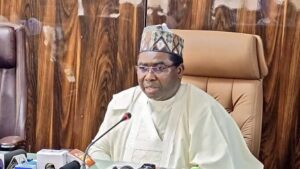
The Governor of the Central Bank of Nigeria (CBN), Godwin Emefiele, has revealed how the country hopes to reduce its import bill by about 35%.
Emefiele said that Nigeria would soon stop the importation of petroleum products due to the planned take-off of the Dangote refinery by the first quarter of next year, as well as saving of foreign exchange due to the non-importation and subsequent export of urea used for the production of fertilizer.
This disclosure was made by the apex bank boss, while receiving the Governor of the Central Bank of Gambia (CBG), Mr Buah Saidy, and his delegation, stating that efforts are ongoing to cut down on Nigeria’s import bill by about 35%.
Emefiele also added that with a population of over 200 million, the CBN is focusing on the area of agriculture to ensure that the country uses available raw materials to produce what it needs, save forex from food importation and ensure food security.
Also Read
What the CBN Governor is saying
The CBN boss noted that President Muhammadu Buhari’s insistence about 5 years ago on the diversification of the country’s economic base had already started to yield positive results.
He said: “And we believe with time Nigeria will really be a greater country than it is today. We don’t think we are great yet because we have a high import dependence in the country and we are doing everything possible to reduce imports.
“But like you know, when we are able to reduce imports, encourage exports and encourage consumption spending and investment, those are some of the parameters that will ultimately boost our economy so that we can continue to see rapid growth in our GDP and see prosperity for our people.”
He also told the visiting team that the apex bank has vast experiences in IT and cybersecurity, adding that its infrastructure had been proven to be impregnable to hackers especially last year when the protest was going on and some people tried to hack into their system.
Bottom line
The Federal Government has initiated diversification policies as well as import substitution policies to help reduce the country’s import bill which is very high and puts a lot of pressure on its external reserves and the naira.
The take-off of the Dangote fertilizer plant, which produces enough for local consumption and export and the coming on stream of Dangote refinery will help reduce the demand for forex.
The investment in agriculture will also reduce the huge amount of forex spent on food importation.