Follow Us on Google Discover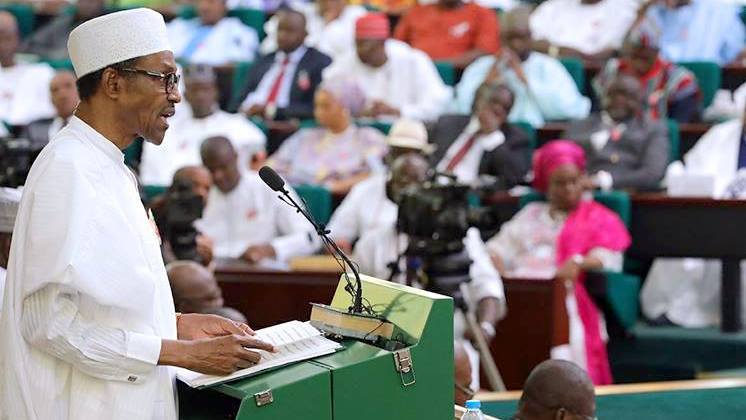
NRI communique on the proposed 2017 budget
2016 will go down as one of the darkest years in Nigeria’s economic history. All the major economic indicators pointed to a marked deterioration in the economy. Starting off, Real GDP growth was consistently negative, which triggered a descent into recession, while pass-through shock on fuel prices from over 50% NGN depreciation drove inflation to an eleven-year high leading to a collapse in real wages. Coming less than two years after our coronation as Africa’s largest economy with over a decade of 6-7% real GDP growth, 2016 exposed the macroeconomic imbalances prevalent in the Nigerian economy. Overall, the problems associated with the economic picture can be distilled into two:
A. A collapse in aggregate demand stemming from negative real wage growth, slowing corporate profitability, depressed fiscal spending, and an imbalance in the external sector.
B. A backward shift in aggregate supply as a high domestic cost structure which engendered a reliance on critical foreign inputs left the private sector more susceptible to dollar shortages.
Set against this backdrop, the economic policy prescriptions we expect to see in the 2017 proposed fiscal plans should at the minimum seek to address:
A. A reduction in the cost basis for utilising domestic raw materials/inputs on the production side. The budget plan should contain initiatives which seek to reduce operational (labour, power and logistics), regulatory (tortuous bureaucratic approvals, multiple taxation, etc) and financing bottlenecks associated with accessing local resources.
B. Stimulate aggregate demand via a combination of fiscally harmonised tax incentives (FG and State) for businesses. Furthermore, given the cumulative impact of Nigeria’s 36 states and their currently dire fiscal conditions, the Federal Government of Nigeria (FGN) should look to temporarily assume a greater burden of state problems conditional on their acceptance of a framework of strict fiscal discipline and accountability.
C. A credible debt raising plan to fund projected fiscal deficit which does not impose higher domestic borrowing costs on businesses i.e. back-door financial repression.
As the key planning tool for the fiscal side, while Budget 2017 should be sufficiently ambitious given the scale of the economic crisis, it should be realistic enough to take adequate cognizance of the constrained fiscal space to avoid a repeat of the mistakes which impacted the 2016 budget. In his submission to the National Assembly, President Muhammadu Buhari noted that owing to revenue challenges which missed forecasts by 25% the FGN was on track to implement only 79% of its ₦6 trillion budget. Furthermore, due to the primacy of the debt service obligations and personnel expenditure payments, budget implementation is weighted towards recurrent spending as against badly needed capital spending.
Set against this backdrop, we express our reservations about the 2017 budget along the following lines:
On the revenue picture:
Oil revenue: granted the price and exchange rate assumptions appear conservative for oil receipts, the production estimates imply that the FGN is betting on a peace deal with the militants and on a sizeable windfall from the removal of JV cash calls. The FG has raised its projections of revenue from oil from ₦820 billion in 2016, to ₦1.985 trillion in 2017. These projections seem overly optimistic. FG Oil revenue as at H2 2016 stood at ₦406 billion.
Non-oil: as in 2016, assumptions should reflect a more subdued pace of economic expansion, still weaker corporate profitability and more importantly, impact of import demand curtailment measures on custom receipts.
Exchange rate assumptions: implicit in the non-oil estimates is that the current exchange rate is the price which clears demand and supply for dollars under normal conditions. Given the current realities, where the CBN has imposed a peg in the interbank market while resorting to Gestapo tactics to influence the parallel market, there is a massive disconnect between the official exchange rate and the actual rate businesses face. Insisting on using this rate as the official rate risks driving genuine business transactions underground resulting in lost revenue for the FG. Thus, a more realistic exchange rate policy which clears the market with little divergence across the various segments would be preferred.
On the expenditure side:
Non-debt recurrent expenditure: now more than ever before, the federal government must commit to shrinking its overheads as well as improved fiscal efficiency, preferably by ratios such as recurrent spending as a percentage of revenues not as a share of budget, GDP or nominal terms. As an example, despite all the claims about cost reduction, we are yet to see any moderation in personnel and overheads as non-debt recurrent expenditure is projected at ₦2.9 trillion.
Debt servicing: the rise in debt service as a share of retained revenues is a cause for grave concern, as while revenue challenges could trigger a failure to implement capital projects, a similar move is impossible for debt servicing. Given our reservations regarding revenue assumptions, the foregoing could easily result in a scenario where we spend half of our revenues paying debts. Despite a low debt-to-GDP ratio, it is alarming that Nigeria’s debt service is now 34% of the projected revenue, a statistic that shows the fiscal revenue weakness of the Federal Government.
On the fiscal deficit:
Following recent claims about above limit CBN financing of fiscal deficits, the lack of clarity on the strategy for the foreign leg of the borrowing plans for 2017 implies even greater reliance on domestic debt markets for funding. On this matter, the markets need more light on the breakdown of the foreign plans as well as back-ups should these plans fail as current economic realities imply further expansion in local borrowing is inimical to private sector investment spending.
All budgets serve as a signalling tool about a likely direction of a sovereign’s fiscal policy plans for the forthcoming year. To be credible, a government must meet its stated commitments consistently as this allows other economic agents plan appropriately. The 2016 budget was to be one which laid the foundation for economic growth, at least from the President Buhari’s address in December 2015, but its poor implementation, which exposed the inebriated statist thinking of the plan’s architects, combined with sideway-passes and own-goals by our various economic managers placed the economy on a fast track to recession.
Perhaps, now in a more sober state, our economic planners have included the word hope in the budget tag-line. We advise that policy-makers learn from 2016’s mistakes, free their mindset from ideological biases, adopt greater realism on the revenue constraints on the fiscal space and give greater impetus to private initiative in addressing the demand and supply shocks Nigeria is currently grappling with.
NRI is a Nigerian think-tank, whose membership comprises of Nigerian professionals with experiences and influence across the public, social and private sectors. We believe in a private sector led economy supported by government policies that encourage sustainable businesses and promote economic diversification
Signed
The NRI Group
For enquiries, send an email to thenrigroup@hotmail.com. Or call 08034796830, 08064068856