
 Follow Us on Google Discover
Guinness Nigeria Plc released its 2016 9 months results shocking investors with a third quarter loss. The company reported a pre-tax loss of N488 million its first quarterly loss since we started tracking Guinness Plc in 2012. It’s also the lowest revenues it has declared in its third quarter since 2012.
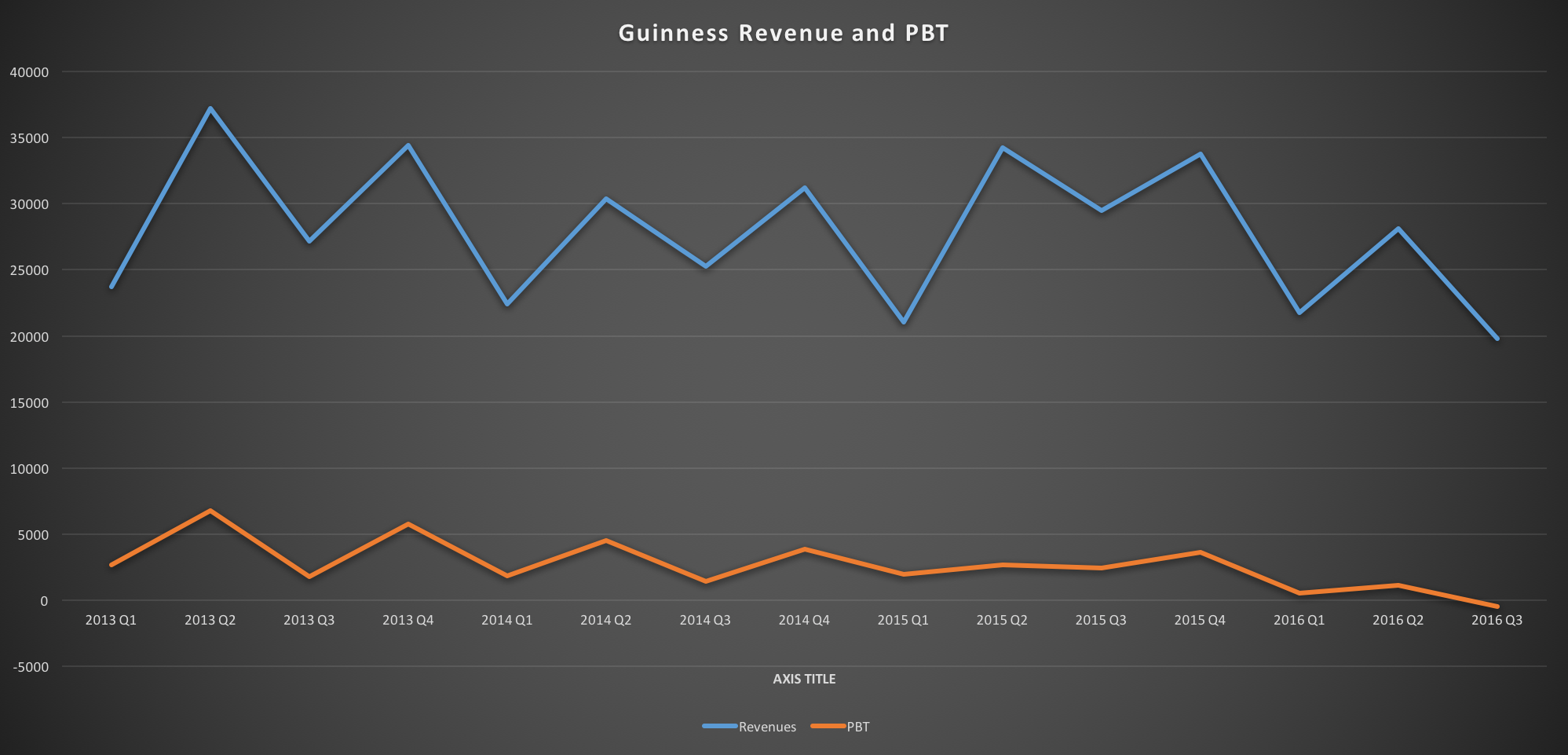
For a lot of investors who are still in shock, the situation has been made worse by the fact that this was a loss that reveals that the business is currently experiencing a gradual but devastating decline in market share. It’s breakthrough drink, Orijin is facing competition from Kasapreko Co Ltd’s Alomo bitters and Nigeria Breweries Ace Roots . To make matters even worse, it’s main competitor Nigeria Brewery is posting better margins despite the tough economic situation in the country . So what exactly is wrong with Guinness?
Also Read
According to its Managing Director,
“Third quarter sales were impacted by a tough operating environment and the lapping of a very strong quarter in the previous year – particularly with distribution gains for the Orijin brand. The economic slowdown and rise in inflation continue to cause a shift towards lower margin value products.
“However, we are starting to make progress in the broadening of our portfolio and also seeing resilience in our core brands. We are also focused on driving efficiency throughout our operations to address the continuing pressure on margins. We anticipate that the year will be challenging as we incur one-off costs to reshape our business and continue to broaden our portfolio in order to drive future growth.”
Some of the analysts report recently released attribute the problem to value brands, pointing to the fact that most Nigerians are responding to harsh economic conditions and are more likely to spend their disposable income on cheaper beers than on the premium brands. But there could be a more pertinent problem that is unfortunately not within the absolute control of the company.
Millennial’s
To understand what the real problem is simply cast your mind back to the last time you were out with friends having a drink at a bar or event. What do you see people drinking the most? The beer market in Nigeria is now firmly dominated by the millennial’s (those born after 1990) who have an average age of about 25 years old. They represent the future for beverage companies and its little wonder most ads are now targeted at this demographic. To get an idea of how important this demographic is take a look at some of their advertisements and latest endorsements being made by beverage companies.
The concept of beer drinking is changing to a drink that doesn’t need to be bitter and alcoholic. People still like alcohol and anything that can induce a state of ‘highness’ but they prefer it a little sweeter if it’s a beer or harsher if it’s spirit. Just look at some of the newer value brands that have surfaced. Star Radler, Orijin, Ace Roots, Star Lite, Snapp, Smirnoff Ice etc They are all designed to taste sweet and alcoholic. Also look at spirits which now come in smaller bottles and packages and at an affordable price, they are made to ensure that you get the right quantity you need to get the feeling you desire. For Guinness this is a huge problem as their flagship brand is the Guinness Stout, which is known for its bitterness. Guinness knows this too well but unfortunately can’t do much about it. To address this problem will require a change in the way Guinness Stout taste.
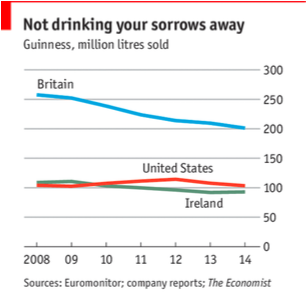
Another problem lies in another type of alcoholic drink that their parent company, Diageo sells. Diageo is the world’s leader when it comes to sale of spirits. This is a market gradually being dominated by Millennia’s. Clubs, parties, ceremonies etc. spirits are consumed by Millenials at a pace that has made Nigeria one of the fastest growing wines and spirit market in the world. An euromonitor report released last year buttresses the influence of spirits in Nigeria’s alcohol market.
Consumers increasingly have refined tastes and now demand products that are less sweet, thus preferring drinks such as whiskey. Furthermore, spirits brands such as gin are available in small sachet sizes or small bottles, driving growth among the low-income consumer group. Increased nightlife and attendance at bars/pubs to watch sporting events also helped to spur growth. Lastly, manufacturers such as Diageo Plc have increased marketing activities such as advertisements and events involving celebrities.
What next for Guinness? Guinness recognizes the need to diversity its product delivery which is why it acquired the rights to distribute Diageo’s spirits earlier this year. It will have to continue to step up its advertising campaigns and take Guinness Stout right to the demographic that could determine its survival. If it desires to change the taste buds of the millennia’s then it has to make Guinness cool again.



In my opinion, another reason why Guiness revenue probably fell is due to change in our culture.
The culture of spending hours at beer palours after work has greatly reduced. Remember that people spend hours drinking a minimum of 4bottles per night at those joints.
People, especially the millennials, will rather visit a club or a highclass lounge to “sip” wine than spend hours at a local beer palour.
Your blog is always very educating
Thanks for the compliments.
A GENUINE ANALYSIS OF THE ABOVE WRITE UP IS CENTERED AROUND LACK OF APPRECIATING THE IMPORTANCE OF CHANGE IN THE MINDS OF YOUTHS AS DEMONSTRATED BY THE PROBLEM THAT GUINNESS IS FACING IN THE NIGERIAN MARKET. TRADITIONALLY, GUINNESS HAS BEEN NOTED FOR BITTERNESS OF IT MAJOR PRODUCT;AND TO CHANGE MAY REQUIRE APPROVAL FROM THE HEADQUARTERS! THERE IS URGENT NEED FOR GUINNESS NIGERIA, PLC TO STUDY THE NIGERIAN COMPLEX MARKET AND LOOK INTO THE MARKET AREA THAT NEEDS ADJUSTMENT. IT GOES TO CONFIRM THE INADEQUATE RESEARCH AND DEVELOPMENT STRATEGY OF THE COMPANY THAT IS WEAK AND NEEDS IMMEDIATE ATTENTION AND UPGRADING. IF I MAY ASK, HOW COME NIGERIAN BREWERIES HAS BEEN ABLE TO MAINTAIN IT HOLD ON THE MARKET OVER THE YEARS WITH PROFITS? THERE ARE OTHER NEW ALCOHOLIC DRINKS THAT HAVE MADE SUCCESS IN THE INDUSTRY. I MUST ADVISE THAT GUINNESS HAS A NATURAL EDGE OVER AND ABOVE THESE NEW ALCOHOLIC BEVERAGE COMPANIES WHICH HAS NOT BEEN EFFECTIVELY TAPED! THE GOODWILL OF GUINNESS WORLD WIDE SHOULD HAVE HELPED THE POSITION OF IT PRODUCTS IN NIGERIA. THE UNWILLINGNESS OF GUINNESS IN NIGERIA TO CHANGE THE TASTE OF IT PRODUCT WILL HAVE A DEVASTATING CONSEQUENCE ON IT EXPANSION AND PROGRESS! MANAGEMENT SHOULD LOOK INTO THE POSSIBILITY OF DIVERSIFICATION INTO OTHER INVITING AREAS IN THE ALCOHOLIC DRINK RATHER THAN ADHERING TO THE OLD AND UNAPPEALING PRODUCTS TO THE YOUTHS. CONCLUSIVELY, MY ADVICE TO THE MANAGEMENT OF GUINNESS IS TO RESTRUCTURE IT MARKETING STRATEGIES WITH SPECIAL INTEREST IN THE AREA OF RESEARCH AND DEVELOPMENT. THIS NEW CONCEPT WOULD ENHANCE STRONG PATRONAGE FROM THE YOUTHS AND IMPROVE THE LEVEL OF PROFITABILITY OF THE COMPANY IN THE YEARS TO COME.