
 Follow Us on Google Discover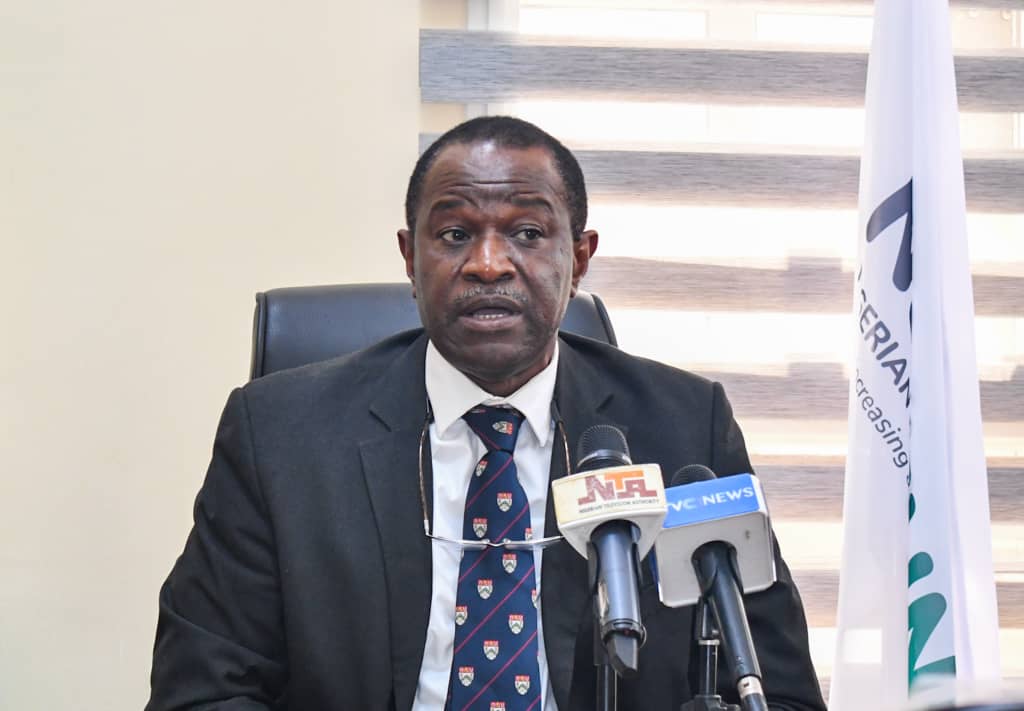
The Nigerian Education Loan Fund (NELFUND) has revealed plans to replace its current system of paying tuition fees directly to tertiary institutions with a digital token-based payment system.
The move is aimed at eliminating double payments and improving transparency in the disbursement process.
The Managing Director of NELFUND, Akintunde Sawyerr, disclosed this during an interview on ARISE News on Sunday.
He explained that the planned upgrade would give students greater control over when their tuition payments are made while ensuring funds are used solely for educational purposes.
Also Read
What NELFUND is saying
According to Sawyerr, the new system is part of reforms designed to address challenges encountered during the first year of the student loan scheme, particularly cases where students paid their tuition before NELFUND processed and released payments to their institutions.
- “We’re looking at a tokenized system where the student has the funds effectively as a token on their telephone, and when they go to the bursary, they can effectively push a button that makes the payment, and then they’re allowed to carry on with classes,” Sawyerr said.
He added that once the upgrade is completed, NELFUND will no longer transfer tuition fees directly to schools.
- “Once we are able to successfully achieve that upgrade in the system, it will mean that we no longer pay the schools; the student pays the schools but through a token,” he added.
Sawyerr explained that the agency deliberately chose not to pay tuition loans directly into students’ bank accounts to prevent diversion of funds away from education.
According to him, allowing students unrestricted access to tuition funds could undermine the primary objective of the scheme.
- “We chose not to pay students directly for the loans because that would take us into an entirely new area where students get paid for the fees, and they can then make the decision as to whether they want to go to school or not,” he said.
He said the administration of President Bola Tinubu established the scheme to ensure that qualified Nigerians are not denied access to tertiary education because of financial constraints.
- “The objective is to ensure that those who have the capacity to go to a tertiary institution are not hindered because they don’t have money,” he said.
The NELFUND boss noted that while students receive upkeep stipends directly, tuition payments are sent through a controlled process to guarantee that the funds are used for their intended purpose.
More insights
The proposed payment overhaul comes after NELFUND received numerous complaints from students whose institutions received tuition payments from both the students and the loan fund, creating cases of double payment.
Sawyerr attributed the problem to the fact that the student loan programme commenced in the middle of an academic session, forcing many students to pay their fees to meet examination and registration deadlines before their loan applications were processed.
He said the digital token system, alongside aligning loan disbursements with academic calendars, is expected to significantly reduce such occurrences going forward.
- “The fact that we’re now aligning our payment and application cycles to the academic cycle will ease these problems. I don’t think problems ever go away, there’ll be new ones, but we’ll deal with them as they come along,” he said.
The new payment model forms part of NELFUND’s broader efforts to strengthen accountability and improve the efficiency of Nigeria’s student loan programme as beneficiary numbers continue to grow.
What you should know
Earlier this year, Nairametrics reported that NELFUND had disbursed a total of N206.29 billion in student loans to 1,164,222 beneficiaries since the launch of its student loan programme.
This was revealed in the fund’s Daily Status Report generated on March 9, 2026, from the NELFUND student loan portal dashboard.
According to the report, 1,734,985 students have applied for the scheme since the application portal opened on May 24, 2024. Of that number, more than 1.16 million students have received loan disbursements for tuition fees and monthly upkeep allowances.



When will we the student start to receive upkeep allowance for may and June, please listen to our plea Alot of Nigeria students need this money most especially me now students are going for SIWES and they need this money to be able to attend this compulsory student industrial scheme please answer our cry
That’s good 👍.
Thanks for this initiative. All thanks to the Government of PBAT. We appreciate as a widow and a single parent. But my child has not receive the monthly upkeep since May. For the last 2months and it affects us badly. Will this not affect the tuition payment too when it is time?
They are not even saying anything about the three month unpaid stipends and now we’re getting this kind of news…….. makes me want to puke
May God deliver the people in charge of this laudable idea put in place to help the students. NIGERIA good system, bad implementation because of greed and corruption.
What is difficult in disbursement of funds to indigent upcoming leaders of tomorrow.
Appreciate your efforts in the tuition fee payment upgrade
But the monthly allowance is be paid as soon as possible to enhance our survival
Send help….bad implementations money been held and at the end of the day we are too pay back
But why are not receiving our upkeep.for the past three months we haven’t received our upkeep and everyone knows this is a loan .so how are we going to pay for what we haven’t been given.please we want the president of Nelfund to look at this our complain. Thank you
Dear NELFUND,
Please work on the upkeep payment. The current situation we are facing is not easy, and many students are finding it difficult to cope with their daily expenses. We would sincerely appreciate it if the upkeep payments could be processed as soon as possible.
Thank you for your attention and support.
None sense
When has nelfund disbursed the last upkeep allowance to students this session
Even for students in final years starting their final EXAMS AND projects defense
USELESS organisation talking nonsense HERE
What has your token git to do with this unprofessional delay