Follow Us on Google Discover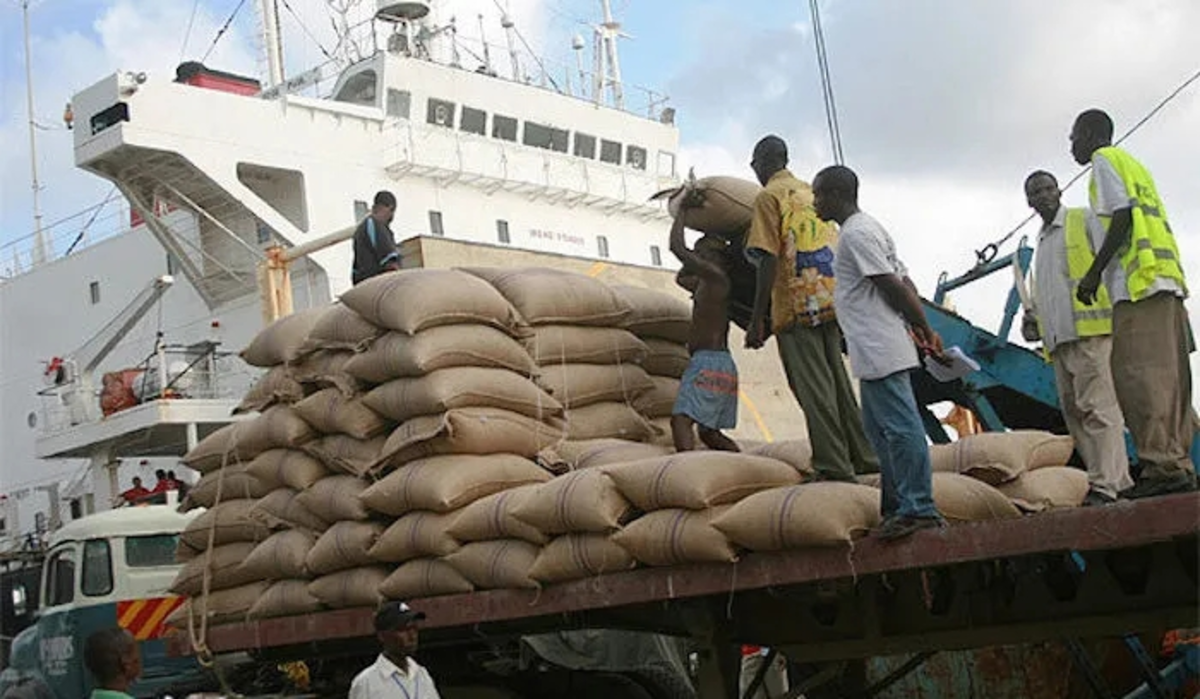
Nigeria spent N3.30 trillion on food and beverage imports in the first half of 2026, with import expenditure rising sharply in the second quarter.
This is according to Nairametrics’ analysis of the Q1 and Q2 2026 Foreign Trade Statistics reports released by the National Bureau of Statistics (NBS).
The report noted that the country’s food and beverage import bill stood at N1.39 trillion in Q1 2026 before increasing to N1.91 trillion in Q2, bringing total expenditure for the six-month period to N3.30 trillion.
However, the H1 2026 figure represents a 3.1% decline from the N3.40 trillion spent on food and beverage imports in H1 2025.
Also Read
In 2025, the data shows that Nigeria spent N1.67 trillion in Q1 and N1.73 trillion in Q2 on food and beverage imports, bringing the six-month total to N3.40 trillion.
What the data is saying
The NBS data shows that primary food and beverage imports accounted for N1.58 trillion in H1 2026, comprising N634.05 billion in Q1 and N948.42 billion in Q2.
- Of the primary products imported, those mainly intended for household consumption accounted for N811.93 billion, rising from N280.81 billion in Q1 to N531.12 billion in Q2.
- Primary products mainly used by industry accounted for N770.54 billion, with N353.24 billion recorded in Q1 and N417.31 billion in Q2.
- Processed food and beverage imports accounted for a larger N1.72 trillion during the period. The category rose from N758.52 billion in Q1 to N956.67 billion in Q2.
- Processed products mainly intended for industry stood at N780.42 billion, while those mainly for household consumption accounted for N934.78 billion.
The Q2 increase therefore cut across both primary and processed food products, with household-oriented imports recording particularly strong growth during the quarter.
Get up to speed
The latest figures come after Nigeria’s annual food and beverage import bill reached N7.65 trillion in 2025, according to earlier NBS data.
- This represented a significant increase from N6.58 trillion in 2024, while the country spent N3.83 trillion on food and beverage imports in 2023 and N2.86 trillion in 2022.
- The continued increase in the naira value of food imports reflects a combination of import volumes, international prices and exchange-rate movements, making the category an important component of Nigeria’s external trade.
- The rising import bill comes amid concerns over food affordability and supply, with Nigeria still facing significant food-security challenges.
The United Nations Food and Agriculture Organization (FAO) has warned that about 34.7 million Nigerians could face severe food insecurity during the next lean season, highlighting the pressure on household food access.
The trend also places greater emphasis on domestic production, storage, processing and distribution capacity as policymakers seek to reduce the country’s exposure to imported food and strengthen food security.
What you should know
In March, Nairametrics reported that the Federal Government had introduced a new chicken breed and 57 crop varieties to boost food security, increase food production, and improve Nigerians’ nutritional well-being.
Nairametrics earlier reported that Nigeria could face a severe food crisis in 2026 as rising production costs, insecurity, and post-harvest losses push many farmers, especially in the North-Central and North-West, to abandon agriculture.
Many of the farmers called on the Federal Ministry of Agriculture and Food Security and their state counterparts to prioritise smallholder farmers in their 2026 budget plans.