
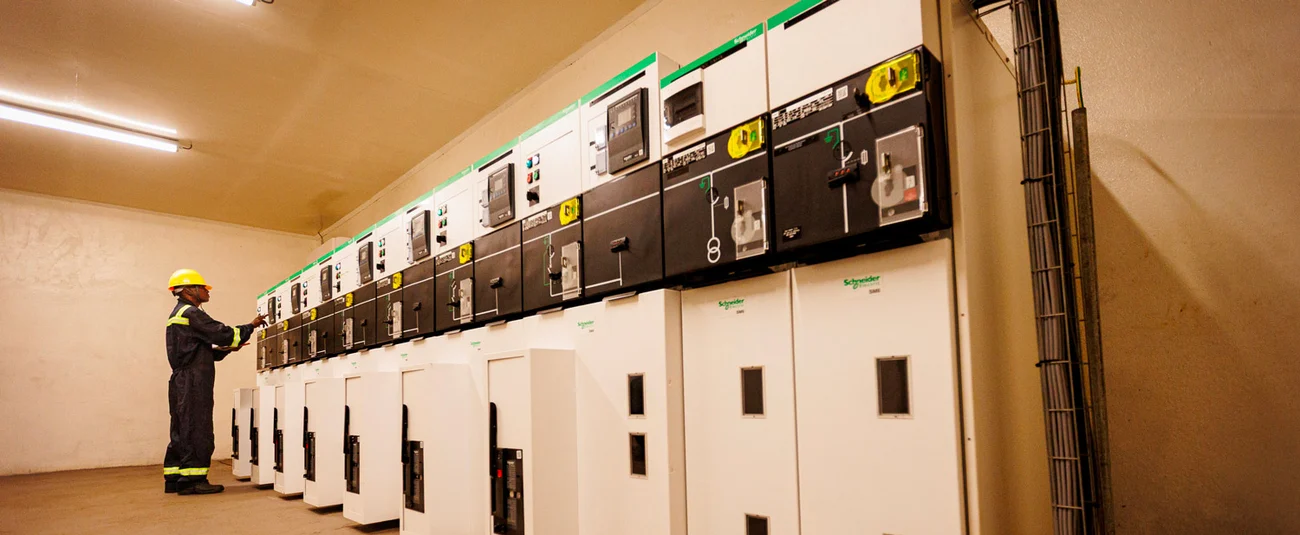
The African Development Bank approved a $3.9 million, two-year project to help Nigeria and 12 other African countries implement energy compacts under Mission 300 to expand electricity access by 2030.
The approval was granted by the AfDB Board of Directors and disclosed in a statement published on the bank’s website on Friday.
The project is designed to help participating countries translate their energy plans into concrete electricity connections for households, businesses, and public institutions.

The initiative comes as African governments intensify efforts to close the continent’s electricity access gap, which continues to constrain economic growth and social development.
What they are saying
The AfDB says the project is intended to move countries from policy commitments to practical delivery of electricity access.
- Wale Shonibare, Director of Energy Financial Solutions, Policy and Regulation at the AfDB, said countries had made “bold commitments” through their Energy Compacts.
- He noted that the new phase of support would help turn those commitments into real outcomes.
- According to him, the focus is on ensuring that households, entrepreneurs, and communities actually gain access to electricity.
He added that the project would provide hands-on technical assistance to help governments implement reforms and accelerate connections.
Get up to speed
In January 2025, the World Bank and African Development Bank launched Mission 300 to provide electricity access to 300 million Africans by 2030.
- As part of the initiative, the AfDB encouraged African countries to develop National Energy Compacts detailing plans to expand electricity access, strengthen power sector institutions, and attract private investment.
- Over the past year, the bank said, dozens of African countries have launched these Energy Compacts, backed by political commitments from governments and pledges of support from development partners.
- The compacts serve as national roadmaps, detailing reforms in regulation, utility performance, and financing needed to scale up electricity access.
However, moving from documented plans to actual electricity connections has remained a major challenge, prompting the need for targeted technical assistance.
More Insights
The newly approved project, known as AESTAP Mission 300 Phase II, will provide direct technical support to 13 Mission 300 countries over the next 24 months.
- Beneficiary countries include Chad, Gabon, Tanzania, Mauritania, the Democratic Republic of Congo, Kenya, Nigeria, Madagascar, Ethiopia, Malawi, Lesotho, Namibia, and Uganda.
- The project will help governments improve electricity regulations, planning frameworks, and tariff structures to unlock investments.
- It will focus on strengthening power utilities so they can deliver more reliable electricity and reduce technical and commercial losses.
- Support will also be provided for improved data, research, and cross-country learning through tools such as the Electricity Regulatory Index and regional energy forums.
In addition, the bank said expert advisers will be embedded within national Compact Delivery and Monitoring Units to help governments coordinate reforms and track progress.
What you should know
The approval of AESTAP Mission 300 Phase II builds on an earlier intervention by the AfDB.
- In December 2025, the bank approved AESTAP Mission 300 Phase I, which provided about USD 1 million in support.
- Phase I focused on helping countries establish and operationalise Compact Delivery and Monitoring Units within government structures.
- These units are responsible for coordinating energy reforms across ministries and monitoring implementation progress.
- Phase II will build on that foundation by providing the technical assistance required to implement planned reforms.
The project will be implemented in coordination with other Mission 300 partners, including the World Bank, national governments, and development organisations, to ensure alignment and avoid duplication of efforts.
Beyond Mission 300, the AfDB has continued to scale up financial support for Nigeria and the wider region.
In November, AfDB approved a $500 million loan to the Federal Government of Nigeria to finance the second phase of the Economic Governance and Energy Transition Support Programme.
The bank also approved a $100 million loan to the Emerging Africa and Asia Infrastructure Fund (EAAIF) to boost sustainable infrastructure development across Africa.