Follow Us on Google Discover
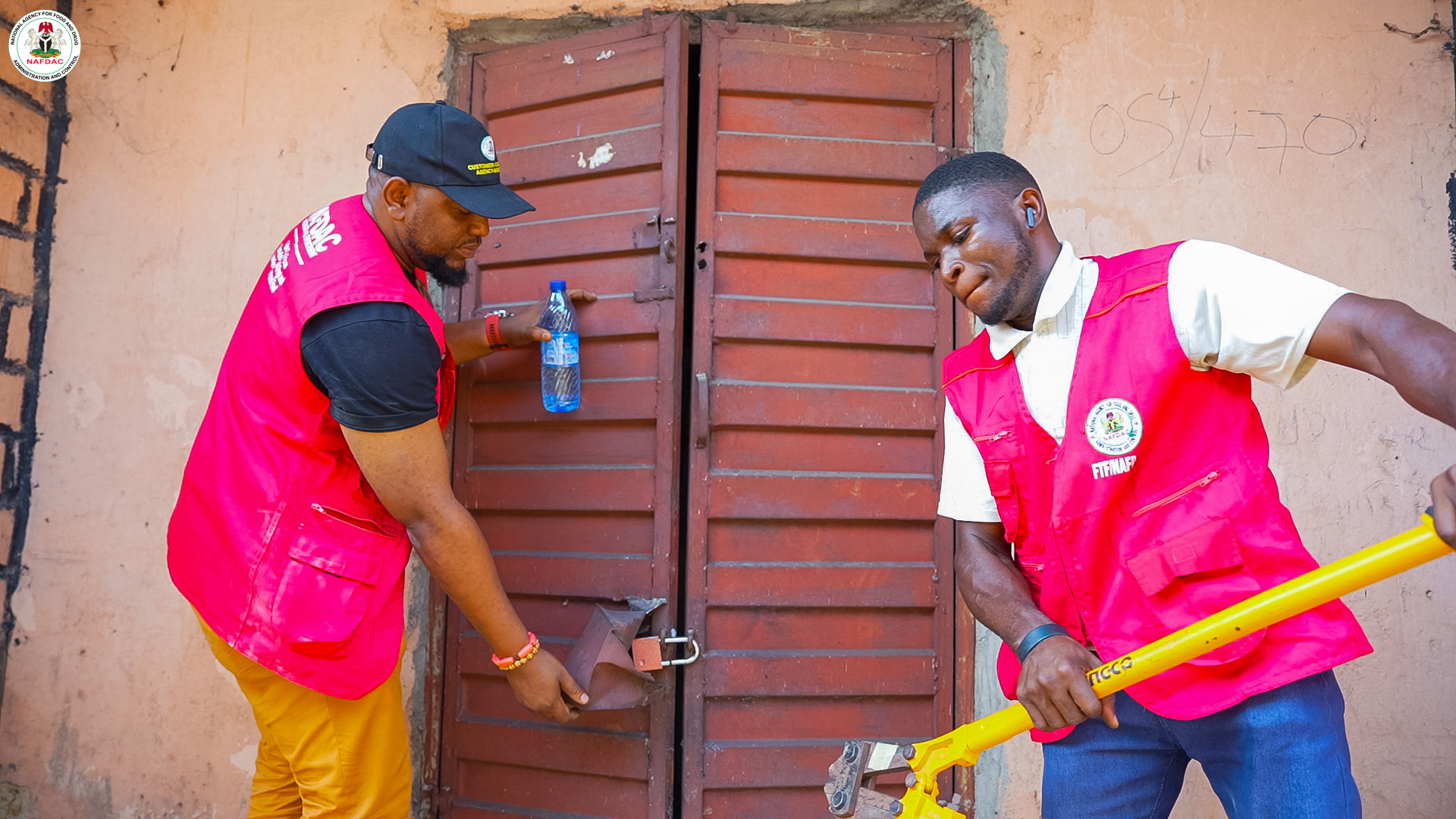
The National Agency for Food and Drug Administration and Control (NAFDAC) has shut down Zuba International Market in the Federal Capital Territory (FCT), Abuja, after uncovering counterfeit and unwholesome regulated products valued at more than N300 million.
The agency disclosed this in a statement issued on Friday.
The enforcement operation involved screening more than 160 shops and confiscating the products in collaboration with the Nigeria Police Force and the Department of State Services (DSS).
NAFDAC shuts Zuba market over N300 million fake products
NAFDAC said the operation was part of its enforcement activities targeting counterfeit, substandard and unwholesome regulated products, particularly ahead of the festive season.
Also Read
The agency’s Head of Investigation and Enforcement Division, North-Central Zone, Pharm. Babatunji Omoyeni, said the exercise followed a directive from the Director-General to strengthen enforcement against counterfeit products and those involved in their distribution.
According to Omoyeni, the directive was intended to prevent operators from taking advantage of increased consumer demand during the yuletide period to circulate fake, substandard and potentially harmful products.
- “NAFDAC has shut down Zuba International Market in the Federal Capital Territory (FCT), Abuja, following an enforcement operation that screened over 160 shops and confiscated counterfeit and unwholesome products valued at over N300 million,” the statement read in part.
The agency urged members of the public to provide credible information about the manufacture, storage, distribution and sale of counterfeit and unwholesome regulated products. It also acknowledged the support of the police and DSS during the operation.
Previous NAFDAC raids uncover billions in fake products
The Zuba operation follows other enforcement actions by NAFDAC targeting counterfeit, substandard and unregistered products across the country.
- In February 2026, the agency confiscated more than 10 million doses of fake malaria drugs and cosmetic products valued at about N3 billion at the Trade Fair Market in Lagos. The operation followed intelligence about the storage of counterfeit medicines at the market.
- NAFDAC also recovered eight truckloads of fake drugs and cosmetic products from a three-storey building disguised as a spare parts warehouse.
- More recently, the agency destroyed fake, banned, expired, and substandard and other violative regulated products valued at an estimated N100 billion at Ogwama Dumpsite in Ogere Remo, Ogun State.
- The products included banned and unregistered medicines, expired Codeine cough syrups, Analgin injections, counterfeit cosmetics, alcoholic beverages in sachets and PET bottles below 200ml, and unwholesome food products.
On November 22, NAFDAC disclosed that it had destroyed unwholesome products valued at approximately N22.73 billion in 22 destruction exercises between January and August 2026. During the same period, it reported 5,542 enforcement activities, 213 raids, 821 product seizures, 179 premises closures, 52 arrests and 221 sanctions.
Nigeria’s counterfeit medicine regulation gaps
NAFDAC has also identified regulatory weaknesses within Nigeria’s pharmaceutical distribution system as part of the challenges behind the circulation of counterfeit and substandard medicines.
- In September 2026, the agency’s Director-General, Professor Mojisola Adeyeye, attributed the persistent problem partly to regulatory gaps surrounding patent medicine dealers and the proliferation of open drug markets.
- Speaking on Channels Television’s Sunrise Daily, Adeyeye said responsibility for regulating patent medicine dealers had previously been handled by the Pharmacy Council of Nigeria (PCN), but was removed from the council for several years before being restored.
- She said the gap allowed people without adequate knowledge of medicines to enter the pharmaceutical distribution business, making effective oversight and control of substandard and falsified medicines more difficult.
Adeyeye noted that the problem had developed over several decades and could not be resolved overnight. She also identified the adoption of the Common Technical Document (CTD), an internationally recognised template for drug registration, as part of efforts to improve the quality and safety of medicines entering the Nigerian market.