Follow Us on Google Discover
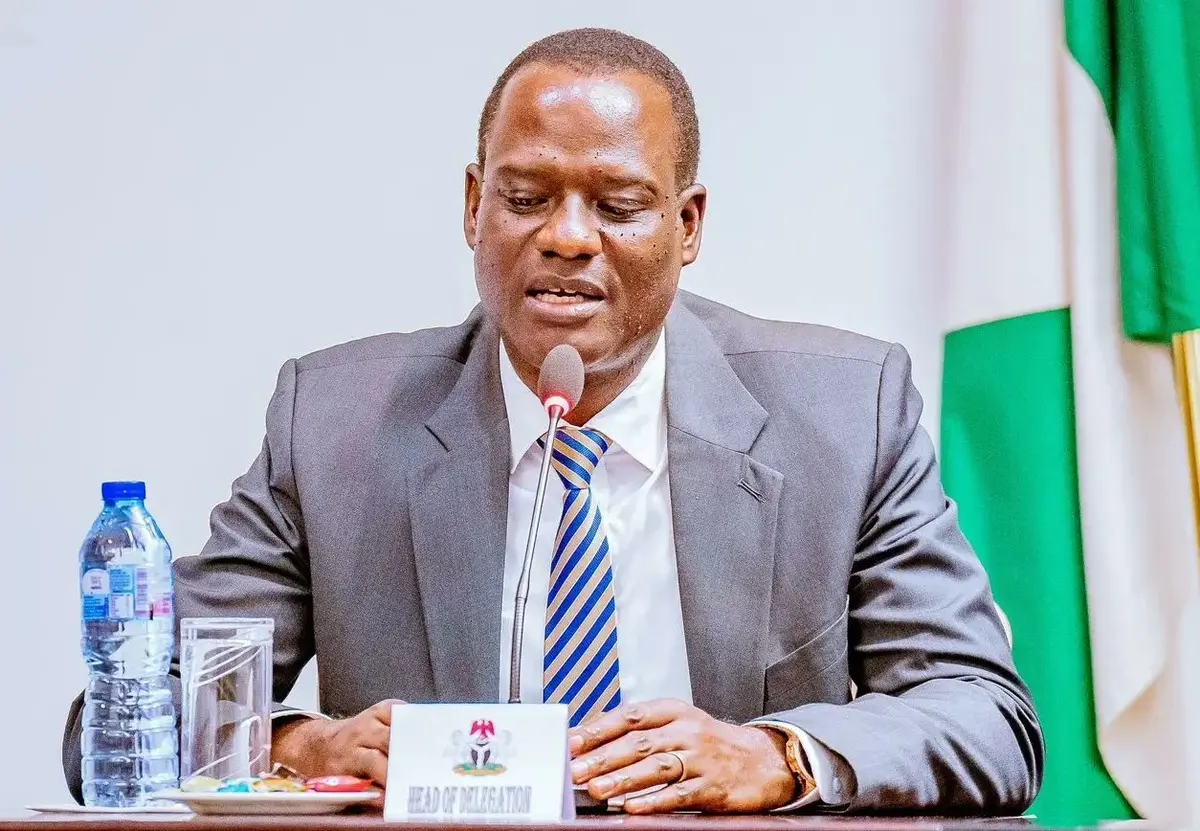
Nigeria has proposed establishing a $10 billion African Union (AU) Peace Fund over the next decade, as part of efforts to strengthen the bloc’s financial independence and reduce its reliance on external funding.
According to a statement from the Ministry of Finance, the Minister of Finance and Coordinating Minister of the Economy, Taiwo Oyedele, made the proposal at the 27th Extraordinary Session of the AU Executive Council on Financing the Union in Accra, Ghana.
Oyedele said the proposed fund should be financed through levies on member states, philanthropy and African capital, with its investments managed along sovereign wealth fund principles to generate sustainable returns for financing peace initiatives across the continent.
The proposal is more ambitious than the existing $1 billion target being considered for the Peace Fund, although Nigeria expressed openness to the initial target.
Also Read
AU faces funding gaps as development assistance declines
Oyedele highlighted the African Union’s funding challenges, noting that member states currently finance only 25% of the organisation’s budget and contribute just 4% of programme funding, compared with a target of 75%.
He said declining development assistance makes it increasingly urgent for African countries to strengthen domestic resource mobilisation and establish more sustainable funding arrangements for the continental organisation.
- Nigeria therefore supports the proposed AU financing option but insists that its implementation must be guided by three principles: fiscal discipline, institutional efficiency and financial leverage.
- On fiscal discipline, the minister advocated focusing on fewer, high-impact priorities, supported by a credible medium-term fiscal framework and performance-linked spending ceilings.
- He also called on technical experts of the Forum of Finance Ministers F15 to validate projections that could increase member states’ contributions to $779 million by 2031, almost four times the current ceiling.
The minister said the projections must be carefully assessed against the fiscal constraints facing countries across the continent.
Nigeria seeks $36 million savings from AU inefficiencies
On institutional efficiency, Oyedele called for the elimination of 29 identified areas of duplication within the African Union, which he said could cost the organisation as much as $36 million.
He also urged the AU Commission to implement outstanding audit recommendations and explore additional revenue sources, including income from AU-owned properties.
- The proposed measures are expected to reduce unnecessary expenditure and improve the efficiency of the organisation’s financial operations.
On the Peace Fund, Oyedele cautioned against drawing down its principal, advocating the retention of the interest-only rule until a sustainable replenishment mechanism is established.
- Under the proposal, investment returns would provide a recurring source of financing for peace initiatives, while contributions from member states and other sources would help build and replenish the fund.
He also urged member states with outstanding financial commitments to fulfil their obligations within an agreed timeframe.
Nigeria seeks implementation plan by 2027
Oyedele called for the Accra meeting to produce a concrete implementation work plan, rather than end with broad commitments on financial reforms.
He urged the AU Commission to eliminate identified institutional inefficiencies and report progress at the organisation’s 2027 mid-year session.
He also asked the F15 technical experts to fully cost the proposed financing option and explore alternative funding arrangements, while the Commission develops sustainable mechanisms for replenishing the Peace Fund.
The minister reaffirmed Nigeria’s commitment to reforms that promote fair burden-sharing, responsible financial management and a financially sustainable African Union.
What you should know
As part of moves to look inwards for economic solutions, the AU recently unveiled the African Credit Rating Agency (AfCRA), an initiative approved by the AU in 2017, in a bid to tell “Africa’s own economic story.”
- Speaking during the launch, the President of Uganda and Chairperson of the African Peer Review Mechanism (APRM), an organ of the AU that coordinated the operationalisation of AfCRA, President Yoweri Museveni, stressed that Africa needs adequate and affordable capital, adding that the continent continues to experience “high borrowing costs” from global partners, which, according to him, are influenced by global rating agencies.
He opined that Africa should not avoid scrutiny but needs accurate assessments and a proper understanding of the context in which African countries are developing.
The Chairperson of the African Union Commission, Mahmoud Ali Youssouf, stressed that AfCRA was created to objectively assess the risks facing African economies while remaining independent for the sake of its credibility.