Follow Us on Google Discover
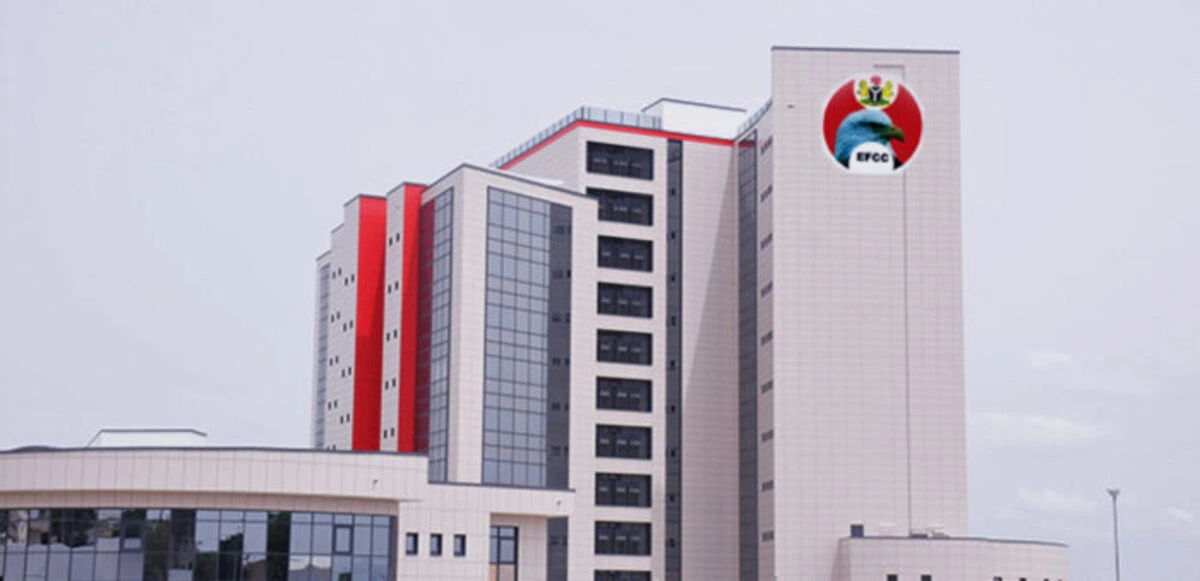
The Economic and Financial Crimes Commission (EFCC) has appealed against the Federal High Court’s decision to set aside its interim forfeiture order against properties linked to the former Managing Director of Warri Refining and Petrochemical Company (WRPC), Jimoh Olasunkanmi Yisawu.
This is according to a notice of appeal filed by the Commission’s lawyer, E.E. Iheanacho, SAN, and seen by Nairametrics.
Nairametrics previously reported on Monday that Justice James Omotosho dismissed the EFCC’s application for the final forfeiture of Yisawu’s funds and properties domiciled in Lagos.
The judge held that the Commission had “failed totally” to establish that Yisawu’s income, after serving the Nigerian National Petroleum Corporation (NNPC) for 32 years, was disproportionate to the value of the properties.
Also Read
Justice Omotosho examined the financial records and explanations provided by both the EFCC and Yisawu, concluding that the balance of probabilities weighed heavily in favour of the former managing director.
EFCC cites alleged errors in trial court ruling
The EFCC, through its counsel, is challenging the entire decision of the trial court.
Iheanacho alleged that the trial judge erred in law by refusing to evaluate evidence presented by the EFCC, which allegedly showed that the Respondent’s income from September 2020, when he completed the Code of Conduct Bureau (CCB) Asset Declaration Form, to September 2023, when he retired, was far below the total sum of $912,550 he paid to Samaila Bala and Rasheed Yusuf, who deal in foreign exchange as Bureau de Change (BDC) operators.
- He argued that between 2021 and 2025, the Respondent paid a total of $912,550 in cash to Bala and Yusuf, equivalent to more than N1.5 billion, maintaining that the “uncontroverted evidence shows that the source of the funds was not linked to the Respondent’s lawful earnings.”
The lawyer further claimed that the Respondent failed to provide a credible explanation for the lawful origin of the funds used to develop the disputed landed properties and purchase the treasury bills sought to be forfeited.
- He alleged that Exhibit EFCC 16 showed that the Respondent had, over the years, purchased other movable and immovable assets, including vehicles and landed properties, using his salaries, allowances and emoluments between 2005 and 2020.
- He also argued that the income the Respondent allegedly earned from salaries and allowances before completing the CCB Asset Declaration Form, which he said was not included in Exhibit EFCC 16, could not be considered by the trial court when determining his lawful income in relation to the substantial amounts in US dollars he allegedly paid in cash to Bala and Yusuf between 2021 and 2025.
Iheanacho alleged that Exhibit EFCC 18 showed that the Respondent used his gratuity, totalling N368,894,865.28, to purchase other properties, different from those sought to be forfeited, as well as FGN Savings Bonds between November 2023 and December 2024.
He maintained that the funds paid to Bala and Yusuf did not form part of the Respondent’s pension and gratuity.
The lawyer further argued that the trial judge erred in law by holding that the Respondent had declared his assets, whereas the CCB, which keeps records of asset declarations by public officers, allegedly confirmed that it had no record of the Respondent’s declaration.
- “In 2020, the Respondent filled the CCB Asset Declaration Form but failed to submit same to the CCB,” he alleged.
The senior lawyer also argued that an asset declaration form is a critical component in determining the legitimacy or otherwise of assets linked to a public officer at any given time.
According to him, the trial judge failed to appreciate the EFCC’s powers, which include demanding and receiving public records from individuals, companies and government agencies such as the CCB.
He also contended that there was no evidence to show that the former managing director purchased US dollars in cash on the open market using his savings, salaries, allowances, pension or gratuity, or that he used lawful resources to purchase the treasury bills and develop the two properties sought to be forfeited.
He urged the court to allow the Commission’s appeal, set aside the trial court’s decision and grant the final forfeiture of the funds and properties reasonably suspected to be proceeds of unlawful activities to the Federal Government.
Yisawu’s legal position at trial court
As of the time of this report, Nairametrics had yet to access the formal response of Yisawu’s legal team to the appeal.
At the trial court, Yisawu, through his lawyer, Wale Balogun, SAN, confirmed that he served the NNPC for 32 years.
He denied violating any contract, stating that neither the NNPC, NNPCL, WRPC nor the contractor had ever lodged a complaint against him regarding his conduct or the execution of the project.
- Yisawu also argued that he served as managing director of WRPC for only ten months, while the properties targeted for forfeiture were acquired between 2015 and 2020, prior to his appointment as MD.
- He maintained that his lawful earnings accumulated over 32 years, including salaries, allowances and estacodes, were used to acquire the properties and treasury bills.
- He also said he had earned foreign currencies through trading in the open market over the years.
- On the allegation of non-declaration of assets, Yisawu argued that he declared his assets when NNPCL was a government-owned company but was no longer required to do so as a public officer following its privatisation.
Justice Omotosho, in setting aside the interim forfeiture orders and final forfeiture application, held that Yisawu’s evidence outweighed what he described as the EFCC’s “flimsy and watery” evidence.
Previous NNPC money laundering case
The development at the trial court adds to the list of anti-corruption cases involving prominent Nigerians accused of money laundering and related financial offences that have ended in their favour at the Federal High Court.
In 2022, the Federal High Court in Abuja discharged and acquitted Andrew Yakubu, a former Group Managing Director (GMD) of the Nigerian National Petroleum Corporation (NNPC), of money laundering charges.
The EFCC had raided Mr Yakubu’s residence in Kaduna State in 2017 after receiving a tip-off and allegedly discovered $9,772,800 and £74,000 stashed in a fireproof safe.
The discovery led to a money laundering case against the former NNPC chief, which lasted five years before the court discharged and acquitted him.
Nairametrics previously reported the case in March 2022.