Follow Us on Google Discover
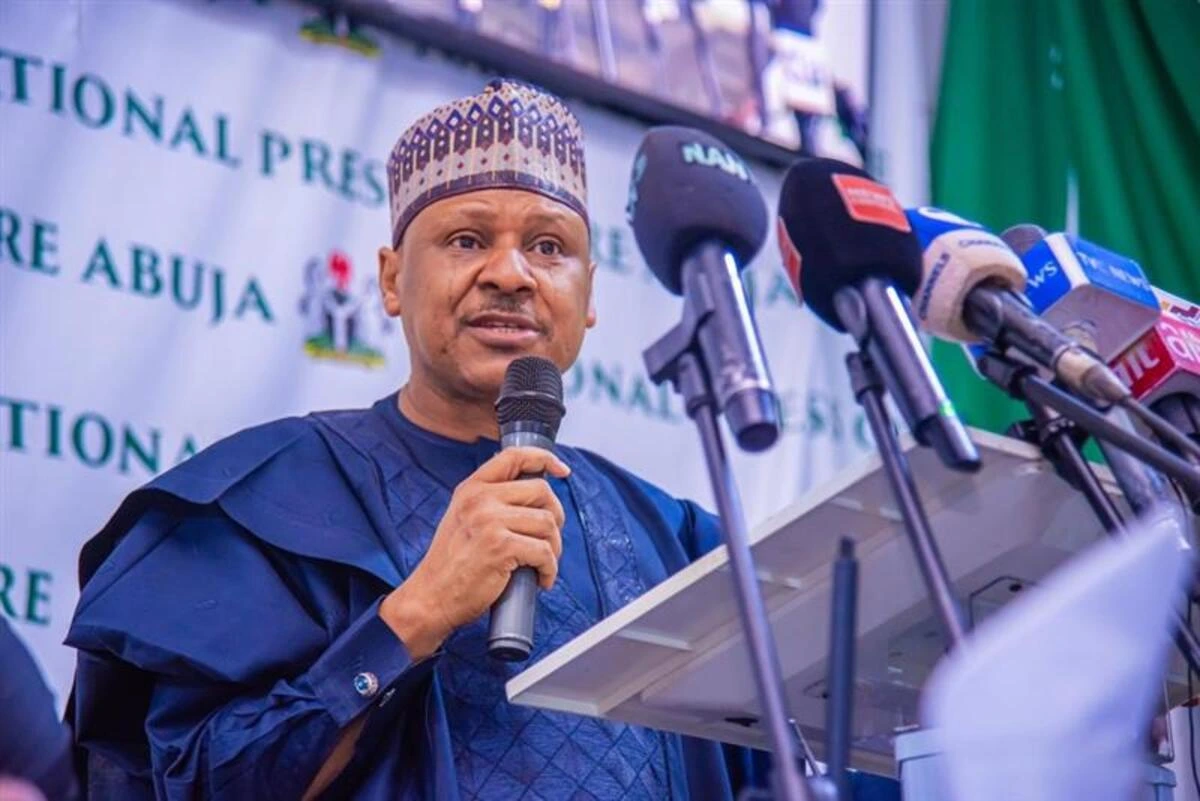
The Federal Government has suspended all reviews of broadcast licence fees until further notice, amid complaints about rising costs raised by the Broadcasting Organisations of Nigeria (BON).
The Minister of Information and National Orientation, Mohammed Idris, disclosed this on Monday during a courtesy visit by a BON delegation led by its Chairman, Senior High Chief Dr Tony Akiotu, according to a statement by Rabiu Ibrahim, Special Assistant (Media) to the Minister of Information and National Orientation.
The directive is part of measures aimed at addressing the challenges facing Nigeria’s broadcasting industry.
Broadcast licence fee review suspended
According to the statement, the BON delegation had raised concerns over the “rising cost of operating broadcast stations.”
Also Read
Responding, the Minister reaffirmed the Federal Government’s commitment to creating a more conducive environment for the growth and sustainability of the broadcasting industry.
- “Any increase in licence fees is hereby put on hold. All reviews relating to licences are suspended until further notice. I am directing the NBC to ensure strict compliance while we review the situation,” he stated.
The Minister also directed the Director-General of the National Broadcasting Commission (NBC) to expedite the review of the National Broadcasting Code to ensure that the regulatory framework remains responsive to developments and emerging realities in the broadcasting industry.
On the Digital Switch-Over (DSO), Idris assured the delegation that he would convene a stakeholders’ meeting to address outstanding issues.
Addressing BON’s request for the enforcement of the 45-day payment period for advertising services, Idris disclosed that he had already directed the Advertising Regulatory Council of Nigeria (ARCON) to ensure the full implementation of the policy.
He said the Ministry would engage relevant stakeholders on concerns surrounding access to affordable financing and spectrum allocation.
The Minister further emphasised the critical role of broadcasting in strengthening democracy, promoting national cohesion and ensuring that citizens have access to credible and accurate information.
He also urged broadcasters to uphold the highest standards of professionalism, fairness and ethical journalism, particularly as the country prepares for the 2027 general elections.
BON seeks access to finance
- On his part, BON Chairman, Senior High Chief Dr Tony Akiotu, highlighted several challenges confronting the industry, including “the review of the National Broadcasting Code, broadcast licence fees, rising operational costs, access to financing, spectrum allocation and the implementation of the 45-day advertising payment period.”
- “BON believes in dialogue, consultation and mediation to prevent a breakdown of industrial harmony in the broadcasting industry,” he added.
He expressed gratitude to the Minister for his personal intervention during the DSO launch and sought his continued support in addressing the challenges affecting members.
Backstory
Issues affecting the broadcasting industry have in the past led to litigation.
- Recall that in 2022, the Federal High Court sitting in Lagos stopped former President Muhammadu Buhari and the National Broadcasting Commission (NBC) from revoking the licences of 53 broadcast stations across the country and shutting them down over their alleged failure to renew their licences.
- The judgment followed a lawsuit filed by the Socio-Economic Rights and Accountability Project (SERAP) and the Nigerian Guild of Editors (NGE) against Buhari and the NBC.
The plaintiffs asked the court to declare that Section 10(a) of the Third Schedule to the NBC Act, which the NBC relied on to threaten to revoke the licences of 53 broadcast stations and shut them down, was unconstitutional and unlawful because it violated freedom of expression.
At the time, the NBC had moved against 53 broadcast media organisations in Nigeria, revoking their licences and ordering them to shut down within 24 hours over alleged outstanding licensing fees of more than N2.6 billion dating back to 2015.