Follow Us on Google Discover
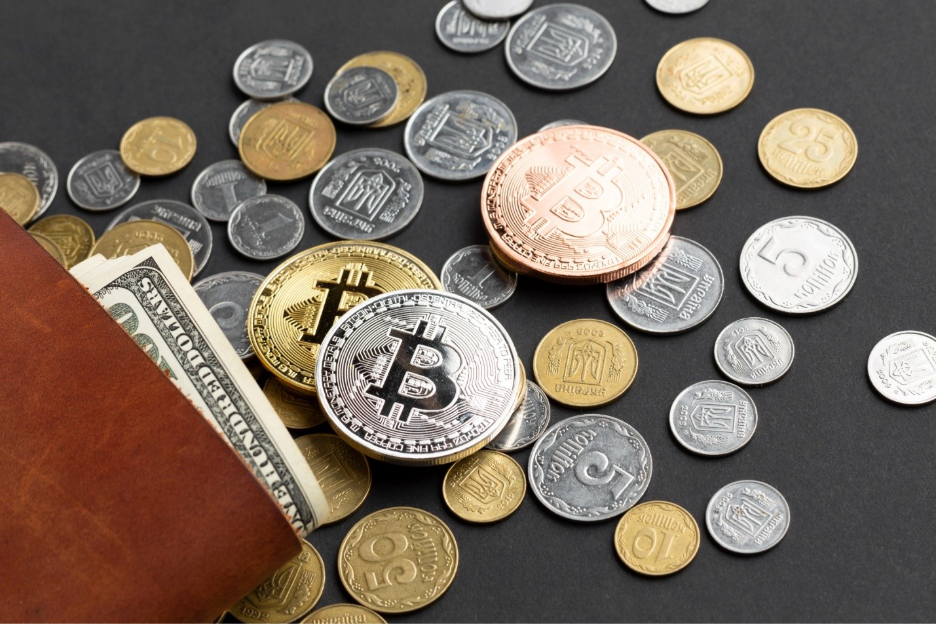
The standard way to pay a foreign supplier is sound: file your documents, get dollars through an authorized dealer bank, and wire the money. In 2026, with the naira steadier, it works better than it has in years.
It still breaks on timing. Dollars that arrive in three weeks cost more than dollars that arrive in three days, and stablecoins have found a role in closing that gap.
The bank route deserves its reputation
Start with what the formal route gets right. Every physical import needs an E-Form M, and Export to Nigeria’s summary of the guidelines says anyone importing physical goods must process it through an Authorized Dealer Bank, whatever the value and whether or not payment is involved. That file protects you at customs, and no payment method replaces it.
The market backdrop is also friendlier. Nairametrics reported that gross reserves stood near $55 billion and net reserves at a record $46 billion, with the official rate at ₦1,346 per dollar. That is a very different picture from the shortages that shaped importers’ habits in earlier years.
Also Read
A reasonable owner could conclude from this that scarcity is over and stablecoins are a solution looking for a problem. That conclusion is half right. Headline scarcity has eased. The friction around it has not gone away.
Where the bank-only approach cracks
The first crack is the gap between the official and parallel markets. Vanguard reported, citing CBN data, that the NFEM rate was ₦1,346 and the parallel rate ₦1,373, a margin of ₦27 per dollar that had been ₦36 a day earlier.
A margin that moves ₦9 in a day tells you that dealers are pricing uncertainty, and an importer who needs dollars outside the bank allocation pays for it.
The second crack is timing. A supplier quotes a price in dollars and holds it for a limited window. If your dollars arrive after the window closes, you renegotiate from a weaker position, and the price in naira may have moved against you in the meantime. Seasonal demand makes this worse as seasonal surges in import demand create sudden clusters of heavy dollar-buying orders.
The third crack is access. A bank can only wire dollars to a supplier in the form its compliance team approves, and small and mid-sized importers often wait behind larger corporate clients. None of this is a failure of the system. It is how a system built for scale treats small orders.
Chainalysis points the same way from the demand side. Its 2025 Geography of Cryptocurrency analysis for Sub-Saharan Africa says Nigeria received over $92.1 billion in on-chain value between July 2024 and June 2025, and ties that scale to persistent inflation and foreign currency access issues that made stablecoins attractive.
What a stablecoin payment changes, and what it does not
A stablecoin such as USDT or USDC is a token designed to hold the value of one US dollar. For a supplier payment, three properties matter. The price is fixed in dollars from the moment you hold the token. Settlement on a blockchain takes minutes rather than days. And it runs on weekends and public holidays, when a bank wire does not.
Chainalysis describes the same pattern at a larger scale. Its analysis says stablecoins are frequently used in high-value transactions tied to trade flows between Africa, the Middle East and Asia, and that it observes regular multi-million-dollar stablecoin transfers supporting sectors such as energy and merchant payments. It adds that Nigeria’s and South Africa’s institutional activity is likely driven by a growing B2B sector facilitating cross-border payments.
Three things do not change. The supplier must be willing to accept the token, and some cannot. Your customs paperwork must still match the goods. And you take on new risks: sending to the wrong address, choosing the wrong network, and relying on the stablecoin issuer to keep its peg. A stablecoin is a faster pipe, not a substitute for compliance.
How platforms automate this with a stablecoin API
A single importer can handle this by hand. A platform that pays suppliers on behalf of hundreds of importers cannot. The platforms that automate it use a crypto payment API, which does the repetitive work of generating a deposit address, detecting an incoming payment, converting it, and settling it.
The flow looks like this. A customer or importer is assigned a unique wallet address for each transaction. They send USDT or USDC to it. The API detects the transfer on-chain and notifies the platform’s server through a webhook, which is an automatic message sent to your system when an event happens. The funds are then converted and settled to a bank account in naira or another supported currency.
Breet Business is a crypto payment gateway whose payment API offers one REST API for on-ramp, off-ramp, wallet generation, and settlement. Customers deposit 12+ assets, including USDT and USDC on TRC20, ERC20, Solana, BNB Smart Chain, Polygon, Arbitrum, and Base. Breet Business auto-converts and settles to NGN or GHS bank accounts, sends real-time webhooks, and offers a live sandbox. There are no setup or monthly fees.
Two limits apply. Breet’s Nigerian operator, InBreetic Technologies Limited, is registered with the NFIU and has a pending application to the SEC’s ARIP incubation program, so no SEC license has been granted yet. And an API fits teams building a product. An importer paying one supplier a month does not need to write code.
A worked example: what three weeks of waiting costs
The numbers below are illustrative. Say an importer needs $50,000 to pay a supplier, and the naira is at ₦1,350 per dollar. The order is worth ₦67,500,000 (50,000 × 1,350). Assume the importer finances it at 30% per year, which is a placeholder for whatever your own cost of funds is.
- Daily cost of carrying ₦67,500,000 at 30%: 67,500,000 × 0.30 ÷ 365 = about ₦55,479.
- If dollars take 21 days to arrive, carrying cost is about ₦1,165,068 (55,479 × 21).
- If a stablecoin route delivers in 7 days, it is about ₦388,356 (55,479 × 7).
- Savings from the 14 days removed: about ₦776,712, or 1.15% of the order.
The saving only counts if the stablecoin route has no offsetting cost. If it carries a 2% price premium, roughly the size of the official-to-parallel margin on 30 October (27 ÷ 1,346), the route costs ₦1,350,000 more than the official rate (67,500,000 × 0.02).
That cancels the savings and then some. The lesson is that stablecoins win on timing, not on price, and only when the delay is long, or the supplier’s discount for fast payment is real.
Three risks that stay with the importer
Counterparty risk comes first. A stablecoin payment is final once it confirms on-chain, so the protections a bank wire gives you, such as a recall request, mostly disappear. Pay new suppliers in tranches: a deposit on order, the balance against a shipping document.
That limits what you lose if a supplier turns out to be unreliable, and it works the same way whether you pay by wire or by token.
Address and network risk comes second. A payment sent on the wrong network, or to a mistyped address, may be unrecoverable.
Send a small test amount first, confirm the address through a second channel, and let software do the copying. If you are automating payments, generating a fresh address per invoice removes the habit of reusing old ones.
Issuer risk comes third. A stablecoin holds its value only as long as the issuer’s reserves and redemption process do.
For a payment that sits in a wallet for minutes, that risk is small. For a balance held for weeks, treat it as you would any foreign-currency account at an institution you cannot inspect, and settle to naira or a bank balance promptly