 Follow Us on Google Discover
The Housing Development Advocacy Network (HDAN) has called for a fundamental transformation of Nigeria’s mortgage banking system, urging financial institutions, regulators and the Federal Government to introduce innovative housing finance solutions that will enable millions of low- and middle-income Nigerians, particularly workers in the informal sector, to access affordable homeownership opportunities.
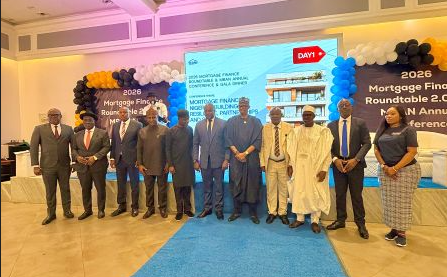
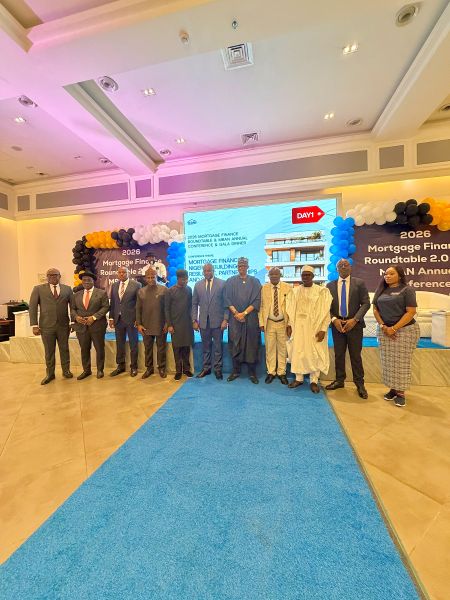
The Executive Director of HDAN, Barr. Festus Adebayo, made the call on Friday while speaking at the 2026 Mortgage Finance Roundtable 2.0, organised by the Mortgage Bankers Association of Nigeria (MBAN) at Fraser Suites, Abuja.
Speaking at the high-level housing finance gathering, which brought together mortgage banking executives, government officials, financial regulators, housing developers and industry stakeholders, Adebayo challenged mortgage institutions to abandon outdated lending practices that exclude hardworking Nigerians simply because they do not receive conventional monthly salaries.
According to him, Nigeria must urgently reposition its mortgage industry to become a major driver of financial inclusion, economic growth, wealth creation and affordable homeownership.
Also Read
“Nigeria cannot achieve mass homeownership with a mortgage banking system designed almost exclusively for people who receive monthly salaries. We must recognise that millions of Nigerians earn legitimate incomes daily, weekly and seasonally, yet remain excluded from formal housing finance,” Adebayo declared.
He said the transformation witnessed in Nigeria’s financial services industry through digital payment platforms such as OPay, Moniepoint and other financial technology providers demonstrates that banking services can reach millions of previously underserved citizens.
Adebayo questioned why the same innovation could not be replicated in mortgage banking.
“OPay, Moniepoint and other digital financial institutions have demonstrated that banking can reach traders, artisans, commercial drivers, farmers, mechanics, market women and small business owners. Why should these same Nigerians, who transact significant amounts of money and consistently meet their financial obligations, remain excluded from mortgage opportunities?”
He maintained that the fundamental reform required was for mortgage banks to stop treating the absence of salary slips as evidence of the absence of income.
HDAN Advocates Digital Transaction History as Proof of Income
The HDAN Executive Director urged mortgage banks to develop alternative credit assessment systems that recognise verified digital transaction histories, business cash flows, consistent savings and rental payment records as legitimate evidence of borrowers’ earning capacity.
He explained that a trader who consistently receives payments through a fintech account may possess the financial capacity to service a mortgage, even without a formal employment letter.
However, he emphasised that lenders must assess actual disposable income after business expenses and existing obligations, rather than relying solely on transaction volume.
“A trader who has operated a profitable business for fifteen years should not be considered unbankable simply because there is no payslip. Mortgage banks must begin to recognise verified financial behaviour, sustainable earnings and repayment capacity,” he said.
Adebayo referenced the 2026 Access to Financial Services Survey by Enhancing Financial Innovation and Access (EFInA), which showed that 79 percent of Nigerian adults are financially included, 38 percent use mobile money, 53 percent save through formal channels, while only 10 percent access formal credit.
He described the figures as evidence that Nigeria’s financial inclusion achievements have not been adequately translated into access to productive credit and long-term assets.
“We have made significant progress in helping Nigerians receive money, transfer money and save money. The next challenge is helping them convert those financial activities into homeownership and lasting family wealth,” he stated.
HDAN Proposes National Informal Sector Homeownership Scheme
As part of his recommendations, Adebayo proposed the establishment of a National Informal Sector Homeownership Scheme (NISHOS) to provide a structured pathway through which financially capable informal-sector workers can access housing finance.
He recommended that the proposed initiative be developed through collaboration involving the Federal Mortgage Bank of Nigeria (FMBN), primary mortgage banks, fintech companies, cooperatives, housing developers and development finance institutions.
Under the proposed scheme, participants would be able to register digitally, save towards housing through regulated institutions, establish verified income profiles and qualify for suitable mortgage, cooperative housing, incremental construction or rent-to-own products.
He suggested an initial pilot involving 10,000 informal-sector workers over twelve months, with results evaluated against savings performance, loan eligibility, affordability, repayment capacity and actual housing delivery.
Adebayo stressed that the proposed programme must be supported by strong consumer protection, transparent lending conditions and responsible credit assessment.
Mortgage Banks Must Introduce Flexible Repayment and Rent-to-Own Products
The HDAN Executive Director also advocated the introduction of flexible mortgage repayment arrangements that reflect the income patterns of different categories of workers.
According to him, the existing practice of structuring mortgage repayments almost entirely around monthly salaries does not reflect Nigeria’s economic realities.
“A civil servant earns monthly, a commercial driver may earn daily, a trader may receive income weekly, while a farmer may depend on seasonal earnings. Our mortgage products must reflect these differences without compromising responsible lending,” he said.
He urged mortgage banks to introduce more inclusive products, including flexible repayment mortgages, cooperative housing finance, incremental construction loans, affordable rent-to-own schemes and dedicated first-time homebuyer facilities.
He further called for stronger partnerships between mortgage banks and credible cooperatives, trade associations and informal-sector organisations to identify eligible borrowers and expand access to housing finance.
Housing Affordability Must Remain Central to Mortgage Reforms
Adebayo cautioned that expanding mortgage access without addressing the rising cost of housing would produce limited results.
He noted that many low- and middle-income Nigerians remain unable to purchase homes because of high construction costs, expensive land, infrastructure deficits, inadequate long-term financing and cumbersome property documentation processes.
“There is no benefit in giving a low-income Nigerian access to a mortgage if the cheapest available house is still beyond that person’s capacity to repay. Mortgage inclusion must go hand in hand with affordable housing delivery,” he said.
He called on the Federal and state governments to prioritise serviced land, affordable housing infrastructure, transparent land administration, reduced titling costs and incentives for developers delivering homes within the purchasing capacity of ordinary Nigerians.
He also urged the government and development finance institutions to establish targeted mortgage credit guarantees and sustainable long-term funding arrangements that would enable mortgage banks to provide affordable loans without exposing the financial system to excessive risks. Calls on CBN, FMBN, NMRC and National Assembly to Champion Reforms
The HDAN Executive Director called on the Central Bank of Nigeria to support responsible digital mortgage innovation and the adoption of appropriate alternative-income verification systems.
He urged FMBN to deepen National Housing Fund participation among self-employed Nigerians and expand practical access to housing finance beyond conventional salaried employment.
Adebayo also encouraged the Nigeria Mortgage Refinance Company (NMRC) to strengthen refinancing opportunities for eligible informal-income mortgages and support wider implementation of existing informal-sector underwriting standards.
He called on the National Assembly to review housing finance legislation where necessary, strengthen consumer protection and support reforms that encourage inclusive mortgage lending.
Adebayo further recommended greater digitalisation of mortgage applications and processing, with clear service timelines, transparent documentation requirements and stronger accountability.
Mortgage Success Must Be Measured by Homes Delivered, Not Funds Announced
The HDAN Executive Director challenged mortgage banking executives to redefine success in the industry.
He argued that the true performance of Nigeria’s mortgage system should not be measured solely by the volume of loan facilities announced or the capital available to mortgage institutions, but by the actual number of Nigerians who obtain affordable, secure homes through sustainable financing.
“We must move away from celebrating mortgage funds that ordinary Nigerians cannot access. The real success of our mortgage institutions should be measured by how many families move from renting into decent, affordable and secure homeownership,” he declared.
He emphasised that a more inclusive mortgage industry would stimulate construction, create jobs, expand demand for building materials, strengthen financial markets and contribute to national economic growth.
“Housing finance is not merely about lending money to buy houses. It is an economic development instrument capable of creating jobs, stimulating industrial production, building household wealth and strengthening the national economy,” he added.
From Financial Inclusion to Housing Wealth Inclusion
Concluding his intervention, Adebayo called for a national coalition involving mortgage banks, fintech companies, government institutions, developers, cooperatives and civil society organisations to develop a practical roadmap for inclusive mortgage financing.
He said HDAN would continue to advocate reforms that place low- and middle-income Nigerians at the centre of housing finance policies.
“Nigeria’s next financial revolution must be a homeownership revolution. We must move from financial inclusion to housing wealth inclusion. The future of mortgage banking must recognise legitimate income, reward consistent savings, encourage innovation and provide realistic opportunities for hardworking Nigerians to own decent homes,” he concluded.
About HDAN
The Housing Development Advocacy Network (HDAN) is a housing policy advocacy, research and development organisation committed to promoting affordable housing, sustainable housing finance, real estate sector reforms, consumer protection and inclusive homeownership in Nigeria and across Africa. Through research, stakeholder engagement and public policy advocacy, HDAN works with government institutions, financial organisations, private developers and development partners to advance practical solutions to Africa’s housing challenges.