Follow Us on Google Discover
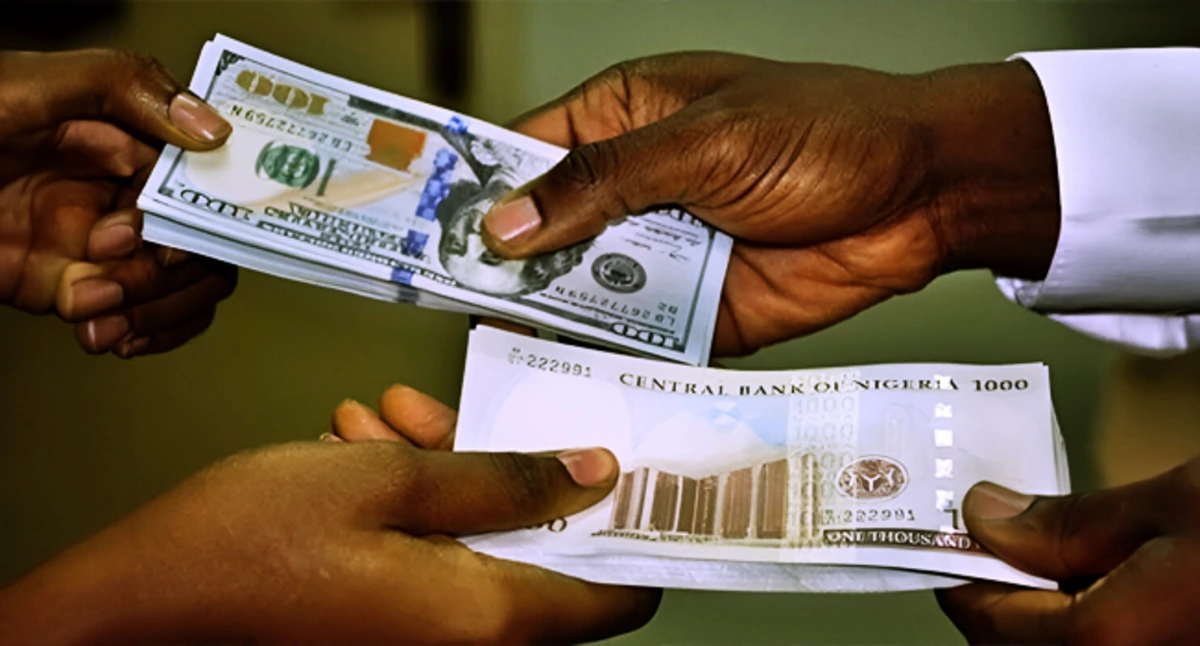
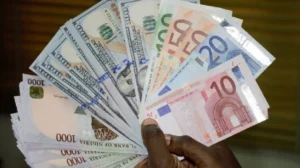
The Nigerian naira is poised for renewed stability following a sharp drop in the Dollar, triggered by the Democratic Party securing control of both chambers of the U.S. Congress in the recent midterm elections.
This political change in Washington is also having a trickle-down effect on global foreign exchange markets.
Overseas investors are adjusting their assets to account for upcoming fiscal policy changes and possible interest rate hikes by the US Federal Reserve, creating downward pressure on the Greenback.
Democrats won victories in Republican districts and red states across the country. They flipped at least six Senate seats and won House races in districts that just a few years ago would have been more likely to vote for a Republican in 2024. Some news outlets projected Democrats winning the House and Decision Desk HQ that they secured the Senate.
Also Read
President Trump said he could “get along with a House and Senate that are controlled by the opposite party” if they would just want to work with him.
A Democratic wave is viewed as a negative for the US dollar, on expectations of increased government regulation, especially on big-growth technology and artificial intelligence companies. US Treasuries could rally if gridlock prevents additional tax and government spending cuts, alleviating worries about the amount of federal borrowing.
A Democrat controlled Congress adds gridlock to the major deregulation and unilateral tax cuts, further tempering any enthusiasm towards aggressive US fiscal expansion. This scenario tends to cause a correction or weakness in the US Dollar Index (DXY). Technically, a softer dollar enables the pair to push into key support levels and not necessarily break through resistance levels.
The pair could move closer to the lower bound (Nudging back toward $1,300/$-$1,250/$). The attractive CBN monetary policy rate (above 20%) draws international portfolio investors with expanding uncertainty on treasury yields from Washington to chase higher yielding emerging/ frontier market debt (the so-called carry trade). FPI inflow support Higher foreign portfolio investments into Nigerian OMO bills and sovereign debt support naira by increasing dollar liquidity in the Nigerian autonomous foreign exchange market (NAFEM).
The dollar’s broad slide provides the CBN with some room to maneuver. The Central Bank of Nigeria is likely to be in a much better position to defend the Naira and stabilize the FX rate in the near to medium term given the resilience of Nigeria’s external reserves and oil revenue.
Traders will be watching the releases by the U.S. Federal Reserve and Nigeria’s Monetary Policy Committee (MPC) for the Central Bank of Nigeria for clues on the future of the rate in the near and distant future.
Additionally, the geopolitical risk premium remains a consideration despite the push for a diplomatic end to the US-Iran war that has been raging for 8 months. President Trump said on Tuesday in an interview with the Financial Times that the US has no plans to attack Iran in the near term despite Israeli Prime Minister Benjamin Netanyahu declaring plans for an attack later this week.
A senior Iranian official told Reuters that the Strait of Hormuz will be reopened if the US sanctions are waived and the naval blockade is lifted. Iran’s Islamic Revolutionary Guard Corps (IRGC) announced that 4 tankers were destroyed after hitting mines south of the Strait of Hormuz. This adds to fears of oil supply risk and inflationary pressures because of volatile energy markets, which supports further Fed policy tightening.
Traders will get to see this week’s US economic calendar on Wednesday to watch the US ADP report on private sector employment and the ISM Services PMI. Otherwise, the incoming geopolitical news might drive some additional momentum to gold, but the downside might be limited considering markets will be eyeing US key monthly employment figures i.e., Nonfarm Payrolls, on Friday.