Follow Us on Google Discover
The Federal Government has begun disbursing the Cabotage Vessel Financing Fund (CVFF) to help Nigerian shipowners acquire vessels, expand their fleets and strengthen indigenous participation in the maritime sector.
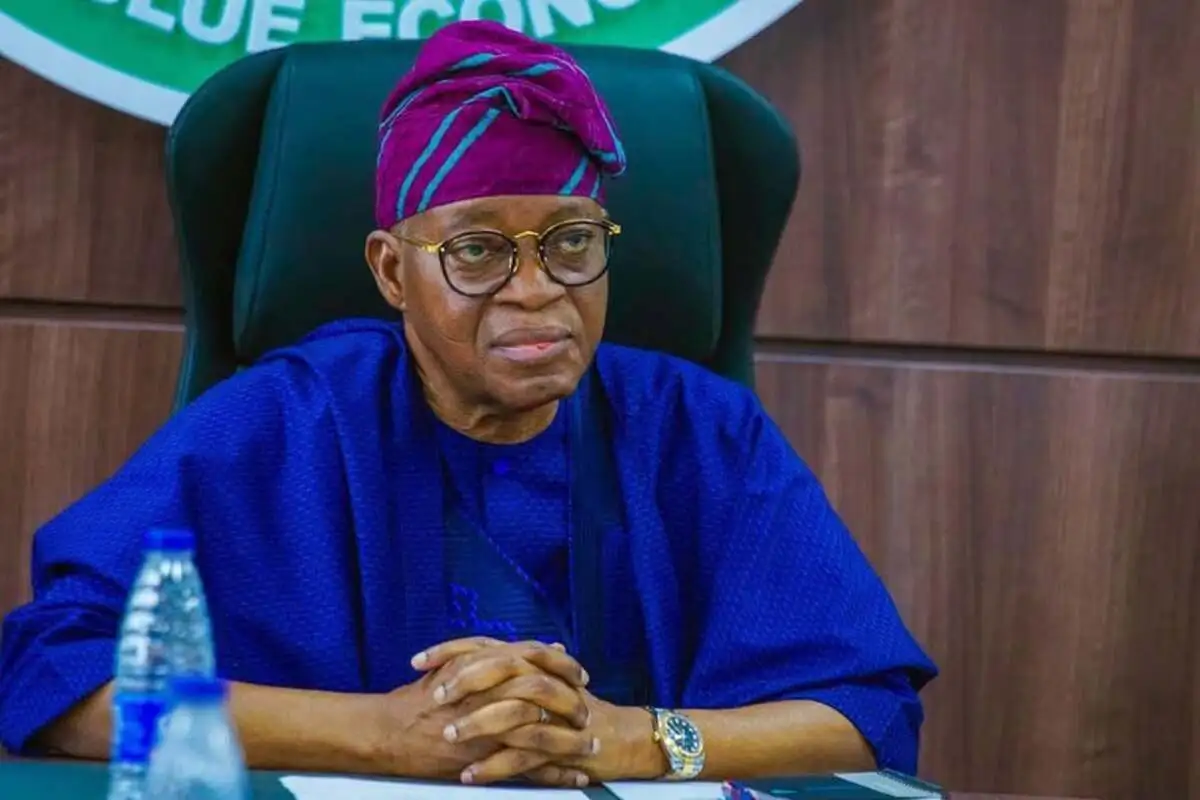
Minister of Marine and Blue Economy Adegboyega Oyetola disclosed this on Thursday in Lagos at the 2026 Annual Summit of the Shipping Correspondents Association of Nigeria (SCAN), according to the News Agency of Nigeria (NAN).
The disbursement is expected to improve access to long-term financing for indigenous operators who have struggled to acquire vessels because of high borrowing costs, stringent collateral requirements and the capital-intensive nature of shipping.
FG to strengthen indigenous participation in maritime
Oyetola said the government was committed to strengthening indigenous participation in the maritime industry, retaining more maritime value within the Nigerian economy and creating sustainable employment.
Also Read
- “Minister of Marine and Blue Economy, Adegboyega Oyetola, says the Federal Government has begun disbursement of the Cabotage Vessel Financing Fund (CVFF) to strengthen indigenous shipping capacity,” the NAN report read in part.
- Represented at the summit by Anastasia Ogbonna, Director of Media at the ministry, the minister said the government recognised the financing challenges facing local shipowners and was taking steps to make the fund accessible to qualified operators.
- He said he had directed the Nigerian Maritime Administration and Safety Agency (NIMASA) to commence disbursement of the CVFF, launch a transparent application portal in January 2026 and increase the number of approved Primary Lending Institutions (PLIs) from five to 12.
The minister described the fund as a strategic instrument for enabling Nigerian operators to acquire modern vessels, expand their fleets and stimulate investment in ship repair, marine engineering and maritime logistics.
- He also urged financial institutions to develop financing products suited to the maritime industry, while calling on shipowners to maintain sound corporate governance, disciplined repayment practices and professional fleet management.
- Oyetola said the government was also exploring the establishment of a commercially driven national shipping line through a public-private partnership (PPP).
At the summit, UBA Apapa Regional Manager Nelson Edoye said the bank was committed to supporting indigenous participation in the maritime value chain through tailored financing and trade facilitation solutions.
SCAN President Moses Ebosele, meanwhile, called for a comprehensive strategy to address financial, regulatory and infrastructure constraints facing Nigerian shipowners.
CVFF aims to expand Nigeria’s shipping fleet
The CVFF was established under Nigeria’s coastal shipping framework to provide financial support for indigenous shipowners seeking to acquire vessels and participate more actively in the maritime industry.
- The government expects the scheme to help local operators acquire vessels, compete for coastal shipping contracts and reduce Nigeria’s dependence on foreign-owned vessels.
- Oyetola also projected that the initiative could generate more than 30,000 direct and indirect jobs across shipyards, marine engineering firms and maritime logistics companies.
Ebosele said a stronger indigenous fleet would help Nigeria retain maritime revenue, create jobs, support local shipbuilding and strengthen the country’s economic independence. He identified affordable financing, high operating costs, multiple charges, policy inconsistencies and inadequate maritime infrastructure as challenges requiring coordinated intervention.
CVFF rollout follows years of delays
President Bola Tinubu approved the disbursement of the CVFF in September, more than two decades after the fund was established without being accessed by Nigerian shipowners.
- Oyetola disclosed the approval in a statement issued by his Special Adviser, Bolaji Akinola, directing NIMASA and the 12 participating PLIs to fast-track the process.
- The minister said NIMASA had received 92 applications for financing under the scheme, with 20 applications submitted to lending institutions and one reviewed and forwarded for final approval.
The process gained momentum following the launch of the CVFF application portal in Lagos on January 22, providing eligible shipowners with a more structured channel to apply for financing. Oyetola had earlier directed NIMASA in April 2025 to commence disbursement, following years of delays.
The fund has faced setbacks despite previous efforts to release it. In December 2019, the Federal Government announced that local shipowners would begin accessing the fund in January 2020 after then-President Muhammadu Buhari approved its disbursement. At the time, the fund was reported to have accumulated to N44.64 billion.
- However, in May 2023, the House of Representatives ordered the suspension of the planned rollout, citing concerns over the lack of reliable information on the fund’s accumulated balance and the absence of clear records of beneficiaries. A month later, the House approved disbursement of the then-estimated $360 million fund to qualified Nigerian shipowners following an investigation.
In April 2025, NIMASA announced plans to commence disbursement, with the fund then estimated at $700 million.